
A porcelain bowl resting behind glass can appear quiet at first glance. Yet, when it was recovered from a shipwreck after centuries beneath the sea, it becomes evidence of a much larger world: merchants, monsoon winds, imperial kilns, distant ports and the people whose lives depended on the water. That is why visit a heritage museum is a more interesting question than it first appears. You are not simply looking at old things. You are meeting the stories that made a place, and seeing how the past still shapes the present.
For visitors to George Town, heritage is not confined to a single building or display case. It lives in shophouse façades, cooking traditions, languages, religious sites and the busy movement of people through an historic port city. A well-curated museum gives that richness a focus. It invites you to pause, look closely and leave with a deeper sense of where you are.
Why visit a heritage museum when you are travelling?
Travel can easily become a sequence of photographs, meals and attractions. All are part of a good holiday, but heritage adds context. It helps explain why a city looks the way it does, why certain communities settled there, and how ideas and objects travelled across borders long before modern tourism.
A heritage museum is particularly rewarding early in a visit. Spend an hour with its collections and the streets outside begin to reveal more. A decorative motif may feel familiar. A trading route on a map may make sense of the harbour. A ceramic vessel may show that the objects we now call beautiful once had an everyday purpose: carrying tea, serving food, marking status or supporting trade.
This is not about treating history as homework. The best museums make it personal. They use authentic objects, strong visual presentation and clear storytelling to turn distant centuries into something tangible. For couples, families and independent travellers, that sense of connection often becomes one of the most enduring memories of a destination.
Authentic objects bring history into focus
There is a distinct difference between reading that maritime trade linked Asia’s great ports and standing before cargo that actually travelled those routes. Shipwreck ceramics carry this immediacy. Their surfaces may hold the marks of age and submersion, while their forms and decoration reveal the sophistication of the workshops that produced them.
Porcelain was never merely decorative. It was an international commodity, valued for its beauty, durability and technical brilliance. The movement of ceramics across the seas connected China, Southeast Asia and markets far beyond. Each surviving piece can suggest questions worth asking: who commissioned it, who packed it aboard, where was it intended to go, and what happened when the voyage failed?
At Straits & Oriental Museum, ceramics recovered from notable Asian shipwrecks, including the Wanli, Turiang, Royal Nanhai, Nanyang, Xuande and Desaru, give this story remarkable physical presence. These are not replicas designed to evoke another era. They are rare archaeological artefacts that have survived a journey through trade, loss and recovery.
That authenticity matters, particularly for visitors who have seen heritage presented as a backdrop rather than a subject. A genuine object asks for attention without needing spectacle. It has travelled through time, often against considerable odds, and its value lies not only in rarity but in what it can reveal.
A closer look changes the experience
Museums reward a slower pace. Look at the fine blue-and-white painting on a dish, the curve of a storage jar or the variation between pieces made for different buyers. What initially appears to be a collection of similar wares soon becomes a record of changing taste, technology and exchange.
Children often respond to the detective work of it all. How did the ship sink? How were the objects discovered? Why did some pieces survive? Adults may be drawn to the artistry, the archaeology or the larger history of commerce. The same gallery can support several kinds of curiosity, which is one reason a heritage museum suits mixed-age groups so well.
Heritage makes a place feel more meaningful
Historic cities can be admired from the outside, but understanding their layers makes them far more compelling. Penang’s story has always been shaped by connection: between land and sea, local communities and overseas arrivals, daily trade and global ambition. Maritime collections offer a powerful way to see that exchange in motion.
This perspective also corrects a common misconception. Heritage is not a sealed-off national story. It is often a shared story, formed through movement, adaptation and encounter. The porcelain carried on ships belonged to a network of makers, sailors, traders and buyers across cultures. A museum can show that cultural exchange is not a recent idea. It has been central to the region for centuries.
For international visitors, this creates a valuable bridge into local history without requiring specialist knowledge. For those who know Penang well, it offers another lens on a familiar city. Both experiences are worthwhile, and neither needs to feel overly formal.
A museum visit can be part of a full day out
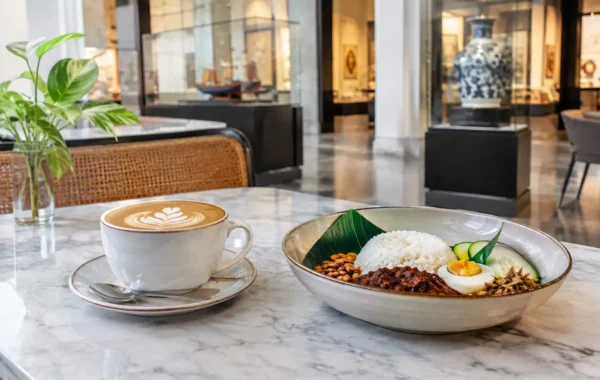
The old model of a museum as a hushed stop between other plans is changing. Visitors increasingly want cultural experiences that feel generous with their time: a place to view significant collections, enjoy an exhibition, browse considered objects and sit down over food or a drink afterwards.
There is a balance to strike. The heritage should remain the heart of the experience, rather than becoming decoration for a lifestyle venue. When done well, however, hospitality can extend the conversation. A meal after a gallery visit gives friends and family time to discuss a favourite object, compare discoveries or simply enjoy the atmosphere of a historic setting.
This is especially useful when planning a day with different interests. One visitor may be drawn to antique ceramics, another to art and design, another to the café or gift house. A destination that holds these experiences together can feel more welcoming than a conventional museum visit, without reducing the collection to an afterthought.
Choose depth over rushing
You do not need to know every dynasty, trade route or ceramic term to enjoy a heritage museum. Arrive with a little time to spare and choose a few objects to study properly. Read their labels. Notice the details. Ask what they may have meant in their original setting, as well as what they mean now.
If you are travelling with children, invite them to pick one object they would place in their own home and explain why. If you are visiting as a couple, compare the piece each of you noticed first. These small prompts turn passive viewing into a shared experience.
There is also value in accepting that not every heritage museum will speak to everyone in the same way. Visitors seeking interactive technology may prefer a highly digital presentation; collectors may want deeper provenance and material detail; families may need shorter, more flexible visits. The strongest cultural destinations accommodate different levels of interest while remaining faithful to the objects in their care.
A thoughtful souvenir is more than a purchase
Museum gift houses can offer an alternative to generic travel souvenirs. A well-chosen book, print or object inspired by a collection can continue the experience at home. It may become a prompt to revisit a story, research a period or remember the pleasure of a particular journey.
For collectors, this is also where discernment matters. Heritage objects have cultural, historical and sometimes legal considerations. The pleasure of collecting should be matched by respect for provenance, responsible acquisition and the communities whose histories these objects represent. A museum setting encourages that more thoughtful relationship with material culture.
Make room for the stories beneath the surface
A heritage museum offers something increasingly rare: the chance to be unhurried in the presence of real evidence from another time. It gives a city more depth, a holiday more texture and a family outing a story worth retelling.
When planning time in George Town, leave space for more than the obvious landmarks. Stand before an object that crossed the sea centuries ago, follow the thread of its journey, then carry that curiosity back into the streets around you. History is often closest when you stop long enough to see it.