
Some family days out begin with compromise. The children want something lively, the adults want something worthwhile, and everyone hopes to avoid the familiar mid-afternoon chorus of “are we done yet?” Choosing a family friendly museum Penang visitors genuinely enjoy comes down to one thing – whether the experience invites every age group into the story.
In a city as layered as Penang, museums can do far more than fill an hour between meals and sightseeing. At their best, they become places where children ask better questions, parents slow down long enough to notice detail, and shared discovery replaces passive entertainment. That matters when you are planning a day in George Town, where heritage is not simply preserved behind glass but felt in streets, food, architecture and memory.
What makes a family friendly museum in Penang truly work
Not every museum suits families in the same way. Some are rich in scholarship but difficult for younger children to follow. Others lean heavily on novelty and leave adults feeling they have seen very little of substance. The strongest family experiences sit in the middle – accessible without being shallow, visually compelling without becoming gimmicky, and structured in a way that lets different generations engage at their own pace.
For families, atmosphere matters as much as content. A museum feels more welcoming when it offers space to pause, clear storytelling, and displays that spark conversation rather than demand silence and endurance. Children do not need every label to make sense; they need a reason to look closer. Adults, meanwhile, tend to value context, authenticity and a sense that the visit offers something distinct to Penang itself.
This is why heritage museums often work surprisingly well for family groups. When objects are tied to real voyages, real trade routes and real lives, history becomes easier to imagine. A ceramic bowl recovered from a centuries-old shipwreck can hold a child’s attention more effectively than a wall of abstract dates, because it feels immediate. Someone used it. Someone carried it. Someone lost it at sea.
Why maritime history can be especially engaging for families
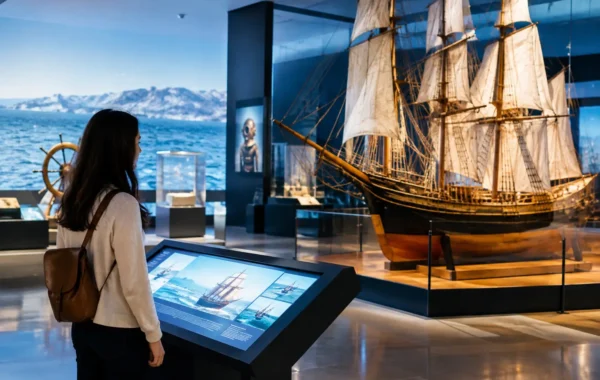
Among the more rewarding options for a family friendly museum in Penang are those that present history as movement rather than static chronology. Maritime collections do this naturally. They introduce children to ships, storms, trade, travel, survival and the extraordinary journeys objects can make across oceans and centuries.
There is also a visual advantage. Ancient porcelain and ceramics recovered from shipwrecks have an instant appeal that cuts across age groups. Younger visitors notice colour, pattern and shape. Older children begin to ask where the pieces came from and why they matter. Adults often appreciate the craftsmanship, rarity and the wider historical significance. The same object can hold several levels of meaning at once, which is exactly what makes a museum visit feel shared rather than split between children’s entertainment and adult education.
A well-curated maritime museum also suits families because it lends itself to storytelling. Instead of moving room by room through isolated displays, visitors follow journeys – of goods, cultures, merchants and empires. That narrative thread helps children stay engaged. It gives parents something substantial to build on, whether they are answering questions on the spot or simply enjoying the pleasure of seeing curiosity take hold.
The kind of museum day families remember
Families rarely remember every date or artefact name. They remember moments. The piece that looked impossibly delicate after centuries underwater. The conversation over lunch about how porcelain travelled across Asia. The sense that a museum visit became a proper outing rather than a duty stop on the itinerary.
That is where an integrated cultural destination stands apart. A museum that combines exhibitions with gallery spaces, dining, and thoughtful retail creates room for a gentler rhythm. Parents are not rushing children through a single-purpose space. Instead, the visit can unfold over a few hours, with time to see, talk, rest and continue. For multi-generational groups, this flexibility is especially valuable. Grandparents may linger over the historical context, children may respond first to the visual drama, and everyone can reconvene over a meal or drink without needing to relocate.
Penang’s heritage setting makes this approach feel particularly natural. A museum visit here should not feel detached from the wider spirit of the island. It should feel like an extension of it – a place where trade, craftsmanship, migration and cultural exchange are not abstract themes but part of the story that shaped Penang itself.
A family friendly museum Penang visitors can grow into
One of the most overlooked qualities in a family museum is longevity of interest. The best venues are not only suitable for children; they are places children can grow into. A six-year-old may be captivated by shipwreck stories and shimmering ceramics. A teenager might return with a stronger interest in archaeology, design or regional history. Adults often find that what first appeared visually striking reveals deeper layers of meaning on a second visit.
This matters because families do not all travel with the same expectations. Some want an easy cultural stop with enough beauty and comfort to keep things pleasant. Others actively seek museums that can add depth to a holiday. A strong heritage destination manages both. It welcomes first-time visitors without diluting the seriousness of its collection.
That balance is especially compelling in a museum built around authentic archaeological finds. Original artefacts carry a different weight from reproductions or decorative displays. Parents often sense that difference immediately, even if children express it more simply by saying, “Was this really under the sea?” Authenticity creates wonder. It also gives adults confidence that the experience is not merely photogenic, but genuinely enriching.
One notable example is Straits & Oriental Museum, which presents rare porcelain and ceramic artefacts recovered from historic Asian shipwrecks within a broader lifestyle setting. For families who want more than a conventional museum circuit, that combination of maritime heritage, exhibition design and contemporary hospitality offers a more complete cultural day out.
How to choose the right museum for your family
If you are deciding between museum options in Penang, it helps to think less about size and more about experience. A very large museum can be tiring for younger children, while a more focused one may hold their attention better. Equally, highly interactive spaces are not automatically the strongest choice if the content feels thin. It depends on the age of your children and what kind of outing you want.
For younger families, visual storytelling and manageable pacing tend to matter most. You want enough to spark excitement without overwhelming them. For older children and teenagers, depth becomes more important. They are often far more interested than adults expect, provided the subject is presented through strong objects and real human stories.
Parents should also consider practical flow. Can you pause comfortably? Is there somewhere to continue the day after viewing the exhibits? Does the setting feel inviting rather than restrictive? These details influence whether a museum remains a worthy cultural stop or becomes part of a larger, more enjoyable family experience.
When a museum becomes part of the holiday, not a pause from it
The most successful family outings in Penang often blend culture with leisure. That does not diminish the value of heritage; it strengthens it. When families can move from exhibition spaces to a meal, a café, or a thoughtfully curated gift house, the museum becomes easier to absorb. Children get time to reset. Adults get time to reflect. The stories seen in the galleries continue in conversation rather than ending at the exit.
There is a quiet confidence in places that understand this. They do not present heritage as something remote or solemn. They present it as something to encounter fully – through objects, atmosphere, taste, design and place. For visitors to Penang, that approach feels especially fitting because the island’s appeal has always been more than one-dimensional. History here is lived, not simply displayed.
So if you are searching for a family friendly museum Penang families and visitors can genuinely enjoy, look for one that respects both curiosity and comfort. The right museum will not ask children to sit still for history. It will invite them to follow a story, notice beauty, and leave with the feeling that the past is far more vivid than they expected. And that is usually the point at which a simple day out becomes one of the most rewarding memories of the trip.