
A bowl lifted from the seabed is never just a bowl. In the Nanyang shipwreck ceramic collection, each piece carries the mark of trade routes, workshop traditions, shipboard life and sudden loss. What survived underwater for centuries now offers something remarkably vivid on land – a direct encounter with the maritime world that shaped Asia.
For visitors drawn to objects with presence, this collection has a particular pull. It is not only about age or rarity, though both matter. It is about seeing porcelain and ceramics as witnesses to exchange: between ports, between cultures, between makers and merchants, and between the practical demands of commerce and the human desire for beauty.
Why the Nanyang shipwreck ceramic collection matters
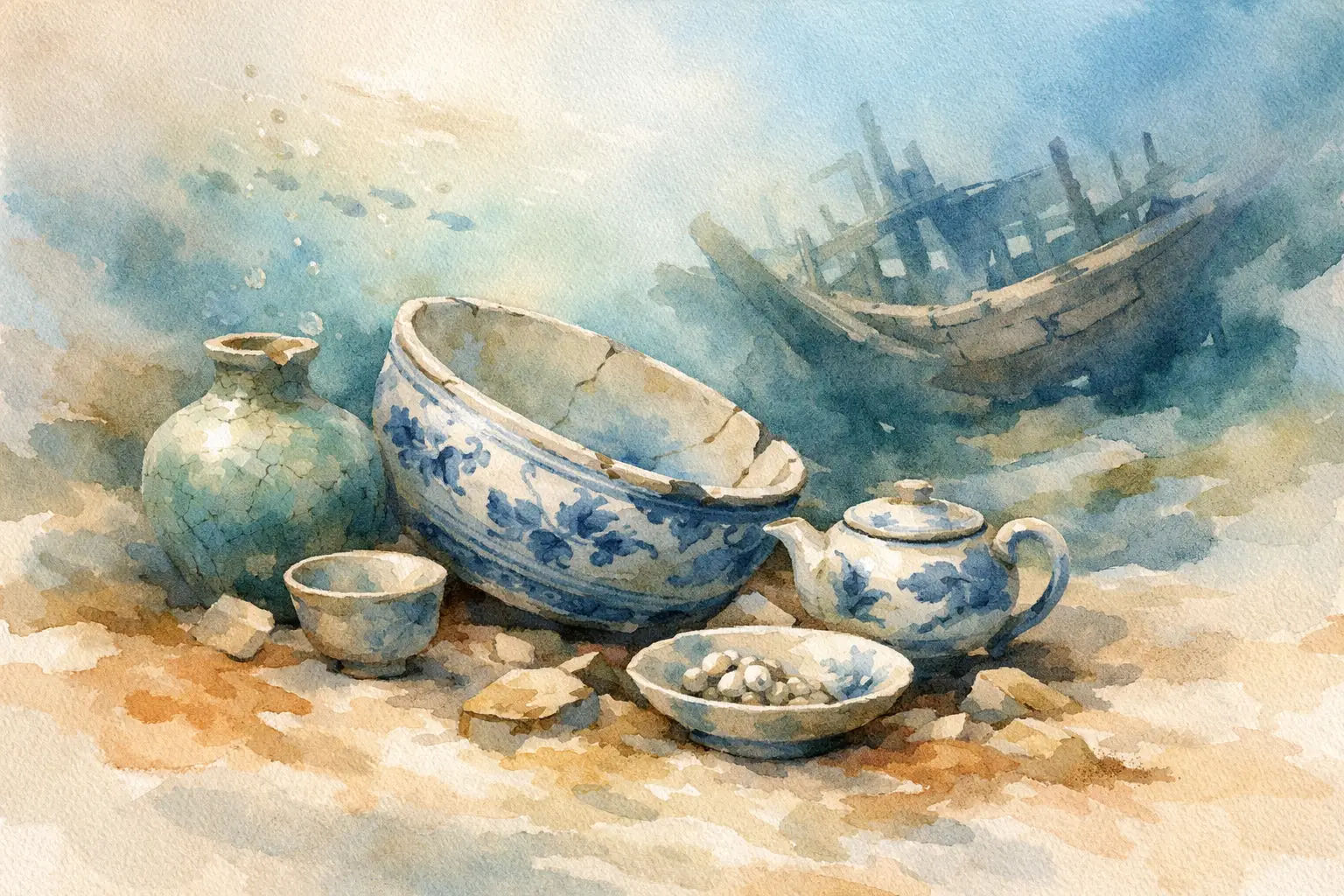
Shipwreck ceramics can seem deceptively familiar at first glance. There are dishes, jars, kendi, cups and storage vessels – forms that still feel recognisable. Yet once recovered and carefully studied, they begin to tell a larger story. They show what was being made in quantity, what was valued enough to ship across dangerous waters, and how far commercial networks extended across the region.
The Nanyang shipwreck ceramic collection matters because it turns abstract maritime history into something tangible. Trade is often discussed in terms of empires, ports and maps. Ceramics bring that story back to human scale. A cargo of porcelain was not an idea. It was packed, loaded, stacked, insured, handled, sold and used. The seabed preserved that moment of movement.
There is also a deeper regional importance here. The waters of Southeast Asia were never passive routes on someone else’s map. They were active corridors of exchange, with their own tastes, demands and trading relationships. A shipwreck recovered in this part of the world helps reveal the Nanyang not as a distant concept, but as a living maritime sphere shaped by circulation, adaptation and ambition.
What you see in a shipwreck ceramic collection
The pleasure of viewing recovered ceramics lies partly in variety. Fine blue and white porcelain may sit alongside more utilitarian wares. Some pieces were intended for elite tables, others for everyday use, and others still for storage and transport. Together, they challenge the neat divide between treasure and ordinary goods.
That mix is important. A collection made only of showpieces would flatter the eye but limit the story. A stronger collection includes the commercial middle – the repeat forms, the export wares, the objects designed to travel well and sell reliably. These reveal market demand. They also show that maritime trade was built as much on consistency as on luxury.
Condition adds another layer. Not every recovered piece is perfect, nor should it be. Marine accretions, firing imperfections, kiln grit, warped rims and chipped edges can all be part of the object’s truth. For some visitors, pristine porcelain will be the immediate favourite. For others, the more arresting pieces are those that still bear the hard evidence of their passage through sea and time.
Reading history through form, glaze and decoration
A serious encounter with the Nanyang shipwreck ceramic collection begins with close looking. Shape tells you how an object was meant to be handled and used. Glaze points to technical choices and workshop standards. Decoration can suggest date, taste and intended market. Even repetition is revealing. When many pieces share the same profile or motif, it often indicates organised production for trade rather than one-off prestige pieces.
Blue and white porcelain often draws the first attention because of its clarity and elegance. But monochrome wares, celadon tones and storage ceramics can be just as revealing. A jar may say more about long-distance commerce than a decorative dish, simply because it speaks to packing, provisioning or bulk trade. In maritime archaeology, beauty and usefulness often sit side by side.
This is where context matters. A ceramic object in isolation can be admired as art. A ceramic object from a wreck site becomes evidence. It belongs to a cargo, a route, a moment of risk. Its meaning expands beyond craftsmanship into circulation. That does not make it less beautiful. If anything, it gives beauty a sharper edge.
The appeal for collectors and curious travellers
Different visitors will meet this collection in different ways. Collectors may be drawn to kiln characteristics, dating clues and export typologies. History enthusiasts may be more interested in trade patterns and maritime networks. Families often respond to the immediacy of the story – these objects were travelling across open water, and then the ship was lost.
That breadth of appeal is one reason shipwreck ceramics work so well in a museum setting that welcomes both learning and leisure. You do not need specialist knowledge to feel the force of a recovered artefact. At the same time, the collection rewards repeat viewing because the details keep opening up. The longer you look, the more each object begins to speak beyond its surface.
There is a useful balance here between romance and rigour. Shipwrecks naturally attract dramatic narratives, and there is no need to deny that allure. But the strongest presentation avoids turning everything into legend. Visitors deserve the thrill of discovery, yes, but also the discipline of evidence. Dates, provenance, typology and recovery context all matter. Without them, a shipwreck ceramic becomes merely decorative. With them, it becomes historical testimony.
Nanyang shipwreck ceramic collection as a cultural experience
What distinguishes a memorable visit is not only the quality of the objects, but the way they are framed. A strong presentation of the Nanyang shipwreck ceramic collection should let visitors move between visual appreciation and historical understanding without feeling lectured. The best galleries make room for wonder first, then deepen it.
This is especially true for audiences who want more than a conventional museum stop. Cultural travellers increasingly look for experiences that feel layered – intellectually rewarding, visually striking and grounded in place. A maritime ceramic collection answers that well because it sits at the crossroads of archaeology, art, trade and regional identity.
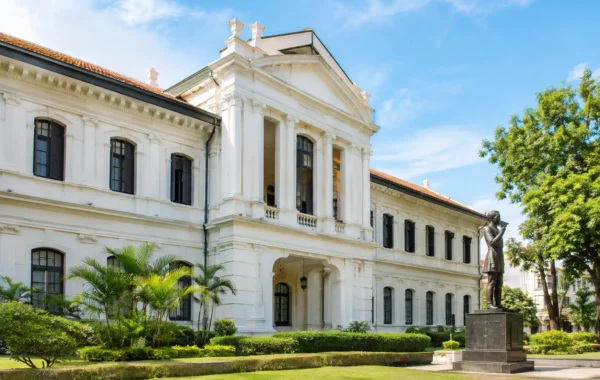
At Straits & Oriental Museum, that wider experience is part of the point. The collection is not treated as static heritage shut behind glass and silence. It is presented within a broader cultural setting that values atmosphere, storytelling and hospitality. For many visitors, that changes the rhythm of the day. You are not simply passing through an exhibit. You are spending time with a maritime world and then carrying that mood into the rest of the venue.
What makes recovered ceramics so compelling
Part of the fascination lies in survival against probability. Ceramics are durable, but ships are vulnerable. Storms, navigational error, conflict, reef impact and structural failure all shaped the risks of sea travel. When a cargo survives but the voyage does not, the result is haunting. The objects remain ready for use, but their original destination is forever interrupted.
That tension gives shipwreck ceramics a different emotional charge from excavated material on land. They are suspended between commerce and catastrophe. A plate was made to be bought, handled and used at table. Instead, it lay in darkness beneath shifting currents. Recovery does not erase that interruption. It makes it visible.
There is also the question of scale. A single museum case may contain forms that once existed in the hundreds or thousands aboard one vessel. That can alter how visitors think about value. The rarest-looking object is not always the most historically significant. Sometimes the repeated export bowl, stacked in quantity, is the real key to understanding regional trade. It depends what question you are asking.
Looking beyond the surface
It is tempting to judge a ceramic collection only by spectacle. Fine porcelain certainly delivers that. But a mature appreciation asks for more. What route was this vessel likely taking? Which markets was it serving? What does this mix of wares suggest about demand? Why do some forms appear in volume while others are scarce?
These questions matter because they shift attention from object as ornament to object as evidence. They also reveal why maritime ceramic collections deserve serious public attention. They help map connections across Asia in a way that feels immediate rather than abstract. Trade becomes visible in clay, glaze and pattern.
For visitors to George Town, where the historical imagination is already shaped by port life, migration and exchange, such a collection feels especially resonant. It reminds us that the story of the region has always been carried by water – and that the material traces of that story can still be encountered, piece by piece, in the present.
The real pleasure of the Nanyang shipwreck ceramic collection is that it does not ask you to choose between scholarship and wonder. It offers both. Stand long enough before any recovered vessel, dish or jar, and you begin to sense what museums at their best can do – bring the past close enough that it feels less like information and more like a meeting.