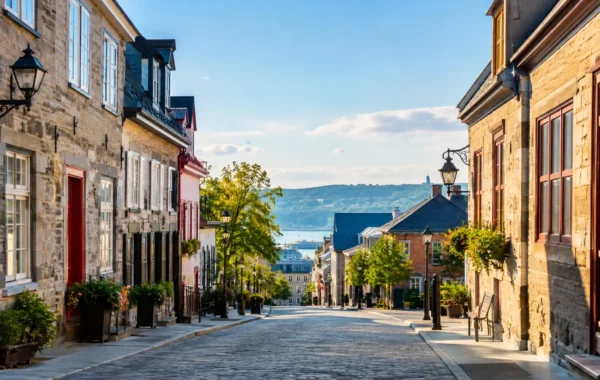
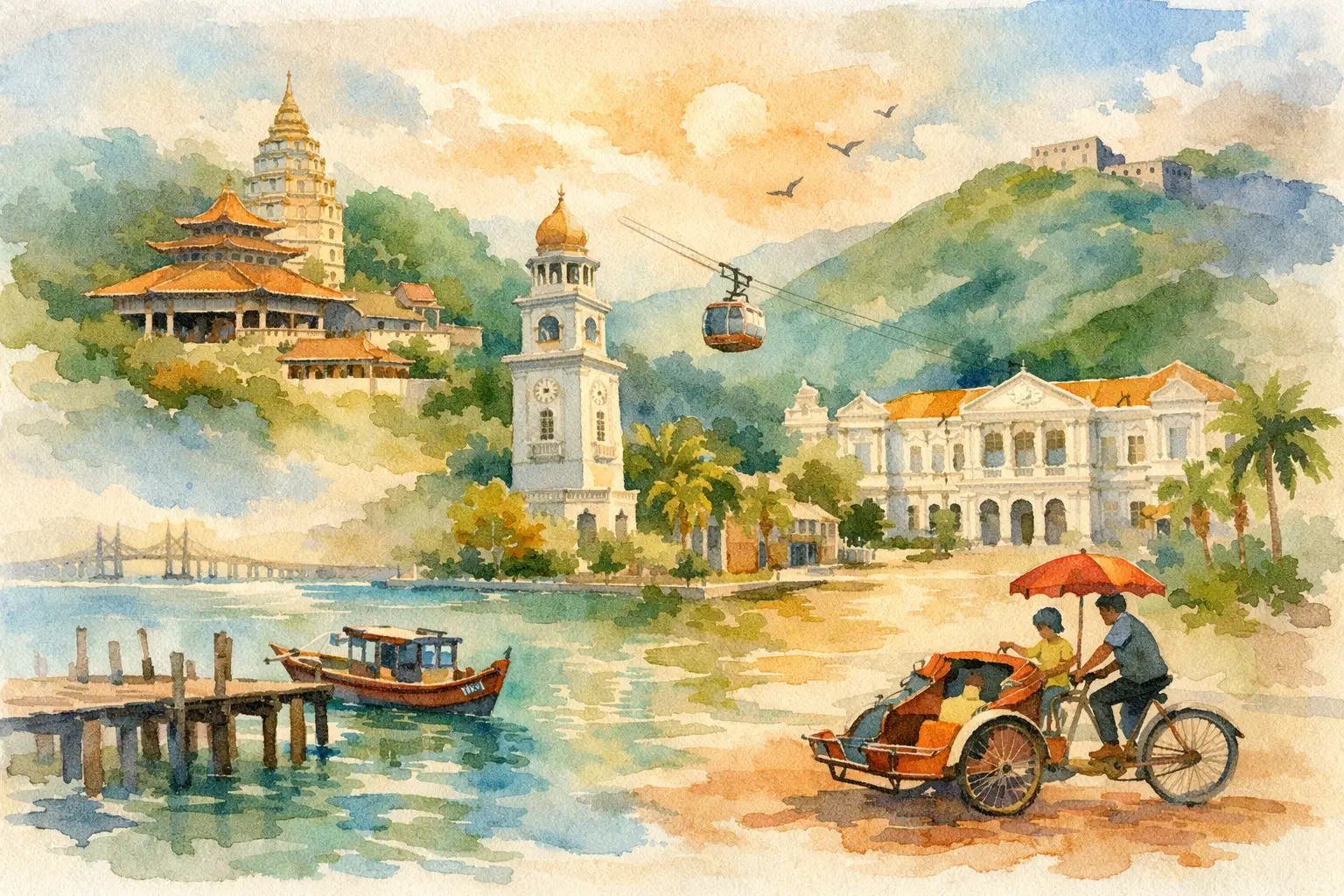

George Town rewards the traveller who pays attention to distance. Within a five-kilometre radius in George Town, the city shifts from clan houses to colonial facades, from harbour edges to café-lined shophouses, often within the same afternoon. That is precisely what makes it such a compelling cultural destination – not merely the number of places to visit, but how naturally history, food, art and everyday life sit side by side.
For visitors who prefer depth over rushing from one headline attraction to the next, a five-kilometre circle is more than enough to shape a memorable day. It is wide enough to include the city’s layered historic core and parts of its waterfront, yet compact enough to explore without losing the rhythm that makes George Town so distinctive.
Why a five-kilometre radius in George Town works so well
George Town is best understood as a living heritage environment rather than a checklist of isolated sights. The buildings matter, certainly, but so do the alleys, the sea air, the sound of traffic passing old shophouses, and the way a formal museum visit can be followed by tea, a gallery stop or a waterside stroll. Staying within a modest radius preserves that sense of continuity.
There is also a practical advantage. Penang’s climate can be warm and humid, and traffic can slow short journeys at certain hours. A tighter geographic plan lets you spend less time arranging transport and more time actually experiencing the city. For families, couples and cultural travellers, that often means a more relaxed and rewarding day.
Start with heritage, not haste
If you are planning what to see within a five-kilometre radius in George Town, begin with the heritage core. This area carries much of the city’s architectural and cultural identity, with streets where Peranakan influence, colonial administration, mercantile trade and community life still leave visible traces.
A morning here tends to work best. Light is softer, pavements are gentler to walk, and many visitors find the atmosphere less crowded. Rather than trying to cover every lane, choose a few streets and let them unfold. The appeal of George Town is rarely in speed. It lies in noticing carved timber details, old signboards, shrines tucked beside businesses, and façades that suggest generations of adaptation rather than a frozen past.
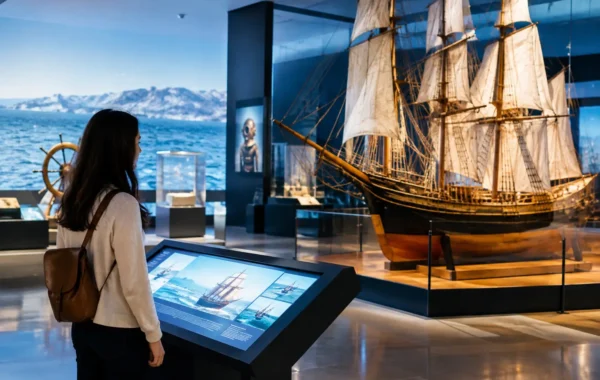
This is also where museums and cultural spaces begin to shape the day. A well-curated museum visit gives context to the city outside, turning buildings and waterfronts into part of a larger historical story. For visitors drawn to Penang’s maritime identity, that perspective matters. George Town did not become culturally rich by accident. Trade, migration and seafaring exchange built much of what the city is.
Museums, galleries and the value of context
A compact radius becomes especially meaningful when cultural institutions are part of the route. In George Town, a museum is not simply a stop between lunch and photographs. Done well, it anchors the experience.
Maritime history is particularly resonant here. Penang has long stood at a crossroads of regional exchange, and collections tied to shipwreck ceramics and sea trade illuminate a world that shaped both commerce and culture across Asia. For travellers who want more than surface impressions, this kind of encounter adds intellectual weight to the day without making it feel formal or remote.
That is one reason a destination such as Straits & Oriental Museum holds such appeal. It presents heritage not as something sealed behind glass alone, but as part of a fuller cultural outing – one that can include exhibitions, visual storytelling, dining and time spent lingering rather than merely passing through. For visitors choosing how to spend a few hours in George Town, that integrated experience often feels more satisfying than hopping between disconnected venues.
The waterfront changes the mood
One of the great advantages of staying within a small radius is how quickly George Town can change character. Walk or drive a short distance from the inner heritage streets and the waterfront introduces a different atmosphere altogether. The city opens outward. Air moves differently, views broaden, and Penang’s maritime identity becomes less abstract.
This matters because George Town has always been tied to the sea. Waterfront areas are not just scenic interruptions. They help explain the movement of people, goods and ideas that gave the city its cosmopolitan nature. Even a simple pause by the water can sharpen the sense that the city’s story extends beyond architecture into regional trade and cultural exchange.
For many visitors, this is also where the day begins to feel less like sightseeing and more like leisure in the best sense. A refined late lunch, coffee with a view, or an early evening drink near the water can turn a heritage outing into something more rounded and memorable.
Food should be part of the plan, not an afterthought
In George Town, eating is never separate from place. A five-kilometre itinerary only works properly if it leaves room for meals, coffee or a slow pause in the afternoon. The city’s culinary appeal is part of its cultural appeal.
That does not always mean chasing the busiest queue or the most photographed dish. It depends on what kind of visitor you are. Some want the energy of hawker dining and local favourites. Others prefer a more composed setting where design, service and atmosphere frame the experience. George Town accommodates both, often within minutes of each other.
For culturally minded travellers, the strongest itinerary usually combines at least one heritage-focused stop with a meal that lets the day breathe. This is especially true for couples and families. Children rarely enjoy being moved too briskly from site to site, and adults often remember the tone of a day as much as its landmarks.
Walking versus driving within a five-kilometre radius in George Town
A five-kilometre radius sounds simple, but how you move within it will shape the experience. Walking offers intimacy. You notice doorways, textures, scents from kitchens, fragments of conversation and the city’s layered visual language. If your focus is the heritage core, walking remains one of the most rewarding ways to engage with George Town.
Yet there are trade-offs. Heat, sudden rain and limited time can make a fully walkable plan less appealing, particularly for families or visitors combining museums with waterfront stops. In those cases, a short drive or ride between clusters can preserve energy for the places that deserve attention.
The best approach is often mixed. Walk where detail matters, then use transport when the goal is to shift mood – from old streets to sea views, from galleries to dining, from daytime exploration to an evening setting.
A better way to plan the day
Rather than thinking in terms of how many attractions fit into five kilometres, think in terms of how many experiences do. A satisfying George Town itinerary usually includes three elements: a strong cultural anchor, time to wander, and a place to eat or rest with intention.
That could mean beginning with a museum or collection, spending late morning in the heritage streets, and moving towards the waterfront in the afternoon. It could just as easily mean a slower start with coffee, a midday exhibition, and evening drinks after sunset. The point is not to imitate someone else’s route. It is to let proximity work in your favour.
Visitors sometimes overplan George Town because the city appears manageable on a map. It is manageable, but it is also textured. Trying to fit too much into a short radius can flatten the experience. A more selective approach often reveals more.
Who benefits most from this compact approach
Cultural tourists will find that a five-kilometre radius keeps the narrative coherent. You move through different chapters of the city without feeling detached from its central themes of trade, migration, craftsmanship and adaptation.
Families benefit because shorter distances reduce logistical friction. There is more flexibility to pause, cool down and change pace. International visitors with limited time benefit because a tightly planned area still offers a convincing sense of George Town’s identity. And collectors or design-minded travellers often appreciate the chance to combine museum-quality objects, gallery encounters and elegant hospitality in one outing.
That last point is worth noting. George Town is not only rewarding because it has history. It is rewarding because heritage here can still be experienced with comfort, style and immediacy. That blend is rarer than it looks.
A well-spent day within five kilometres of George Town does not need to be frantic to feel full. If anything, the city is at its finest when you allow one meaningful place to lead naturally to the next, and leave enough room for history to linger after you have stepped back into the street.