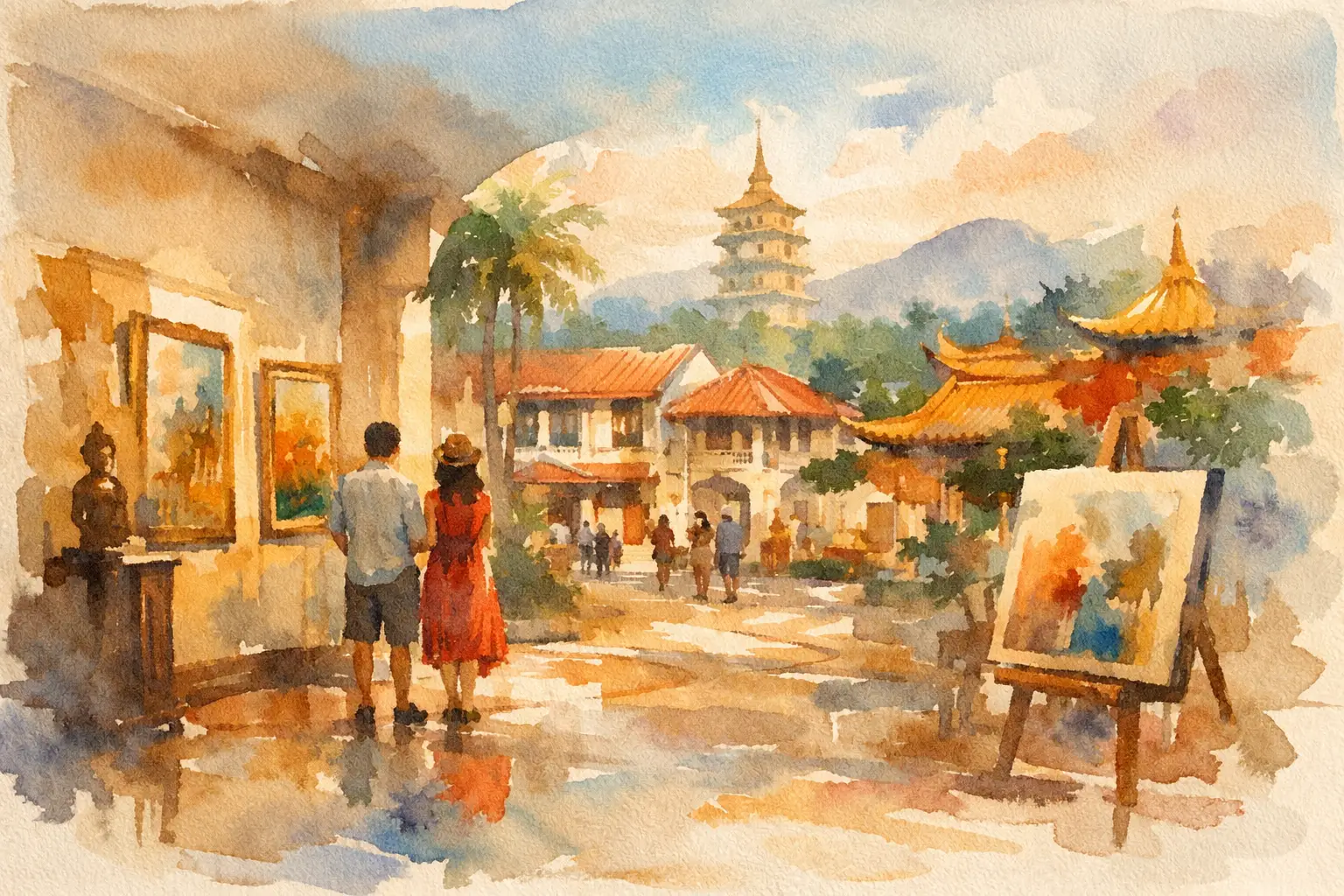

Some galleries give you white walls and polite silence. The best cultural art galleries Penang offers do something richer – they place art back into the story of the island itself, where trade, migration, craftsmanship and memory all meet.
For visitors who want more than a quick photo stop, Penang’s gallery scene rewards patience. This is not simply a place for decorative paintings or fashionable openings. It is a place where visual culture sits alongside layered histories – Peranakan identity, maritime exchange, colonial architecture, Chinese clan traditions, Indian Muslim commerce and a long relationship with craft. If you choose well, a gallery visit here becomes less about ticking off attractions and more about understanding why George Town still feels so distinctive.
What makes cultural art galleries Penang stand apart
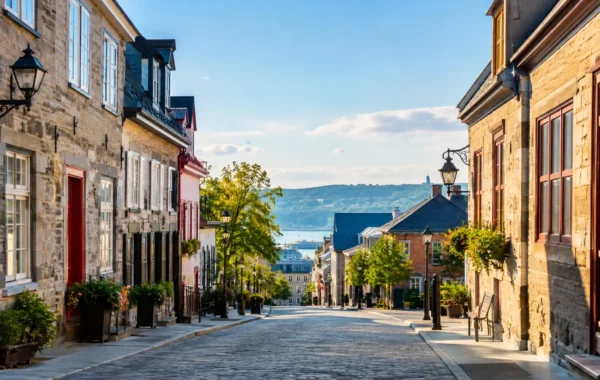
Penang’s appeal lies in context. In many cities, galleries can feel detached from their surroundings, almost interchangeable. Here, the setting matters. A restored shophouse, a heritage building near the waterfront, or a space embedded in a former mercantile district changes the way art is encountered. You are not only looking at objects on display. You are moving through the architecture and atmosphere that shaped the island’s cultural life.
That matters because Penang has always been a meeting point. Ceramics, textiles, devotional objects, portraits, trade goods and contemporary artworks all make more sense when viewed through that lens. The strongest galleries do not present culture as static. They reveal movement – of people, ideas, aesthetics and materials across centuries.
There is also a welcome breadth to the experience. Some spaces lean towards heritage and object-based storytelling, while others foreground living artists and contemporary practice. Neither is inherently better. It depends on what kind of cultural encounter you want. If your interest is historical depth, seek places where artefacts and interpretation carry real weight. If you prefer current creative voices, contemporary galleries may feel more immediate. The ideal itinerary often includes both.
How to choose the right gallery experience
A useful question is not simply which gallery is best, but best for whom. Families with children often benefit from spaces that are visually varied and easier to move through, with objects that naturally prompt curiosity. Couples on a cultural day out may prefer venues that blend exhibitions with dining, retail or a slower architectural experience. Collectors and serious enthusiasts tend to look for provenance, curation and a sense that the institution understands its subject rather than merely displaying it attractively.
The difference between a memorable gallery and a forgettable one is usually curation. A good collection is not enough on its own. The arrangement, the narrative and the confidence of presentation all matter. Penang’s most compelling cultural venues understand this well. They frame each object as part of a wider story, whether that story is about trade routes, identity, ritual, craftsmanship or artistic change.
Timing matters too. Some travellers try to fit several cultural stops into one afternoon and end up absorbing very little. Penang rewards a slower pace. One or two well-chosen galleries, with time for lunch or coffee nearby, will often leave a deeper impression than a rushed circuit of every place on the map.
Heritage-led galleries offer the deepest sense of place
If your idea of a cultural visit includes substance, heritage-led spaces are often the strongest starting point. These are the places where Penang’s history is not treated as backdrop but as the main event. Collections tied to trade, domestic life, craftsmanship and the movement of goods across the region tell you far more about the island than generic wall art ever could.
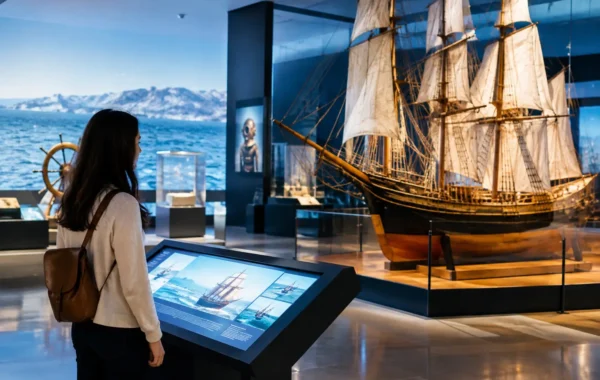
Maritime and ceramic collections are especially revealing. Penang’s identity has always been linked to the sea, and objects recovered, preserved or interpreted through that maritime lens carry unusual power. Porcelain, in particular, speaks to both beauty and exchange. It reflects appetite, status, commerce and cross-cultural influence in one material. When presented well, such collections make visible the routes that once connected Penang to the wider Asian world.
This is where a venue such as Straits & Oriental Museum holds particular significance. Rather than treating heritage as distant or dusty, it presents rare shipwreck ceramics and maritime archaeology as living cultural narrative, set within a broader lifestyle destination. That combination matters. For many travellers, the ideal cultural stop is one that offers intellectual substance without feeling forbidding. A museum-gallery environment paired with hospitality, exhibition programming and a strong sense of occasion turns a visit into a fuller outing.
There is a practical benefit as well. Travellers often want a cultural experience that satisfies different interests at once. One person may care about history, another about design, another about where to have a refined afternoon break. Integrated heritage spaces answer that need without diluting the value of the collection.
Contemporary galleries add a different kind of insight
Heritage gives you roots. Contemporary art gives you pulse. To understand Penang properly, it helps to see not only what the island has preserved, but what its artists, curators and cultural entrepreneurs are saying now.
The best contemporary galleries in Penang do not imitate larger art capitals. Their strength lies in local specificity. You may find works shaped by urban memory, language, migration, food culture, faith, community or the pressures of development. Even when the style feels global, the subject often remains grounded in Penang’s social texture.
That said, contemporary spaces can vary widely in quality. Some are conceptually ambitious but less accessible to casual visitors. Others are welcoming yet lighter in curatorial depth. If you are new to contemporary art, look for exhibitions with a strong visual thread or a clear thematic anchor. If you are already engaged in the art world, smaller independent spaces can be rewarding precisely because they feel less polished and more experimental.
There is no need to force enthusiasm for every format. Video installations, abstract work or politically coded exhibitions may resonate deeply with one visitor and leave another cold. That is part of the point. A healthy cultural scene includes friction as well as beauty.
Why architecture and atmosphere matter so much
In Penang, the building is often part of the exhibition. Heritage architecture changes the emotional rhythm of a visit. Timber shutters, tiled floors, courtyards, narrow staircases and restored facades all shape the way you receive what is on display.
This is not mere ambience. It affects attention. In a characterful setting, visitors tend to linger. They notice materials more carefully. They feel the continuity between object and place. A porcelain vessel, a textile fragment or a painting of street life carries different weight when viewed in surroundings that still echo the commercial and domestic world from which such objects emerged.
That is one reason Penang’s cultural spaces can feel unusually memorable. They are not isolated boxes. They belong to the island’s built history. Even when the exhibition itself is contemporary, the architecture keeps reminding you where you are.
A gallery visit in Penang works best as part of a wider day
One of the pleasures of Penang is that culture does not need to be separated from leisure. A good gallery visit can flow naturally into a meal, a walk through heritage streets, a stop for coffee or time spent browsing design-led retail. For many visitors, this makes the experience more enjoyable rather than less serious.
There can be an old-fashioned idea that true cultural appreciation must be solemn. Penang suggests otherwise. A day that combines art, history, conversation and hospitality often leads to better engagement than a rigid museum march. You are more receptive when the experience has texture.
This integrated approach is especially appealing for couples, multigenerational families and international visitors with limited time. It allows culture to feel generous rather than demanding. The trade-off, of course, is that some highly lifestyle-oriented venues may lean too heavily on atmosphere at the expense of curatorial depth. The best ones manage both.
What discerning visitors should look for
If you care about authenticity, ask simple questions as you move through a space. Does the gallery have a clear point of view? Are the objects or artworks presented with confidence and context? Does the experience feel rooted in Penang, or could it be transplanted anywhere?
The strongest cultural art galleries Penang presents will usually offer at least one of three things: rare material worth seeing in person, thoughtful interpretation that changes your understanding of the place, or a setting so well considered that the visit feels distinct from ordinary sightseeing. When a venue offers all three, it becomes a true destination.
There is also value in resisting the urge to treat every gallery equally. Some deserve an hour; some deserve an afternoon. Some are useful for a quick glimpse into local creativity; others justify planning your day around them. Knowing the difference is what turns cultural tourism into informed travel.
Penang does not ask you to choose between beauty and meaning. At its best, it gives you both – in porcelain shaped by the sea, in art shaped by living communities, and in spaces that understand how history should feel when it is presented with care. Leave room in your itinerary for that kind of encounter, and the island will tell you far more than any guidebook can.