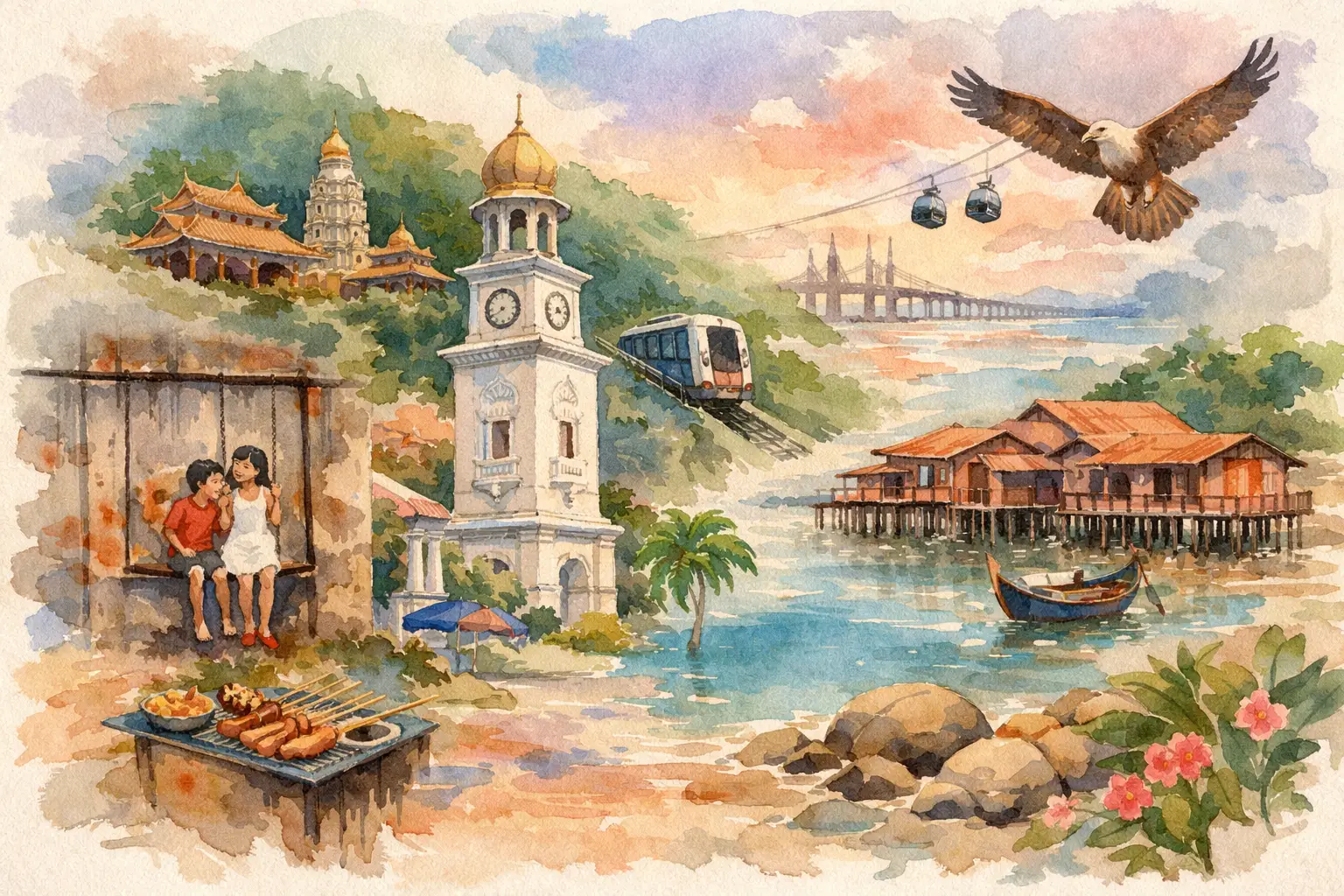

Some places reward a checklist. Penang rewards curiosity. The island’s most memorable experiences are not only the famous facades and postcard viewpoints, but the stories behind them – the trade routes, communities, craft traditions and flavours that turned a port city into one of South-East Asia’s most layered destinations.
That is what makes Penang attractions so compelling. You can spend the morning among clan houses and colonial streets, the afternoon tracing maritime history through recovered ceramics, and the evening at the hawker centres that locals speak about with near-religious conviction. For travellers who want more than surface-level sightseeing, Penang offers a rare balance of beauty, substance and ease.
Penang attractions that reveal the island’s character
George Town usually sits at the centre of any first visit, and with good reason. Its historic core has the visual charm that visitors expect, but its real appeal lies in its density of stories. Within a short walk, temples, shophouses, mosques, churches and old mercantile buildings stand side by side, reflecting centuries of exchange across Asia and beyond. It is one of the few places where heritage does not feel staged. Life continues around it.
Armenian Street and its surrounding lanes are often approached as a quick stop for murals and photographs. That can be enjoyable, but it is worth slowing down. The appeal here is not only street art. Look higher and you notice shuttered windows, carved details and old commercial signs that speak of trade, migration and adaptation. The area can become busy in peak hours, so an earlier visit usually offers a calmer and more rewarding experience.
Nearby, Khoo Kongsi remains one of the island’s most striking heritage landmarks. Its intricate architecture, gilded ornament and ceremonial presence make it immediately impressive, yet the deeper value lies in what it represents – kinship, settlement and the ways migrant communities established identity in a new place. Families tend to enjoy it because it is visually dramatic, while history-minded visitors often linger longer over the social story.
A richer side of Penang attractions for culture lovers
If your idea of a memorable trip includes objects with provenance rather than replicas with labels, Penang’s museum scene deserves proper attention. While some visitors devote most of their time to food and street photography, the island’s cultural institutions offer the context that makes everything else feel more meaningful.
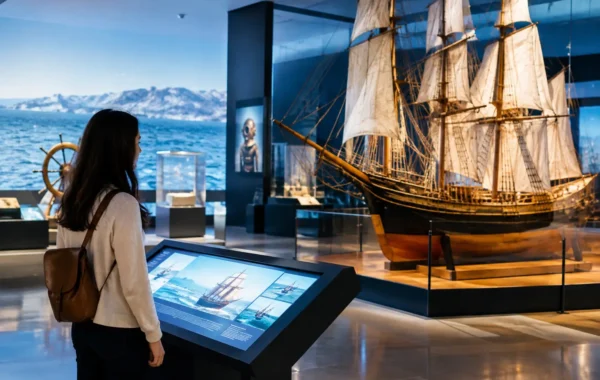
Among the most distinctive experiences is the Straits & Oriental Museum, where Penang’s maritime identity comes into sharp focus through authentic ceramics and porcelain recovered from historic Asian shipwrecks. This is not heritage presented as a static backdrop. It is a rare encounter with the material evidence of trade, ambition, craftsmanship and peril at sea. For visitors interested in the wider story of Penang as a maritime crossroads, shipwreck artefacts offer something unusually tangible. You are not simply reading about exchange across the region – you are looking at the very objects that once moved through it.
That difference matters. Many attractions entertain for an hour and then fade into the background of a trip. A collection rooted in maritime archaeology tends to stay with you because it collapses time. Fine ceramics recovered from wrecks such as the Wanli or the Royal Nanhai do more than demonstrate beauty. They remind you that luxury, commerce and cultural circulation were already shaping this region centuries ago. For couples, families and collectors alike, it can turn a casual day out into a more considered cultural outing, particularly when paired with good food and time to linger rather than rush.
Penang’s broader museum circuit also appeals because it suits different travelling styles. Some visitors want depth and scholarly texture. Others want a refined indoor experience between outdoor sightseeing and meals. On a hot or rainy day, museums become more than a fallback. They become some of the most intelligent ways to understand the island.
Beyond George Town: Penang attractions with contrast
Not every day in Penang should unfold at street level. Penang Hill offers a very different mood, with cooler air, wider views and a welcome sense of distance from the bustle below. It is one of the island’s most established attractions, and yes, it can be busy. Even so, the ascent still delivers a genuine shift in perspective. If you have spent two days in the city’s historic quarters, the hill provides the contrast many itineraries need.
The same is true of Kek Lok Si Temple, which combines spiritual significance with visual scale. Its architecture, hillside setting and layered courtyards make it one of the most recognisable Penang attractions, but timing matters. Visiting earlier in the day often allows for a more contemplative experience. At crowded times, the grandeur remains, though some of the atmosphere can be diluted.
For travellers who prefer nature and seafront scenery, Penang National Park and the beaches around Batu Ferringhi answer a different brief. These are not interchangeable experiences. The national park suits visitors willing to walk and tolerate a little humidity in exchange for a more natural landscape. Batu Ferringhi is more straightforward – convenient, relaxed and easy to pair with resorts, dining and sunset views. Which is better depends entirely on whether you want activity or ease.
Food as one of the essential Penang attractions
To speak about Penang without speaking about food would be absurd. Here, eating is not something you do between attractions. It is one of the attractions. Hawker culture, coffee shops and long-debated local favourites are part of the island’s identity in the same way that architecture and history are.
This matters for visitors planning their days. Leave room for spontaneity. The best food experiences are not always those with the most polished presentation, and a queue does not automatically guarantee brilliance. Taste is personal, and one traveller’s perfect char kway teow may be another’s good-but-not-life-changing plate. That is part of the fun.
A more useful approach is to treat meals as a way of reading place. Nyonya flavours, Hokkien influences, Indian Muslim staples and generations-old coffee shop habits all reveal the cultural blend that defines Penang. If you are curating your own list of Penang attractions, food deserves equal billing with temples, museums and viewpoints.
How to choose the right Penang attractions for your trip
The most satisfying Penang itinerary is rarely the one that tries to do everything. It is the one that matches the island’s variety to your own interests. If you are drawn to architecture and atmosphere, devote more time to George Town’s historic streets and heritage buildings. If you travel for context, place museums and cultural collections early in the trip so the rest of the island makes more sense afterwards.
Families often do best with a balanced day – one visually engaging heritage site, one indoor cultural stop, and one food-centred pause. Couples may prefer a slower rhythm, mixing a refined museum visit with a café, gallery or evening meal. Collectors and design-minded travellers should be especially alert to Penang’s material culture, because the island rewards close attention to craft, ceramics, antiques and decorative detail.
It is also worth accepting that some well-known sights may not be your favourite, and that is perfectly fine. A famous street mural may charm you less than a porcelain bowl raised from a shipwreck. A hilltop panorama may matter less than a conversation over tea after a morning in a gallery. Penang accommodates both the iconic and the intimate.
What gives the island lasting appeal is not any single landmark. It is the way different experiences speak to one another. A temple tells you about belief. A clan house tells you about settlement. A plate of hawker food tells you about migration. A maritime collection tells you how all of it was connected by sea.
The best Penang attractions do not simply fill an itinerary. They sharpen your sense of where you are. Leave a little space in your plans for that to happen, and Penang tends to give more back than expected.