
A bowl lifted from the seabed can say more about a civilisation than a wall of text ever could. In a compelling ancient ceramic exhibition, the first impression is often visual – the sheen of glaze, the discipline of form, the delicacy of painted motifs – but the deeper fascination lies in what these objects have endured. They were made to be used, traded, gifted and transported. Many never reached their destination. That unfinished journey is precisely what gives them their power.
Ceramics are among the most eloquent survivors of the ancient world. Wood rots, cloth disintegrates and paper disappears, yet porcelain and stoneware can remain intact for centuries, even after a shipwreck. When displayed with care, they do more than illustrate history. They document movement across seas, shifts in taste, the economics of maritime exchange and the refined ambitions of those who commissioned, purchased or carried them. For visitors seeking more than a conventional museum visit, these objects offer something rarer – a direct encounter with history shaped by trade, risk and craftsmanship.
What makes an ancient ceramic exhibition so absorbing
Not every historical display holds attention beyond a few labels and a glance. Ceramics do, because they bridge art and evidence. A dish may be admired for its balance and decoration, yet it also tells us where it was made, who valued it and how far it travelled. In that sense, an ancient ceramic exhibition appeals on two levels at once. It satisfies the eye while rewarding curiosity.
This is especially true when the ceramics come from maritime archaeological contexts. Shipwreck finds transform isolated objects into part of a much larger story. Suddenly, a jar is not merely a jar. It is cargo. It is commerce. It is proof of a route, a market and a network of exchange stretching across Asia and beyond. Visitors do not have to be specialists to grasp the significance. The setting does much of the work. Once an artefact is understood as part of a vessel’s final voyage, its presence becomes charged with drama.
There is also a useful tension in these exhibitions. Ceramics are often associated with domestic life – dining tables, tea rituals, storage, display – yet many surviving examples were shaped by the unforgiving realities of the sea. That contrast between elegance and danger gives maritime collections unusual emotional force.
Ancient ceramic exhibition as a window into maritime history
The most memorable exhibitions do not treat ceramics as decorative fragments detached from life. They present them as witnesses to regional history. Across Asian maritime routes, ceramics moved in astonishing quantities, linking kilns, ports, merchants and royal courts. They were practical goods, status symbols and diplomatic commodities all at once.
Seen in this context, a single gallery can reveal centuries of exchange. Forms changed with demand. Motifs travelled across borders. Kilns adapted to foreign markets. Trade intensified, faltered or shifted according to politics, weather, warfare and appetite. A visitor may come expecting beautiful porcelain and leave with a clearer understanding of how the region was connected long before modern globalisation became a familiar phrase.
That is one reason shipwreck ceramics hold such a strong place in public imagination. They collapse distance. Instead of reading abstractly about trade routes, you stand before the very cargo that once moved along them. The experience is intimate, but the implications are expansive.
Why shipwreck ceramics feel different from other museum objects
There is a particular atmosphere around objects recovered from the sea. Part of it is rarity, and part of it is survival. These artefacts were not preserved in palaces or archives. They were lost, submerged and recovered through painstaking effort. Their condition may be remarkably fine, but their story is marked by interruption.
That interrupted history matters. It reminds us that trade was never guaranteed. Every voyage involved weather, navigation, timing and human judgement. Cargoes that now sit quietly in display cases were once part of active commercial systems. To see them today is to be reminded that history is not only shaped by success, but also by accident and loss.
At its best, an exhibition built around shipwreck ceramics offers more than romance. It invites close looking. Why were some wares mass-produced while others appear more refined? Why do certain shapes recur across different sites? Why did particular styles travel well in one era and not another? The answers are seldom simple, which is exactly why these collections continue to reward repeat visits.
The artistry behind utility
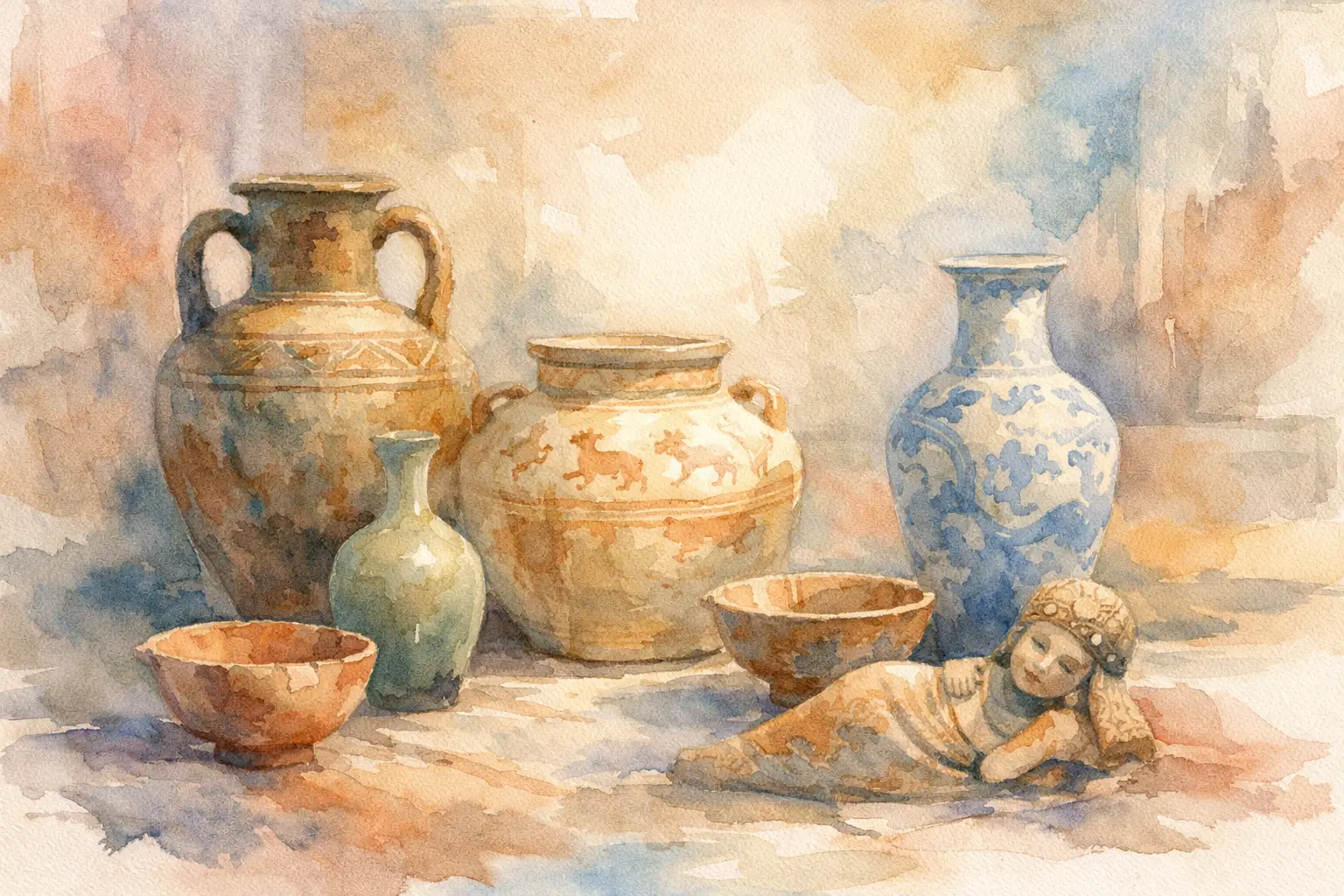
One of the great pleasures of ancient ceramics is that utility never excluded beauty. Storage jars, plates, kendi, bowls and ewers were made for use, but they were also designed with remarkable intelligence. Proportion, weight, finish and decoration all mattered. Even pieces produced in large numbers often carry a grace that feels immediate.
This is where a strong exhibition earns its authority. It does not flatten all ceramics into a single category of “old objects”. It distinguishes between everyday wares and elite porcelain, between regional kiln traditions and export-focused production, between technical innovation and stylistic continuity. That nuance changes the visitor’s experience. You stop seeing repetition and start noticing judgement, preference and evolving skill.
There is, of course, a trade-off in how such collections are presented. Focus too heavily on scholarship and many casual visitors will feel held at arm’s length. Focus only on visual appeal and the deeper significance may be lost. The best museums balance both, allowing the objects to remain beautiful while giving them enough historical context to speak fully.
A cultural outing, not a static display
For today’s museum-goer, context extends beyond the label. People increasingly want cultural experiences that feel layered and memorable rather than dutiful. An ancient ceramic exhibition can meet that expectation particularly well because it naturally combines visual pleasure, storytelling and place.
This is where a destination-led museum format becomes especially effective. When exhibitions are part of a broader heritage environment – with spaces for reflection, conversation, dining and collecting – the visit becomes more than a circuit through display rooms. It becomes an afternoon shaped by discovery. For travelling couples, families and cultural tourists, that matters. The exhibition anchors the experience, but the surrounding atmosphere deepens it.
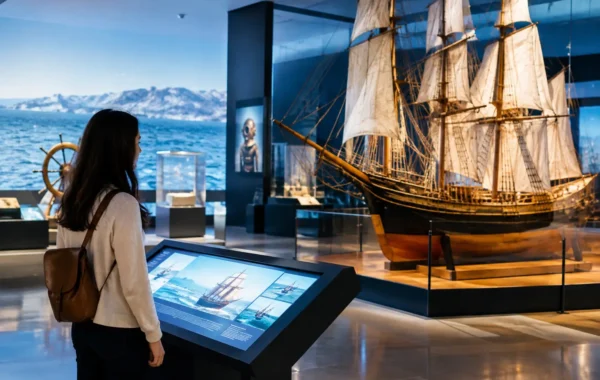
At Straits & Oriental Museum, this approach feels especially fitting because the subject itself is maritime exchange. Ceramics once moved through ports as part of lively commercial worlds. Presenting them in a setting that also embraces hospitality, art and collecting does not diminish their historical value. If done with restraint and taste, it restores some sense of their original cultural life.
Who will enjoy an ancient ceramic exhibition most
The obvious audience includes history enthusiasts, collectors and museum regulars, but the appeal is wider than that. Families often respond well because ceramics are tangible and visually clear. You do not need specialist knowledge to recognise skill, pattern and age. International visitors, meanwhile, often appreciate how such exhibitions illuminate regional history through objects rather than abstractions.
Collectors tend to look differently, focusing on glaze quality, form, dating and rarity. Casual travellers may be more interested in the drama of shipwreck recovery or the elegance of the pieces themselves. Neither response is lesser. A well-curated exhibition makes room for both. It allows one visitor to admire beauty and another to trace trade history, all within the same gallery.
That breadth is part of the category’s strength. Ancient ceramics do not demand prior expertise. They invite it.
What to look for when you visit
If you want more from the experience, slow your pace. Notice whether certain motifs repeat across different pieces. Look at the foot-rims, the shape of handles, the depth of cobalt, the restraint or exuberance of decoration. Consider which objects seem made for daily use and which suggest ceremony or status.
Then think about movement. How far might each piece have travelled? Who packed it, bought it, loaded it, expected it? Once you begin asking those questions, the gallery shifts. You are no longer looking only at ceramics. You are looking at appetite, ambition and connection across the sea.
That is why these exhibitions endure. They are not simply about preservation. They are about continuity – between maker and user, ship and shore, past trade and present memory. In the right setting, an ancient ceramic exhibition becomes less a lesson than an encounter, one that lingers long after you leave the gallery and carries into the rest of your day.