
A porcelain bowl can carry far more than tea or rice. It can hold evidence of a dynasty’s artistry, a merchant’s ambition and the sea routes that connected China with Southeast Asia. The Straits and Oriental Museum’s collection of important Ming and Qing ceramics brings these stories into view through authentic artefacts shaped by trade, travel and survival beneath the waves.
Why Ming and Qing ceramics matter
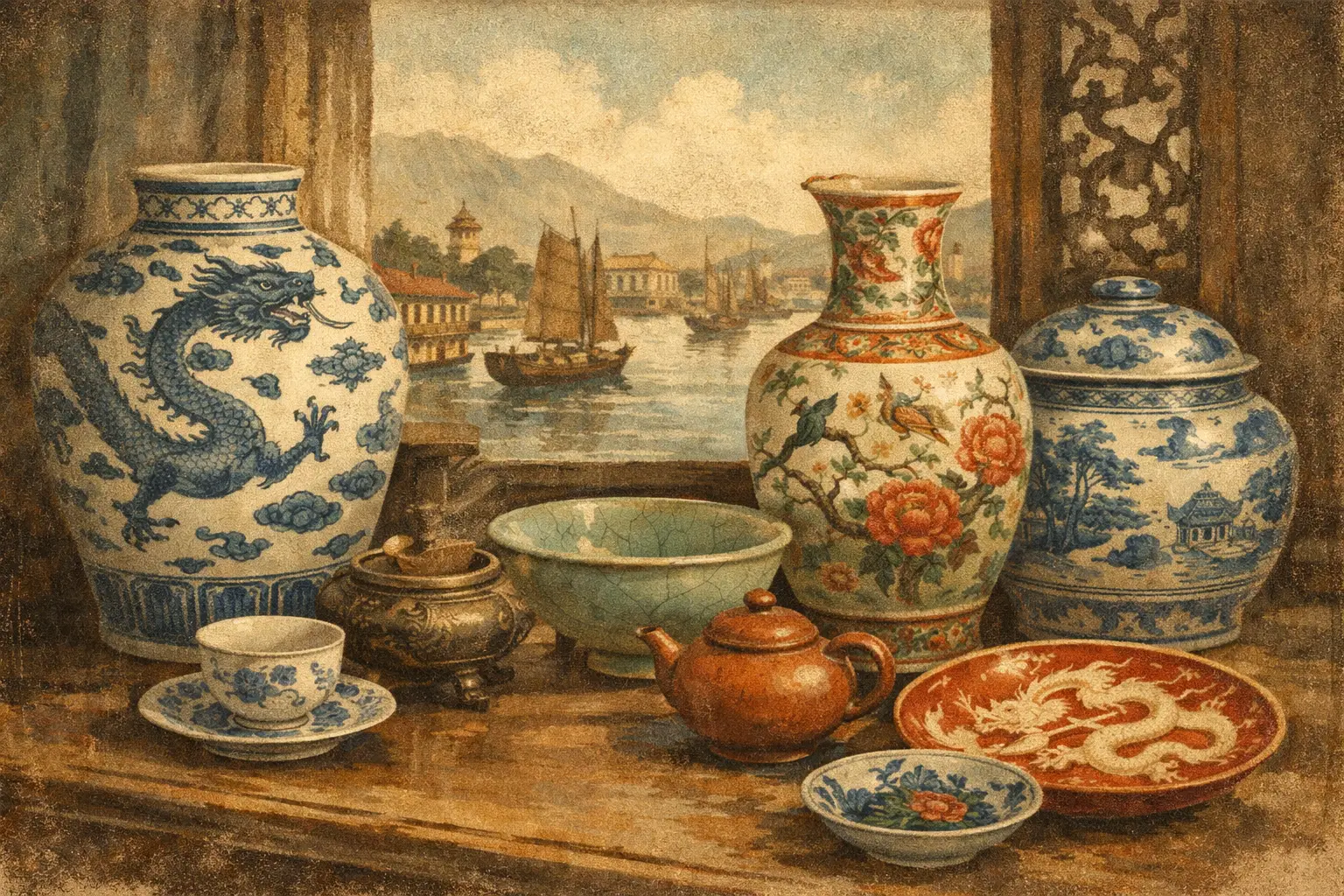
The Ming dynasty, which ruled from 1368 to 1644, is celebrated for porcelain of exceptional technical confidence and visual refinement. Its potters developed forms, glazes and painted decoration that travelled widely beyond China, becoming prized objects in courts, households and trading ports across Asia. Blue-and-white wares are perhaps the best known, yet the period’s achievement also lies in its range: dishes made for export, elegant vessels for daily use, and finely finished pieces intended to signal status.
Qing ceramics continued that tradition from 1644 to 1912, while taking colour, surface and decorative ambition in fresh directions. Delicate famille rose enamels, rich monochrome glazes and increasingly elaborate painted scenes speak to a world in which porcelain was both a luxury and a language of taste. Seen together, Ming and Qing works reveal continuity as well as change. They show how an ancient craft responded to new markets, changing patrons and wider commercial connections.
The Straits and Oriental Museum’s Ming and Qing ceramics
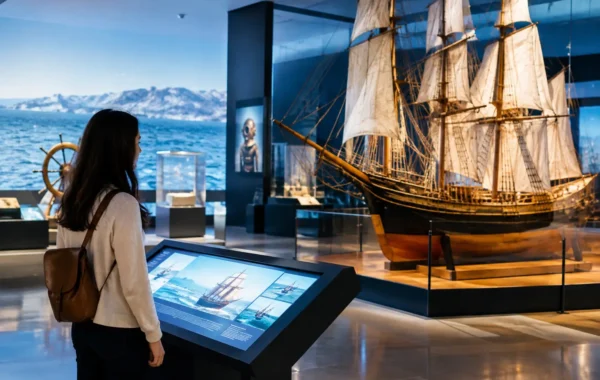
What gives this collection particular resonance is its maritime setting. Ceramics recovered from shipwreck contexts are not simply beautiful survivors. They are fragments of cargoes that once crossed busy seas, bound for ports where Chinese porcelain was collected, used, exchanged and admired. A dish that appears familiar in a display case becomes more compelling when considered as part of a voyage interrupted by storm, accident or misfortune.
The museum’s shipwreck-centred approach places each object within the larger movement of Asian maritime history. Vessels associated with renowned wrecks, including the Wanli, Xuande, Royal Nanhai, Nanyang, Turiang and Desaru, illuminate the long commercial networks that linked makers, merchants and consumers. Ming and Qing pieces sit within this broader chronology, allowing visitors to see that the trade in ceramics was not a passing fashion but a durable force in the cultural life of the region.
More than decorative objects
It is easy to be drawn first to a cobalt-blue floral motif, the gleam of a glaze or the precision of a painted border. Those details deserve attention. They can help specialists identify an approximate date, kiln tradition, intended market or period style. A form designed for export may differ subtly from one made for a domestic Chinese audience, while a repeated pattern can point towards the scale and organisation of overseas trade.
Yet the importance of shipwreck ceramics is not measured only by rarity. Some surviving pieces may have been made in considerable numbers. Their value lies in the group as much as the individual: a cargo can show what was being bought, packed and transported at a particular moment. It can reveal practical concerns, too. Stacking marks, wear, repairs and marine accretions turn porcelain into a record of handling and passage, rather than an isolated work of art.
A cultural encounter in George Town
For visitors to George Town, these ceramics offer a fitting way to encounter Penang’s relationship with the sea. The island’s history has long been shaped by arriving goods, ideas and communities. Porcelain makes that history visible in a particularly immediate form: it is tactile, finely made and recognisable as an object of everyday life, even when it has spent centuries underwater.
The experience is designed to reward both the dedicated collector and the curious first-time visitor. Look closely at the foot of a bowl, the curve of a jar or the rhythm of a painted motif. Then step back and imagine the object among hundreds of others in a ship’s hold, travelling through the Straits as part of a far-reaching exchange of goods and culture.
Allow time to move slowly through the displays. The most memorable detail may be a small imperfection in the glaze, a centuries-old brushstroke or the quiet realisation that this porcelain has already crossed an ocean before meeting your eyes.