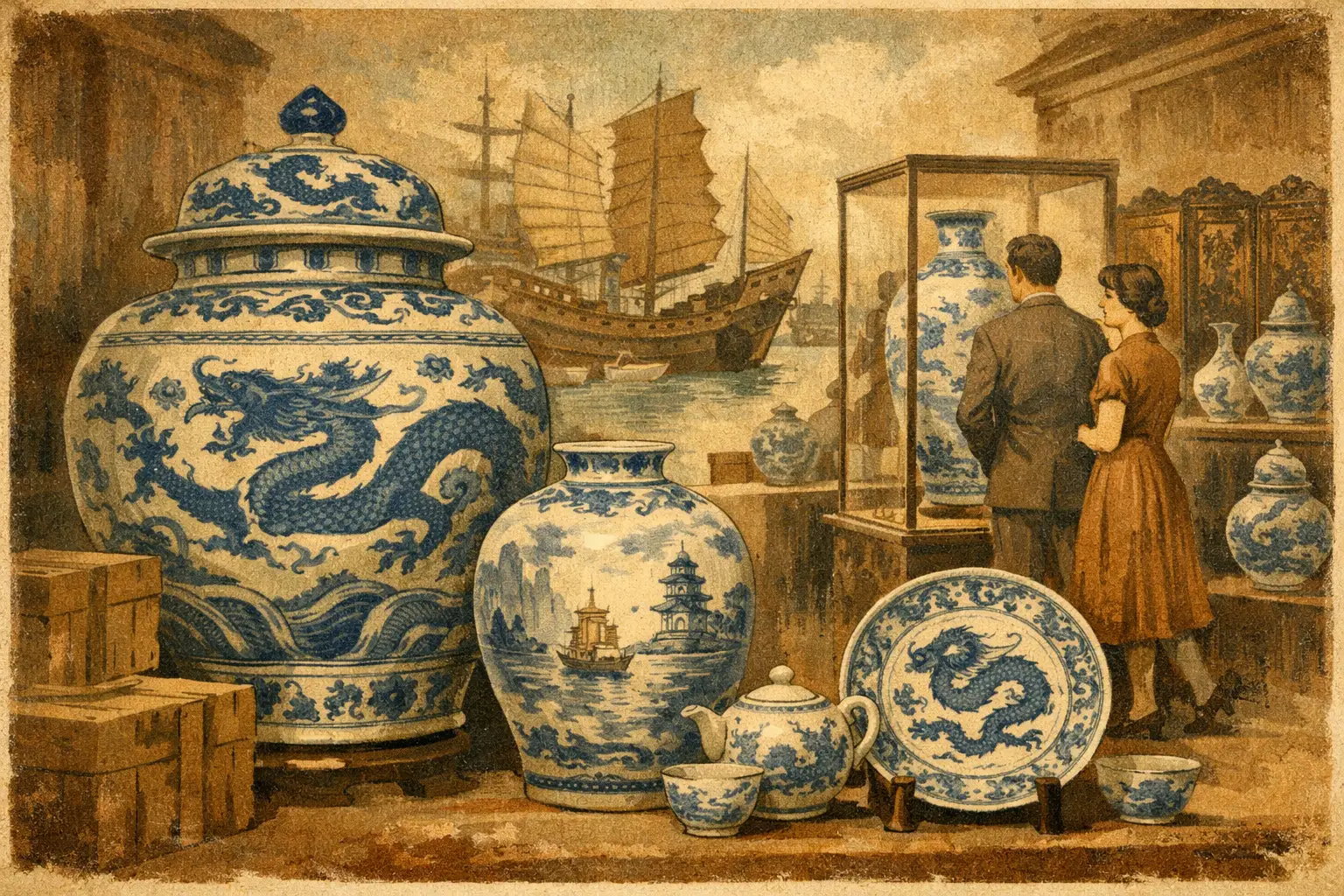

A single blue-and-white bowl can carry more than a painted scene. It can hold evidence of the kiln where it was made, the merchant who ordered it, the ship that carried it and the household that may have expected it at the other end of the sea route. A Wanli cargo exhibition example makes those connections visible, turning recovered porcelain into a vivid account of Asian maritime exchange.
For visitors, this is the enduring appeal of shipwreck ceramics. They are not merely beautiful objects preserved by chance. Together, they form a surviving record of taste, trade and movement across the seas during one of the most energetic periods in the history of Chinese export porcelain.
What the Wanli cargo tells us
The Wanli era, which ran from 1573 to 1620 during China’s Ming dynasty, was a period of remarkable ceramic production. Porcelain made for trade travelled far beyond China’s coastline, reaching markets across Southeast Asia and onwards through networks that connected ports, islands and communities.
A ship’s cargo offers something a single object cannot: scale. When bowls, dishes, jars and storage vessels are recovered together, they show that maritime commerce was organised around practical demand as much as prestige. A merchant was not simply transporting rare treasures. The vessel carried wares suited to eating, serving, storing, gifting and displaying, often in quantities that reveal a carefully judged market.
This makes a Wanli cargo especially compelling in an exhibition setting. Visitors can look beyond the familiar refinement of porcelain and consider its original purpose. Was a small bowl made for daily use? Was a large dish intended for a celebratory table? Did a pattern appeal because it reflected Chinese visual traditions, or because buyers in another port had come to favour it?
The answers are not always certain, and that uncertainty is part of the fascination. Maritime archaeology gives us remarkable evidence, but it also asks us to read objects with care. A cargo reflects what was loaded onto a ship, not necessarily every choice made by every person who encountered it.
A Wanli cargo exhibition example: from sea bed to story
The strongest exhibition approach does not present shipwreck porcelain as a line of isolated antiques. It gives visitors a way to understand how the objects worked together as cargo, and how cargo became history.
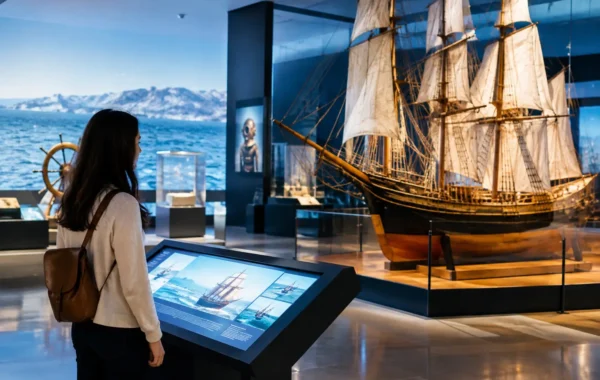
Begin with the voyage. A map, vessel image or concise route narrative can establish the geography at stake: a maritime world in which Penang, the Malay Archipelago, China and other regional trading centres were connected by monsoon winds, commercial knowledge and skilled navigation. The sea was not an empty space between destinations. It was the route through which ideas, materials and dining customs travelled.
The porcelain then becomes the centre of the story. A group of related bowls might be displayed by form and decoration, allowing visitors to notice both repetition and variation. Repetition suggests volume and trade. Variation introduces choice, changing fashions and the human hand behind production.
Labels should do more than identify a date and material. They can draw attention to a rim profile, a cobalt-blue motif, a firing mark or traces of marine encrustation. These details encourage a slower look. They also make clear that the objects have lived two very different lives: first as goods in circulation, then as archaeological artefacts recovered from the sea.
A considered display can also make room for the cargo’s absent voices. Sailors, port workers, kiln labourers, traders, brokers and buyers may not be named in the surviving record, yet their work made this commerce possible. Porcelain is often associated with imperial courts and elite collecting, but cargoes remind us that it was also part of everyday exchange across a vast region.
Why porcelain was made for the sea
Porcelain was exceptionally well suited to long-distance trade. Once fired, it was durable, relatively compact and valuable enough to justify careful packing and transport. Its bright surface and finely painted decoration also made it desirable across cultures, even where local traditions of pottery and tableware were already well established.
Yet export porcelain was never simply a Chinese product imposed on foreign markets. Demand shaped production. Forms, decorative preferences and quantities could respond to the needs of overseas buyers. A cargo therefore reveals exchange rather than a one-way journey: objects left one shore carrying the skills of Chinese potters, then entered new settings where their meanings changed.
That is why a collection of shipwreck ceramics can speak so directly to Southeast Asian history. The pieces are evidence of shared maritime worlds. They show how coastal communities and trading ports participated in networks that were international long before modern borders and freight systems.
Looking closely at the objects
Visitors do not need specialist knowledge to appreciate a Wanli cargo. A few simple questions can transform the experience.
First, look at the shape. Is the vessel shallow or deep, delicate or heavy, formal or practical? Form gives clues to function, although it should not be treated as proof on its own. Then look at the decoration. Floral sprays, landscapes, animals, symbols and geometric borders were not just ornament. They linked the object to artistic traditions and, in some cases, to ideas of prosperity, longevity or good fortune.
Next, notice the evidence of travel. Marine deposits, staining and wear can be visually striking, but they should not be mistaken for flaws that diminish an artefact. They are part of its biography. A porcelain dish that spent centuries beneath the sea carries the physical marks of that extraordinary passage through time.
Finally, stand back and look at the grouping. One piece is a work of craftsmanship. A group of pieces becomes a commercial story. The relationship between objects can reveal more than any individual rarity.
The balance between preservation and presentation
Exhibiting recovered ceramics requires restraint as well as imagination. The aim is not to make every piece appear newly made. Conservation protects the artefact and makes it legible, while preserving the signs that distinguish an archaeological object from a later decorative reproduction.
There is also a useful trade-off in interpretation. Too much technical detail can obscure the pleasure of looking; too little can reduce an important collection to a picturesque backdrop. The most memorable displays allow both responses. A visitor may first be drawn by the gleam of blue-and-white porcelain, then stay to discover its place in the history of regional trade.
Lighting, spacing and sightlines matter here. Fine painted surfaces need enough illumination to be appreciated, while reflective glaze can make close viewing difficult if the display is overlit. Clear cases and thoughtful object heights help families, collectors and first-time museum visitors engage at their own pace.
From exhibition visit to cultural outing
A shipwreck collection has particular power when it is experienced as part of a wider encounter with place. In George Town, a visit to the Straits & Oriental Museum can place maritime history within a city shaped by centuries of commerce, migration and cultural exchange. The story does not end at the display case; it continues in the streets, food and layered architecture beyond it.
For collectors, the Wanli cargo offers an informed way to look at ceramics: not only through rarity, condition or decorative appeal, but through provenance and historical context. For families, it can open a conversation about how people travelled, traded and ate in the past. For cultural travellers, it offers a tangible connection to the sea routes that helped shape the region.
The finest part of a Wanli cargo exhibition is often the moment a visitor realises that an object made centuries ago was never meant to remain still. It was designed to move across water, into homes and onto tables far from its kiln. Looking at it now, take a moment to imagine the next port it was meant to reach – and the lives waiting for it there.