
A single shard can tell you more than a shelf of labels. In ming dynasty blue and white ceramics, the brushwork of cobalt, the whiteness of porcelain body and even the curve of a bowl carry traces of court fashion, kiln skill and ocean trade. For visitors drawn to objects with both beauty and provenance, these wares are not merely decorative – they are evidence of a world connected by ambition, craftsmanship and commerce.
What makes them so enduringly compelling is their double life. They belong at once to the imperial sphere, where taste was codified and prestige mattered, and to the maritime world, where ceramics were packed in volume, shipped across Asia and beyond, and woven into daily life in distant ports. That tension between refinement and circulation is part of their lasting appeal.
Why ming dynasty blue and white ceramics still matter
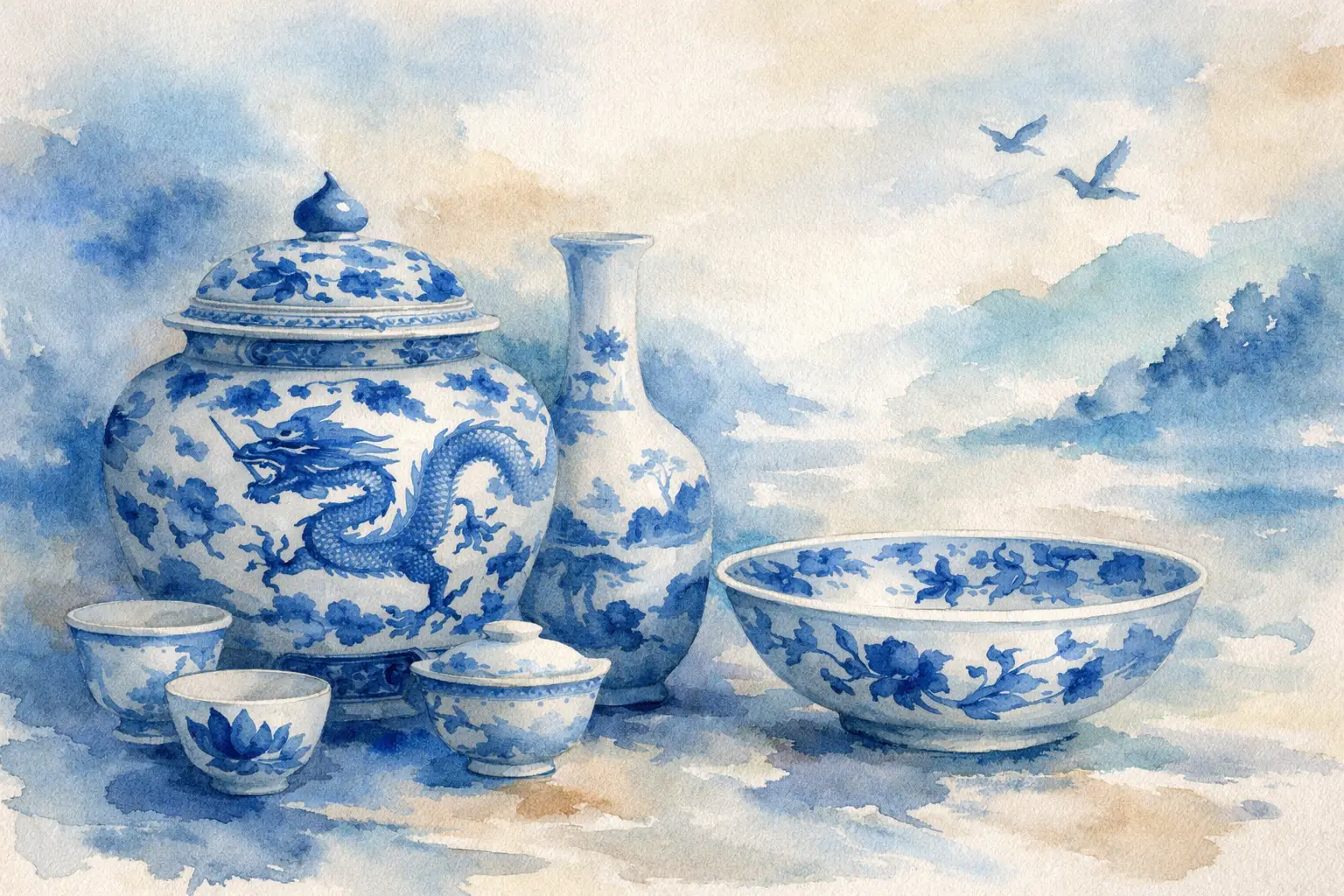
Blue and white porcelain existed before the Ming period, but under the Ming dynasty it achieved a confidence and clarity that made it one of the most recognisable ceramic traditions in the world. The contrast was simple yet striking – deep cobalt painting beneath a transparent glaze on a luminous white body. From a distance, the effect is elegant. Up close, it becomes far more revealing.
These ceramics matter because they sit at the meeting point of art and history. A dish might show disciplined floral scrolls, waves, dragons or fruit sprays, yet it also reflects technical decisions about firing, imported pigments and kiln organisation. A jar recovered from a shipwreck adds another layer again, placing the object inside the larger story of risk, demand and long-distance exchange.
For modern audiences, this is where the fascination deepens. Blue and white porcelain is easy to admire visually, but harder to dismiss as simple ornament once you understand what it travelled through and what it represented to those who handled it centuries ago.
The making of prestige
The success of Ming blue and white ware rested on materials as much as design. Fine porcelain stone and kaolin produced a hard, pale body capable of taking a smooth glaze. Cobalt, often imported from western Asia in earlier periods and later also sourced domestically, provided the vivid blue that gave these wares their identity. The chemistry mattered: too much cobalt and the decoration could blur or blacken, too little and the design lost authority.
What collectors and curators often notice first is control. The best pieces show assured painting, balanced composition and a strong relationship between form and motif. Decoration was not simply added to a vessel; it was organised around it. Borders tightened the rim, central medallions anchored the eye and repeated patterns created rhythm without making the piece feel crowded.
That said, not every Ming ceramic was made to the same standard. Imperial wares, especially those associated with court production, tend to show a level of precision that distinguishes them from commercial output. Export pieces, however, have their own significance and charm. They may be less exacting in finish, yet they often reveal how kilns adapted shapes and decoration for wider markets. The hierarchy of quality is real, but so is the value of variation.
Xuande, Chenghua and Wanli – why reigns matter
Within the Ming dynasty, certain reign periods hold particular prestige. Xuande blue and white is admired for its rich cobalt tones and powerful decorative confidence. Chenghua wares are often associated with refinement and delicacy, though many surviving attributions have long invited debate. Wanli period ceramics, produced much later, are deeply significant to maritime collections because they circulated widely through trade networks.
For the general visitor, reign names can seem like specialist shorthand. In truth, they are useful because they point to shifts in style, production and market reach. A Xuande piece may speak of courtly control and technical excellence, while a Wanli export bowl may illuminate the extraordinary scale of late Ming commerce. One is not automatically more interesting than the other. It depends whether you are looking for imperial rarity, trade history or a combination of both.
Ming dynasty blue and white ceramics at sea
This is where the subject becomes especially vivid for anyone interested in maritime heritage. Ceramics travelled because they were valued, portable and surprisingly efficient as cargo when packed in quantity. They moved from kiln centres to ports, then across regional and international routes linking China with Southeast Asia, the Middle East and Europe.
When a shipwreck yields blue and white porcelain, the objects recover more than form. They recover context. Stacks of dishes, storage jars and serving wares can show what was being traded, at what scale and, sometimes, for which markets. Marine encrustation, breakage patterns and cargo groupings all contribute to the story. A bowl in a gallery is beautiful. A bowl known to have crossed dangerous waters before resting on the seabed for centuries carries a very different emotional weight.
This is one reason shipwreck ceramics hold such power in a museum setting. They reconnect porcelain with movement. Rather than treating each object as isolated treasure, they restore it to a network of merchants, sailors, kiln workers and consumers spread across the maritime world.
How to recognise key features
You do not need to be a specialist to begin reading these objects well. Start with the blue itself. Is it soft and controlled, or dark and heaped where the pigment pooled? Does the painting feel quick and commercial, or measured and confident? Good observation often begins with these small visual clues.
Then look at the body and glaze. Ming porcelain of quality tends to feel coherent – the whiteness of the body, the translucency or density of the glaze and the painted decoration all work together. On some pieces, the glaze may sit with a slightly uneven character, particularly on export wares, and that is not necessarily a flaw. It can be part of the object’s historical truth.
Form matters too. Plates, bowls, jars and kendi-type vessels each answered different needs in different markets. The more a shape seems adapted for handling, pouring or stacking, the more likely it is telling you something practical about trade and use, not just display.
Motifs that carried meaning
The decoration on Ming blue and white wares was rarely random. Dragons could signal authority and auspicious power. Lotus scrolls, peonies and chrysanthemums carried their own associations with purity, prosperity or elegance. Waves, clouds and mountain forms linked the vessel to a larger visual language that audiences at the time would have recognised more readily than many modern viewers do.
Yet meaning is not always fixed. Some motifs were appreciated because they were fashionable, legible or simply beautiful in repetition. In export contexts, designs could also shift towards what sold well. That is worth remembering. Symbolism matters, but market preference matters too.
Why collectors and travellers are drawn to them
There is an immediate visual reason people are drawn to these ceramics: they photograph beautifully, display beautifully and retain their presence in almost any setting. But for serious collectors and culturally curious travellers, appearance is only the beginning.
Provenance changes everything. A blue and white dish with a documented maritime history offers a more layered encounter than a detached decorative object. It ties the eye to a route, a port and a moment in trade. That kind of context is increasingly valued because audiences want authenticity, not just surface appeal.
There is also a more human reason for their enduring popularity. Ming blue and white wares feel both distant and familiar. They belong to another age, yet their patterns, symmetry and functional forms still make immediate sense. You do not need specialist training to respond to them, though knowledge certainly rewards a longer look.
For a museum visitor, this creates an unusually generous experience. You can arrive with a casual curiosity and still leave with a sharpened sense of how porcelain shaped cultural exchange across the region.
Seeing them in the right setting
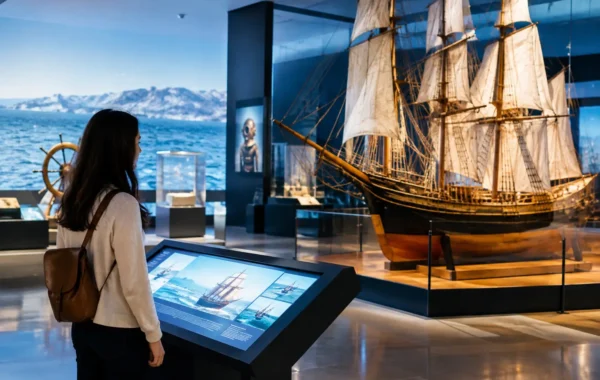
Ming ceramics are often best understood not in isolation but in dialogue with trade, archaeology and place. In that sense, a maritime collection can offer a richer encounter than a purely decorative presentation. When porcelain is shown alongside the story of shipwreck recovery and regional exchange, the objects regain their scale of significance.
At Straits & Oriental Museum, that approach feels especially resonant. Here, porcelain is not treated as static treasure behind glass, but as part of a wider story about passage, risk, taste and connection across Asian waters. For visitors to George Town seeking a cultural experience with depth as well as visual splendour, that framing matters.
The pleasure of ming dynasty blue and white ceramics lies in their balance of grace and evidence. They are refined enough to arrest the eye, and substantial enough to hold history. Stand before one long enough and it begins to do what the best artefacts always do – it narrows the distance between our world and the one that made it.