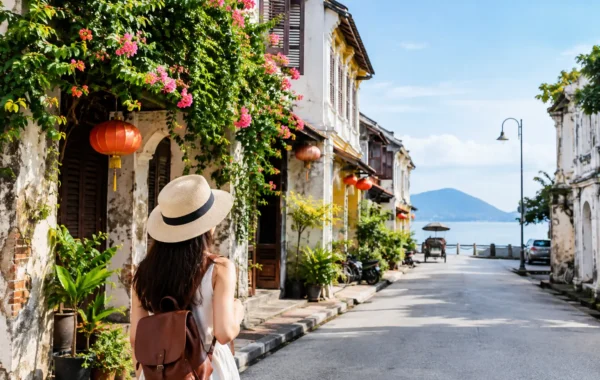

King Street is not a street to hurry through. Within a few unassuming blocks, the former trading town of George Town becomes wonderfully tangible: weathered five-foot ways, carved timber shutters, the scent of spice and incense, and façades that have witnessed generations of trade. For visitors seeking landmarks at King Street in George Town, Penang, the reward lies in reading these details as part of a much larger story.
This is a place where faith, commerce and seafaring history have long met. It is best approached not as a checklist of photogenic buildings, but as a compact heritage quarter with its own rhythm. Arrive with time to look up, pause beneath the covered walkways and let the street reveal how a port city became one of Southeast Asia’s most distinctive cultural landscapes.
Why King Street matters in George Town
Known locally as Lebuh King, King Street sits within the historic core that grew with Penang’s rise as a trading port. Its significance is not confined to a single monumental building. Rather, it lies in the close weave of old shophouses, mercantile addresses, religious communities and lanes leading towards some of the city’s most recognisable heritage sites.
For centuries, George Town drew merchants, labourers, artisans and families from across the Malay Archipelago, China, India and beyond. They brought goods, languages, beliefs and building traditions with them. King Street retains traces of that cosmopolitan inheritance in a form that remains human in scale. A doorway, a tiled threshold or a faded signboard may say as much about the city’s past as a grand civic monument.
The street also offers a useful counterpoint to the better-known waterfront. The sea made Penang prosperous, but streets such as this show where that prosperity was exchanged, stored, worshipped over and woven into daily life.
Landmarks at King Street in George Town, Penang
A considered visit begins with the architecture itself. The most memorable landmarks at King Street in George Town, Penang, are often encountered at walking pace, especially when you notice how each building meets the pavement.
Heritage shophouses and the five-foot way
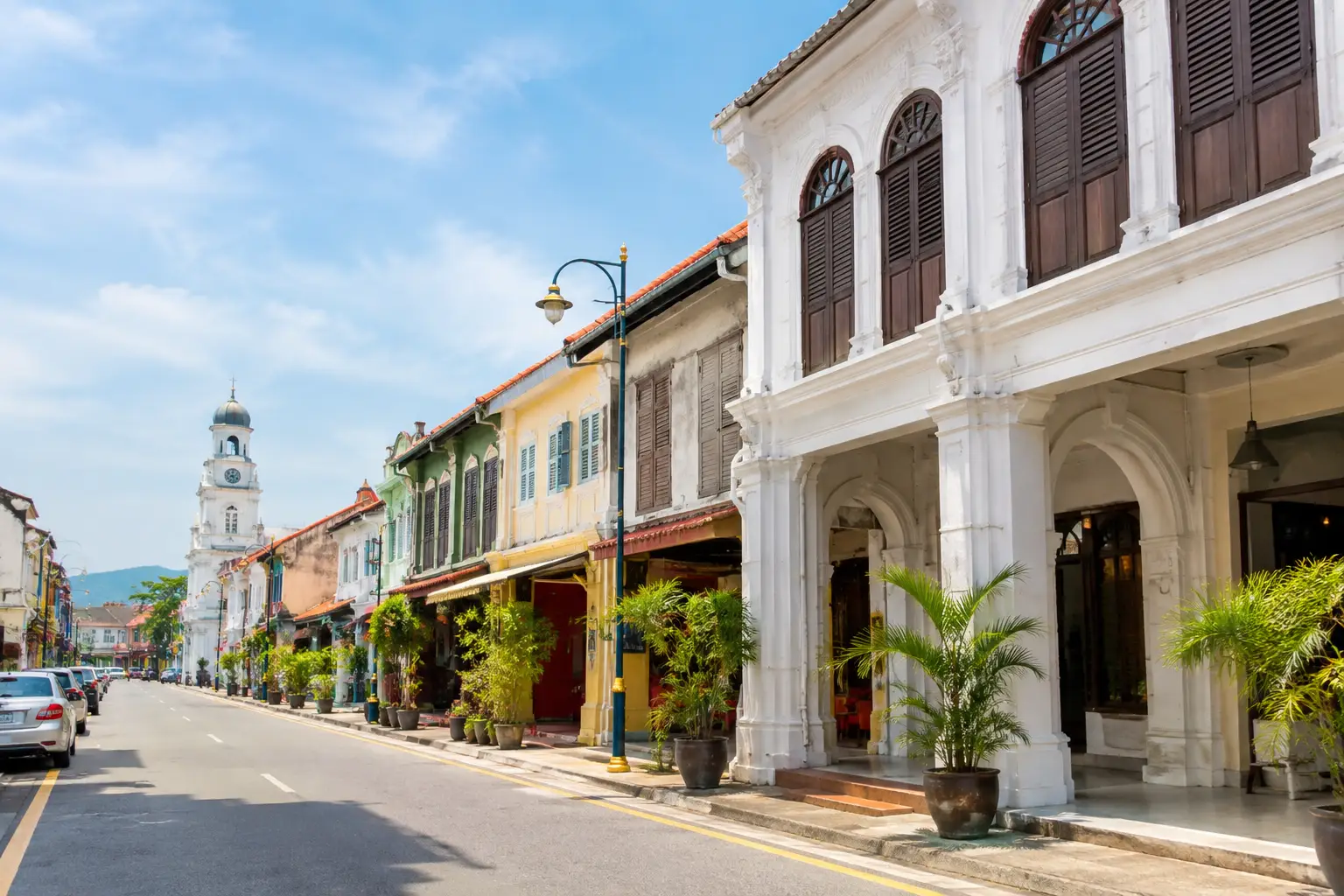
The continuous covered passage outside many old shophouses is among the defining features of George Town. These five-foot ways were designed for shade, shelter and sociability. On King Street, they frame a sequence of premises whose proportions reflect the practical needs of an entrepôt town: business at the front, family life and storage behind, with upper floors catching breezes above the bustle.
Look for painted ceramic tiles, ventilation grilles, louvred windows and plaster ornament. Some façades are carefully restored; others bear the softer patina of use. Both can be revealing. Heritage is not simply a polished surface. It is the accumulated evidence of adaptation, maintenance and occupation.
Do keep in mind that many such properties remain active homes or businesses. The best photographs are taken respectfully, without blocking entrances or treating private thresholds as a stage set.
Little India and the sacred quarter nearby
King Street forms part of a wider network of lanes associated with George Town’s Indian Muslim and South Asian communities. The neighbourhood changes character throughout the day. In the morning, shopkeepers raise shutters and food stalls begin their preparations. Later, the soundscape gathers layers: conversation, traffic, devotional music and the clink of cups from nearby cafés.
A short walk connects visitors with significant places of worship, including the Kapitan Keling Mosque and the Sri Mahamariamman Temple within the surrounding heritage quarter. Their proximity is meaningful. They reflect a city in which communities established enduring institutions near the commercial routes that sustained them.
Visitors are welcome to admire these sacred landmarks, but etiquette matters. Dress modestly, follow instructions at entrances and be attentive to prayer times or ceremonies. A heritage visit becomes richer when it respects the living purpose of the places being viewed.
A maritime story beneath the surface
King Street’s merchant architecture makes more sense when seen through Penang’s relationship with the sea. The island’s prosperity depended on vessels moving across the Straits of Melaka, carrying ceramics, textiles, spices and other prized goods between ports. What survives on land is therefore inseparable from the trade routes that crossed the water.
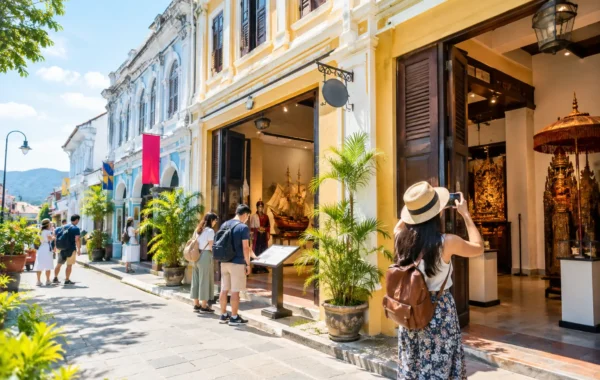
At Straits & Oriental Museum, this connection takes material form through authentic ceramics recovered from notable Asian shipwrecks. Porcelain once packed in a ship’s hold can now be viewed as evidence of taste, technology and exchange across centuries. The encounter adds a compelling dimension to a King Street visit: the street tells the story of the port from above ground, while shipwreck artefacts illuminate the maritime networks that made such streets possible.
This is also where a leisurely cultural outing can extend beyond the gallery. A museum visit, a considered meal or coffee, and time spent browsing objects and design-led keepsakes can turn an afternoon of sightseeing into something more complete. It suits couples and collectors, certainly, but families often find that tangible objects make the history easier to discuss and remember.
The lanes that lead outward
Part of King Street’s appeal is its position within a walkable historic district. From here, narrow streets open towards old trading areas, religious landmarks and civic buildings, each revealing a different chapter of George Town. It is worth resisting the urge to cover everything at once.
Instead, choose a direction and follow one thread. Architecture enthusiasts may concentrate on façades and building details. Food-minded visitors can let the street lead towards the flavours of Little India. Those drawn to history can use maritime artefacts and old commercial streets as a lens for understanding how Penang connected to the wider region. The right route depends on what you hope to carry away from the city.
How to read the street like a collector
Collectors know that provenance changes the meaning of an object. The same principle applies to a streetscape. A carved panel is more than decoration when you consider the trade, skill and household that brought it there. A ceramic tile becomes more intriguing when you remember the maritime routes that made imported materials accessible in a Penang shopfront.
Begin by looking upwards. The upper storeys often retain the clearest architectural personality, with shutters, eaves and decorative plasterwork less altered by contemporary signage. Then look down: thresholds and footways reveal where public movement met private enterprise. Finally, look across the street. Repeated proportions may suggest a coherent historical building pattern, while the differences show individual ambition and changing fortunes.
This slower way of seeing is particularly rewarding in tropical light. After rain, colours deepen and tilework shines. During the warmer part of the day, covered walkways offer relief, though interiors, galleries and cafés are often a more comfortable choice for an extended pause.
Plan a visit with care
King Street is most enjoyable early in the day, when the light is gentle and the streets are beginning to stir, or later in the afternoon when the pace softens. Midday can be hot and humid, particularly for visitors unaccustomed to Penang’s climate. Lightweight, modest clothing, comfortable shoes and water will make a considerable difference.
The area rewards walking, but it is not a museum set apart from the city. Pavements may be uneven, traffic can be close, and businesses are operating around you. Allow room for the everyday life of the neighbourhood. If you are travelling with young children or older relatives, build in stops rather than trying to cover the entire heritage zone in one stretch.
There is also a trade-off between planning and spontaneity. A timed itinerary helps if you have only a day in George Town, especially if you wish to pair museums, dining and places of worship. Yet leaving an hour unassigned can lead to the best discoveries: a handsome old sign, a quiet courtyard, a bowl of something fragrant, or a conversation that reframes the street before you.
King Street does not demand that visitors know every dynasty, trade route or architectural term. It asks only for attention. Give it that, and a short walk becomes a journey through the lived history of a port city still shaped by the stories it received from the sea.