
The first surprise in any serious ceramics exhibition review is often the quietness of the objects. A bowl may be no larger than two hands. A blue-and-white dish may have spent centuries beneath the sea. Yet together, these works carry the scale of empires: the ambitions of merchants, the skill of kiln workers, the tastes of distant households and the hazards of maritime trade.
At Straits & Oriental Museum, shipwreck ceramics are not presented as decorative curiosities detached from their past. They are evidence of a region shaped by the sea. The experience asks visitors to look closely, then look beyond the glaze: towards the trading routes that connected China, Southeast Asia and the wider world long before modern borders and container ports.
Ceramics Exhibition Review: More Than Beautiful Objects
A strong ceramics exhibition has to solve a particular challenge. Ceramics reward patient looking, but their most compelling stories can be invisible at first glance. Without context, a celadon jar or a porcelain saucer risks becoming simply “old and beautiful”. With thoughtful interpretation, it becomes a record of technology, taste, commerce and survival.
That distinction matters especially for shipwreck material. These objects were not originally made for museum cases. They were packed in holds, stacked for transport and sent across unpredictable waters to meet buyers in faraway ports. Their journey was interrupted by disaster, and their recovery centuries later adds another chapter to their story.
The most memorable displays allow both truths to sit together. There is pleasure in the delicacy of a painted floral border, the restraint of a monochrome glaze or the reassuring weight of a storage vessel. There is also the more profound knowledge that such pieces travelled as cargo, carrying culture alongside commerce.
The Sea as Part of the Collection
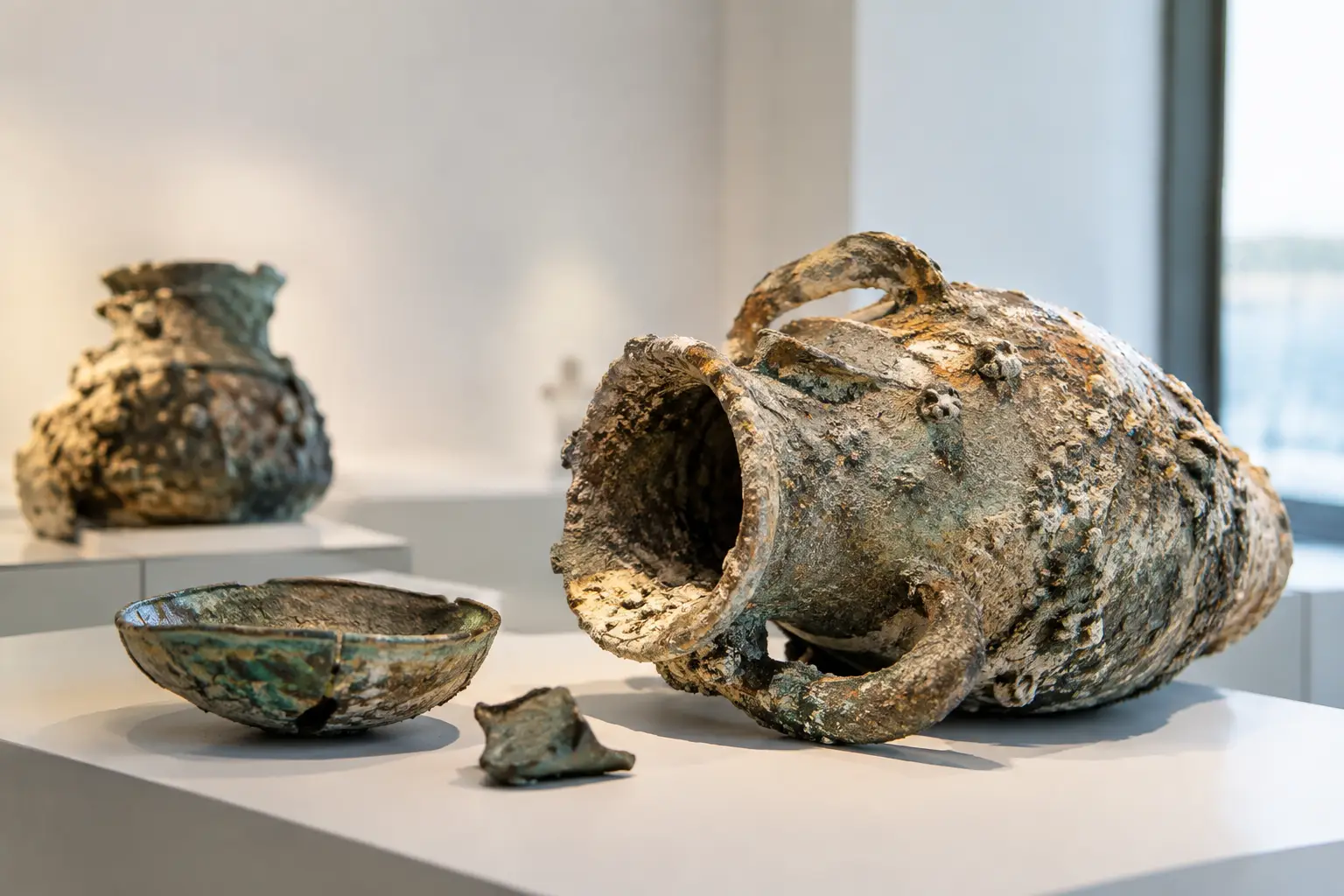
Shipwreck ceramics possess a visual language of their own. Some surfaces remain remarkably bright, as if their makers had only recently lifted them from the kiln. Others bear mineral accretions, softened edges or traces of their time underwater. These marks are not flaws to be overlooked. They make the sea visible.
This creates a useful tension for visitors. A pristine porcelain bowl demonstrates the precision of its original manufacture. A sea-worn fragment speaks more directly of archaeology, recovery and time. Neither is inherently more valuable as an exhibition object. Each reveals a different aspect of the same maritime history.
The finest presentation does not force visitors to choose between art and artefact. It recognises that a vessel can be both. The potter’s hand, the merchant’s calculation and the diver’s discovery are all present in a single object. For families and first-time museum visitors, this makes the collection immediately approachable. For collectors and historians, it offers a more layered encounter with provenance and material culture.
Reading Form, Glaze and Decoration
Ceramics repay attention to detail. Shape can suggest purpose: shallow dishes for serving, jars for storage, ewers for pouring, covered boxes for precious contents. Decoration can indicate fashion, patronage or intended markets. Even an apparently simple bowl may reveal a sophisticated understanding of proportion, firing and glaze chemistry.
Blue-and-white porcelain remains especially arresting because its visual clarity crosses centuries. Cobalt-painted flowers, scrolls and landscapes retain their energy under gallery lighting, while the white ground gives the decoration an almost contemporary crispness. Celadon, by contrast, asks for a slower gaze. Its green tones shift with the light, ranging from soft jade to deeper olive, and its appeal lies as much in surface and form as in overt ornament.
Visitors need not arrive with specialist knowledge to appreciate these differences. The value of a well-curated exhibition is that it gives the eye somewhere to begin. Notice the rim of a dish. Compare the brushwork on two pieces. Consider why dozens of similar bowls may have travelled together. These small acts of looking turn a visit from a walk past cabinets into a genuine encounter.
What Gives the Exhibition Its Weight
The historical range of shipwreck collections is one of their greatest strengths. Works associated with wrecks such as the Wanli, Turiang, Royal Nanhai, Nanyang, Xuande and Desaru reveal that maritime exchange was not a single event but a long, changing pattern. Styles evolved, cargoes adapted and trading relationships shifted, but ceramics remained among the most enduring travellers.
This breadth also avoids a common weakness in decorative arts displays: the temptation to treat every object as isolated luxury. Many ceramics were desirable, but they were also functional, traded in volume and made for real homes and markets. A plate can be exquisite without having been unique. In fact, the repeated forms of export ware are part of the story. They show how workshops responded to demand at scale, producing goods that could move across oceans while retaining recognisable artistic traditions.
There is a trade-off here. Visitors seeking only spectacular masterpieces may find that the quieter objects require more attention. Yet those pieces often deliver the fuller historical reward. A group of everyday bowls can say more about consumption, shipping and regional connections than one exceptional display piece ever could.
A Gallery Experience That Invites Curiosity
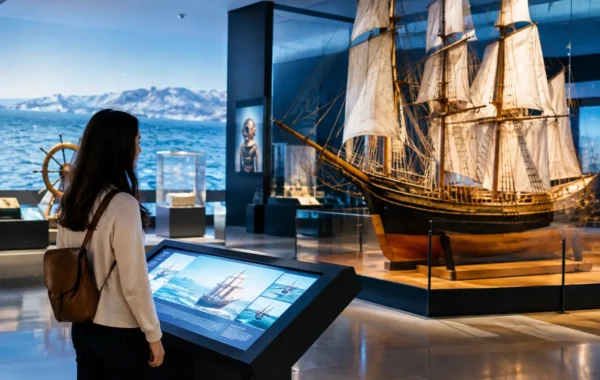
A museum devoted to maritime ceramics works best when the setting feels considered rather than crowded. Space around the objects is essential. It lets a vessel’s silhouette register, makes comparison possible and gives visitors time to notice changes in colour, scale and craftsmanship.
Interpretation should be confident but never overbearing. Dates, origin, material and wreck history provide necessary anchors, while the broader narrative should leave room for discovery. Not every mystery needs to be resolved. There is something fitting about objects recovered from the seabed retaining a degree of uncertainty: who selected them, who expected them, and what conversations they might have entered had their voyage ended differently.
For travellers spending time in George Town, this perspective adds a valuable dimension to the city’s heritage. Penang’s story has always been connected to movement – of people, goods, ideas and appetites across the Straits. A ceramics gallery makes that history tangible. It turns vast networks of trade into objects that can be examined at arm’s length.
Why It Resonates Beyond the Gallery
The most successful heritage experiences do not ask visitors merely to admire the past. They help them recognise its continuing presence. Modern tableware, global supply chains and the instinct to bring home a meaningful object all have older counterparts in these cargoes of porcelain and stoneware.
That relevance is particularly clear when a museum visit becomes part of a wider cultural outing. Time spent studying a cargo of bowls can sharpen one’s appreciation of a meal afterwards: the ritual of serving, the choice of vessel, the beauty of useful things. It can also change the way a visitor approaches a gift or collectible, encouraging attention to craft, origin and story rather than novelty alone.
This is where an integrated heritage destination has a genuine advantage. It can preserve the gravity of archaeology while making room for hospitality, conversation and contemporary cultural life. The aim is not to turn history into a backdrop. It is to let history remain part of the day after visitors leave the gallery.
A Considered Verdict on Shipwreck Ceramics
The lasting strength of a shipwreck ceramics exhibition lies in its ability to make distance feel intimate. Centuries, oceans and trading systems can seem abstract until they are distilled into the curve of a cup, the sheen of a glaze or a pattern still visible after a long silence underwater.
This kind of collection will reward different visitors in different ways. Collectors may be drawn to the technical distinctions between wares and periods. History enthusiasts may follow the maritime routes. Children may remember the simple drama of treasure recovered from a wreck. None of these responses is lesser than another, provided the exhibition offers enough depth for curiosity to grow.
Take your time with the less flamboyant pieces. The object that first appears modest may be the one that best reveals the journey: made by skilled hands, packed among hundreds of others, carried across the sea and returned at last to tell its story.