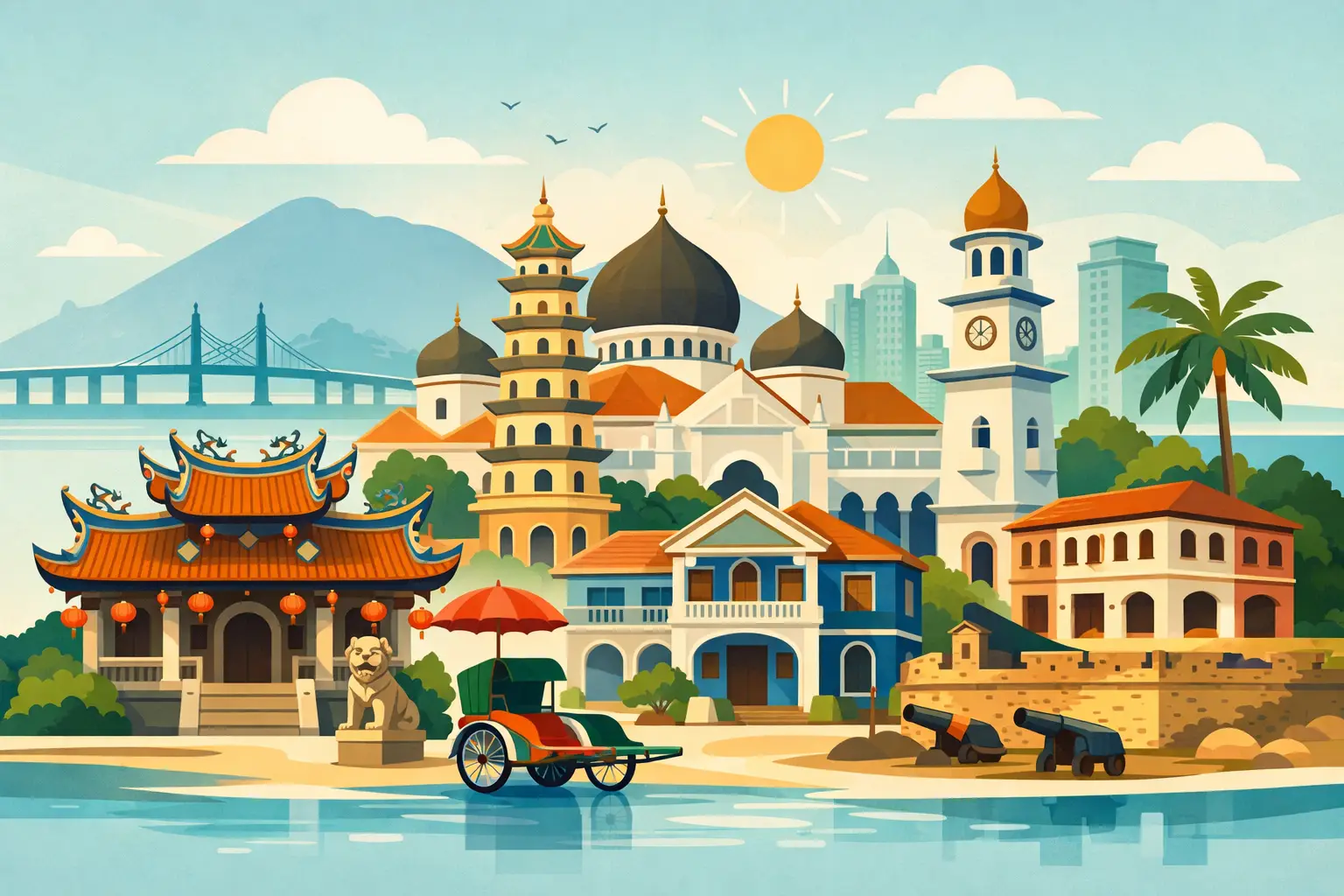

The best heritage attractions in Penang are not simply places to tick off on a sightseeing list. They are the rooms, streets, temples and collections that explain why George Town still feels layered, lived-in and unmistakably connected to the wider maritime world. For visitors who want more than a quick photograph, Penang’s heritage is best experienced through sites that reveal trade, migration, craftsmanship and daily life in compelling detail.
What makes the best heritage attractions in Penang worth your time
Penang rewards travellers who look closely. A beautifully restored façade may lead to a story about Hokkien merchants, Indian Muslim traders, Peranakan households or British colonial administration. A temple may hold generations of devotion within a single courtyard. A museum may do more than display objects – it can give shape to the sea routes, exchanges and encounters that made this island what it is.
That is why the strongest heritage attractions in Penang are not all the same. Some are architectural landmarks. Some are deeply spiritual places. Others are interpretive spaces that help visitors understand how Penang became one of Southeast Asia’s most fascinating historic ports. The right itinerary depends on whether you are drawn to interiors, collections, family history, religious art or urban atmosphere.
1. Pinang Peranakan Mansion
If you want an immediate sense of Penang’s social history expressed through design, etiquette and domestic life, this is one of the most rewarding stops on the island. The mansion offers a richly detailed glimpse into Peranakan culture, where Chinese heritage and local influences shaped a distinctive world of fashion, dining, ceremony and taste.
What makes it memorable is its theatrical completeness. Rather than presenting heritage as something distant or austere, it places visitors inside lavish rooms filled with furniture, porcelain, textiles and personal objects. It feels intimate as well as impressive. Families often enjoy it because there is enough visual detail to keep younger visitors engaged, while design lovers and cultural historians will appreciate the layers of meaning behind each decorative choice.
2. Khoo Kongsi
Among Penang’s most celebrated clan houses, Khoo Kongsi stands out for its craftsmanship and ceremonial presence. The carved woodwork, elaborate roofline and decorative detailing are remarkable, but the site matters for more than its beauty. It tells the story of clan associations that helped Chinese migrant communities organise support, preserve identity and establish social order in a new environment.
There is a grandeur here that photographs never quite capture. Arriving in the courtyard and seeing the temple-like structure in person gives a better sense of how community, faith and prestige were intertwined. For visitors with limited time, this is one of the clearest examples of heritage that is both architecturally striking and historically revealing.
3. Cheong Fatt Tze Mansion
Known for its indigo façade and refined restoration, Cheong Fatt Tze Mansion offers a different lens on Penang’s past – one shaped by global commerce, elite ambition and cosmopolitan taste. The house reflects a period when Penang was deeply connected to regional and international trade networks, and its architecture carries influences that speak to those wider horizons.
This attraction suits visitors who prefer guided interpretation over wandering independently. The stories behind the building’s construction, ownership and revival are part of the appeal. It is also one of the best places to consider heritage as something actively preserved rather than merely inherited. There is always a balance in restored sites between atmosphere and presentation, but here the storytelling is generally strong enough to justify the polish.
4. Fort Cornwallis
Fort Cornwallis is often approached as a colonial landmark, but it is best understood as part of Penang’s early strategic history. It marks the island’s role within British expansion and maritime defence, even if the fort itself feels more open and understated than visitors sometimes expect.
This is one of those attractions where expectations matter. If you are looking for an imposing military fortress on a European scale, it may feel modest. If you arrive interested in the political beginnings of colonial Penang and the coastal geography that shaped them, it becomes more rewarding. It works particularly well as part of a broader day spent tracing the island’s port history.
5. The Blue Mansion’s surrounding heritage quarter
While the mansion itself deserves attention, the surrounding streets also form part of the experience. One of the pleasures of heritage travel in Penang is that major landmarks are rarely isolated. Step outside and you are still within an urban fabric of shophouses, old trading streets and layered communities.
This matters because Penang’s heritage is not confined to museum walls. The quarter around many of George Town’s best-known sites shows how commerce, religion and domestic life sat alongside one another. If you prefer a slower, more atmospheric approach, allow time between formal attractions. Some of the most memorable moments come from looking up at upper-storey shutters, catching the scent of incense from a side street, or noticing how a row of shopfronts still carries its original rhythm.
6. Penang State Museum and Gallery
For visitors who want institutional context, the Penang State Museum and Gallery has long held an important place in interpreting the island’s cultural and historical development. Depending on renovation schedules and gallery access, the experience can vary, so it is sensible to check current arrangements before planning around it.
When available, it provides a broader overview than house museums or single-site landmarks can offer. This makes it useful for first-time visitors trying to build a historical framework. It may not have the intimacy of a mansion or the devotional energy of a temple, but it helps connect individual attractions into a wider narrative.
7. Kapitan Keling Mosque
Penang’s heritage is inseparable from its pluralism, and Kapitan Keling Mosque is central to that story. Built by Indian Muslim traders and settlers, it reflects the role of Muslim communities in shaping the island’s commercial and cultural life. Architecturally, the mosque has presence and elegance; historically, it anchors a vital strand of George Town’s identity.
As with any living religious site, visitors should approach respectfully and understand that atmosphere changes with prayer times and daily use. That is part of its significance. Unlike heritage spaces preserved mainly for observation, this is a place where tradition continues in the present.
8. Sri Mahamariamman Temple
This temple is one of the most vivid expressions of Penang’s Indian heritage, with intricate iconography and an active religious life that gives the area real energy. It offers a strong contrast to the domestic grandeur of mansions and the formality of colonial sites, reminding visitors that heritage in Penang is not singular in style or origin.
Even a brief visit can be visually arresting, but it is worth spending a little longer to absorb the details. The carvings, colour and ritual elements speak to continuity rather than nostalgia. For many travellers, this is where Penang’s multicultural heritage feels most immediate.
9. The heritage shophouses of Armenian Street and beyond
Not every heritage attraction needs a ticket. The shophouses and streetscapes of George Town remain among Penang’s finest cultural assets because they show how urban heritage works as a lived environment. Armenian Street, along with neighbouring lanes, offers façades, courtyards and streets that reveal successive eras of trade and adaptation.
There is, however, a trade-off. Popular streets can feel crowded, and commercial activity sometimes pushes the area towards spectacle. Yet that does not erase their value. If you visit early or pause beyond the busiest corners, you can still sense the proportions, materials and rhythms that made these streets central to Penang’s mercantile life.
10. Maritime collections that tell Penang’s wider story
To understand Penang fully, it helps to look beyond land-based architecture and consider the sea that made the island prosper. Maritime heritage adds a crucial dimension because trade, migration and cultural exchange arrived by ship long before they were written into guidebooks. Museums and curated collections that foreground ceramics, trade goods and shipwreck discoveries can illuminate this world with unusual clarity.
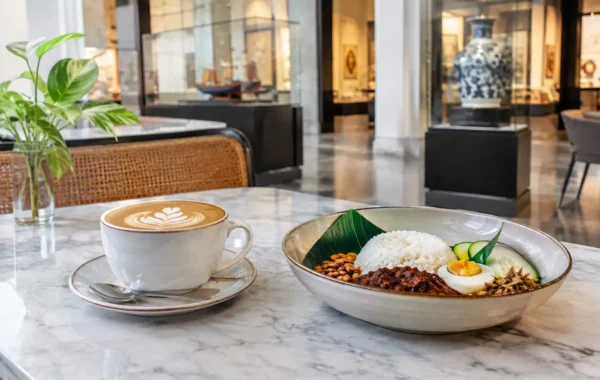
Among the most distinctive experiences is Straits & Oriental Museum, which presents authentic porcelain and ceramic artefacts recovered from historic Asian shipwrecks. It offers a more specialised perspective than conventional local history attractions, and that is precisely its appeal. For visitors interested in Penang as a maritime crossroads rather than only a colonial or architectural destination, such collections add depth, rarity and a sense of regional significance.
How to choose the best heritage attractions in Penang for your trip
If this is your first visit, a balanced approach works best. Pair one mansion, one clan house, one religious site and time on foot through the heritage streets. That gives you architecture, social history, living tradition and street-level atmosphere in a single day.
If you are travelling with family, choose sites with strong visual impact and accessible storytelling. The Peranakan interiors, the ornament of Khoo Kongsi and a gentle walk through the old quarter are usually easier than a schedule weighted too heavily towards text-led galleries. If your interests are more scholarly or collector-driven, make room for museums and maritime collections where objects carry the narrative.
There is also the question of pace. Penang’s heritage is richest when not rushed. Two or three carefully chosen attractions can be more satisfying than a long checklist, especially in the tropical heat. Leave space for a proper meal, a pause over coffee, and the kind of unplanned detour that turns a good cultural outing into a memorable one.
Penang gives generous rewards to visitors who prefer substance over speed. Choose the places that sharpen your sense of the island’s many histories, and you will leave with more than photographs – you will leave with a story worth carrying home.