
Few visitors realise that George Town was not only a trading port of global consequence, but also a political crossroads where modern Chinese history was quietly shaped. Dr Sun Yat Sen’s connection to Penang, George Town in English and Chinese version matters because it reveals how this island city became a vital overseas base for one of Asia’s most important revolutions.
For travellers who know Penang for its layered streetscapes, shophouses and maritime past, Sun Yat Sen adds another dimension to the story. His presence here was not ceremonial. It was practical, strategic and deeply tied to the Chinese communities of the Nanyang, whose commercial networks, philanthropy and political convictions helped sustain the revolutionary movement that would eventually bring down the Qing dynasty.
Why Penang mattered to Dr Sun Yat Sen
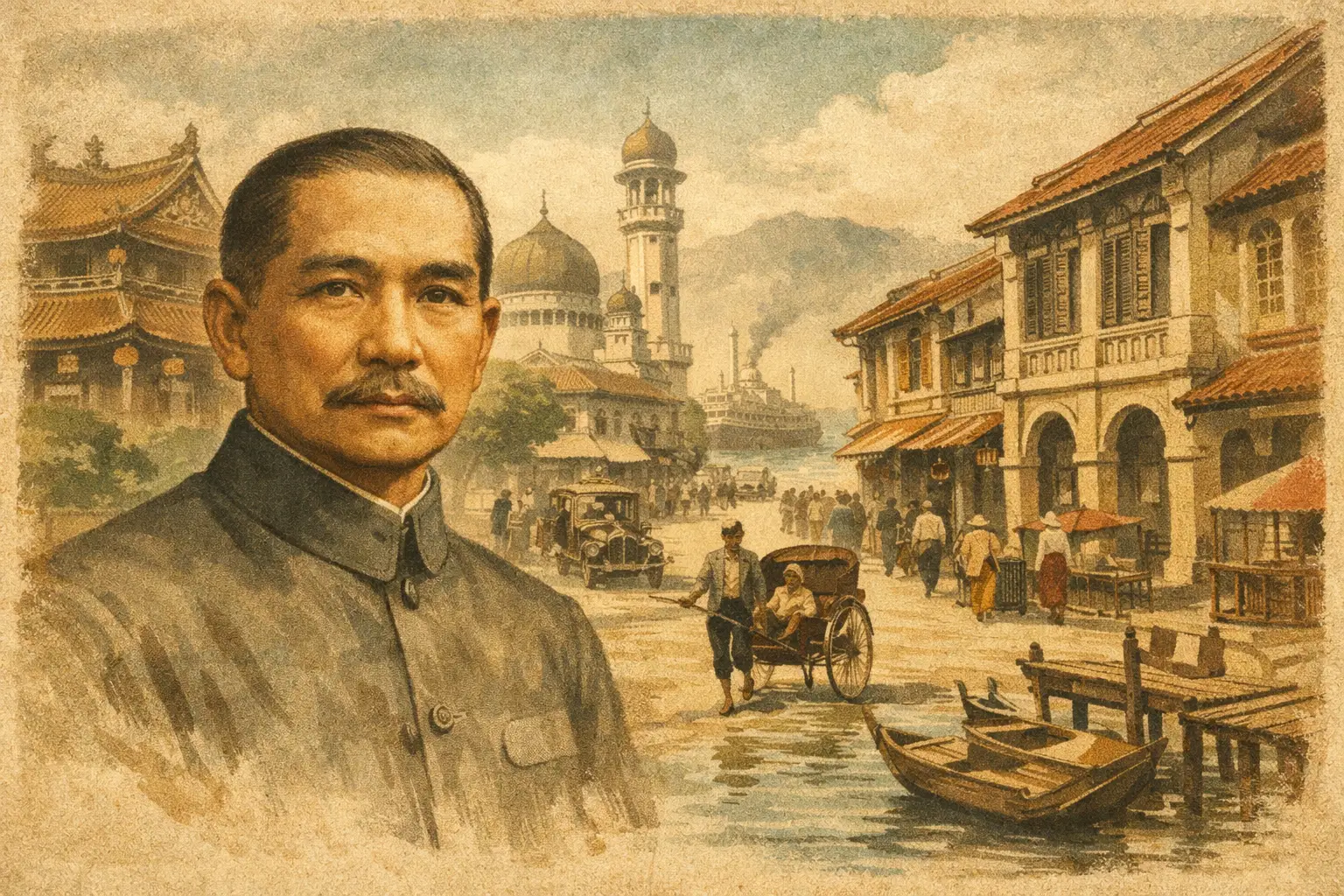
At the start of the twentieth century, Penang stood at the intersection of sea routes, ideas and diasporic loyalties. It was a British port with strong connections to China, Singapore, Burma, Siam and the wider Malay world. Merchants, labourers, intellectuals and reformers moved through its harbour, carrying not only goods but also newspapers, funds and political news.
This made George Town especially useful to Sun Yat Sen. He needed places beyond Qing control where he could meet supporters, raise money and organise networks with a measure of safety. Penang offered exactly that. The city’s Chinese merchant class included influential figures willing to back nationalist reform, and its cosmopolitan environment gave revolutionary ideas room to circulate.
Sun Yat Sen visited Penang more than once, but his 1910 stay is the most historically significant. During this period, he worked to consolidate support among overseas Chinese communities and prepare for a new phase in the anti-Qing struggle. The meetings held here were not isolated gatherings. They formed part of a wider web of revolutionary coordination across Southeast Asia.
The 1910 Penang Conference and revolutionary planning
The key episode in Dr Sun Yat Sen’s connection to Penang, George Town was the Penang Conference of 1910. Held at what is now remembered as Sun Yat Sen Museum Penang, the meeting brought together supporters and sympathisers committed to the revolutionary cause. Here, fundraising and planning were advanced for the Second Guangzhou Uprising, also known as the Huanghuagang Uprising.
The uprising itself would not succeed militarily, and that point matters. Penang was not the place where victory was declared. It was the place where resolve was strengthened, money was gathered and overseas backing was transformed into action. Revolutionary history is often told through battles and declarations, yet it also depends on quieter rooms where alliances are built and risks are shared.
Penang’s role was therefore substantial rather than symbolic. Funds raised among the overseas Chinese in the region helped support revolutionary operations. Just as importantly, Sun Yat Sen’s presence lent urgency and legitimacy to the movement. For local supporters, this was not distant politics unfolding in China alone. It was a cause in which Penang could take part directly.
The house at Armenian Street
No discussion of this history is complete without the house at 120 Armenian Street. Today, it is closely associated with Sun Yat Sen’s Penang story, and for many visitors it provides the clearest physical link to his time in the city. The building is often referred to as Sun Yat Sen Museum Penang, though its significance lies in more than the label. It stands as a witness to how George Town’s domestic and commercial spaces also served political purposes.
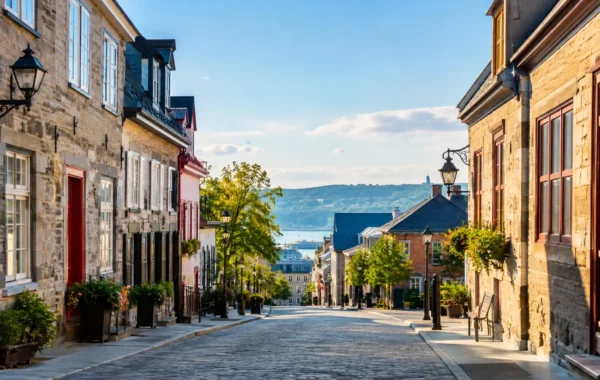
Like many heritage buildings in the city, the house reflects Penang’s layered urban fabric. Its architectural character belongs to the world of Straits port cities, where trade, migration and community life converged in compact streets. That Sun Yat Sen and his supporters worked within such a setting is entirely fitting. The revolutionary movement in Southeast Asia did not grow apart from everyday urban life. It grew through merchant homes, clan associations, businesses and social circles.
For visitors, Armenian Street offers an unusually vivid way to understand the period. It is one thing to read that Penang supported a revolution. It is another to stand in a preserved heritage environment and imagine conversations that linked this island to events in Guangzhou, Hong Kong, Singapore and beyond.
Penang’s Chinese community and the Nanyang connection
Sun Yat Sen’s work in Penang cannot be separated from the wider Nanyang Chinese diaspora. Across Southeast Asia, overseas Chinese communities were economically influential and socially organised through associations, schools, newspapers and commercial networks. These structures gave reformist and revolutionary politics a ready-made channel.
In Penang, community leaders were not uniform in their views. Some were cautious. Some preferred reform over revolution. Others were strongly committed to Sun Yat Sen’s republican vision. That mix is worth remembering, because it prevents the story from becoming too simple. Support for the revolution was real, but it was debated, negotiated and built through persuasion.
This is one reason Penang’s connection remains so compelling. It shows the city not as a passive backdrop but as an active participant in transnational history. Money raised here travelled outward. Ideas discussed here influenced action elsewhere. In a port city shaped by movement across the sea, political commitment moved in much the same way as ceramics, textiles and newsprint – through routes of exchange.
For a heritage destination such as George Town, this is especially resonant. The city’s past has always been larger than its shoreline. Maritime trade brought people and objects; political history brought ambition, sacrifice and change. Together, they form a richer account of Penang’s place in the region.
Dr Sun Yat Sen’s connection to Penang, George Town in English and Chinese version
For readers seeking Dr Sun Yat Sen’s connection to Penang, George Town in English and Chinese version, the core historical points are straightforward. In English, Sun Yat Sen visited Penang as part of his revolutionary efforts, met supporters in George Town, and used the city as a base for fundraising and planning linked to the 1910 Penang Conference and the Second Guangzhou Uprising.
In Chinese, this connection is commonly expressed in terms of Sun Zhongshan and Qiaosheng support for the Xinhai Revolution. A concise version would be: 孙中山与槟城乔治市关系密切。1910年,他在槟城召开会议,联络南洋华侨,筹募革命经费,并策划支援广州起义。乔治市因此成为辛亥革命海外运动的重要据点之一。
That bilingual framing matters for a city like Penang, where heritage is multilingual by nature. English helps international visitors understand the broad significance, while Chinese preserves the cultural and historical vocabulary through which many communities have long remembered this chapter.
Why this story still matters in George Town
Sun Yat Sen’s Penang chapter still carries weight because it expands how visitors understand the city. George Town is often celebrated for food, architecture and street life, and rightly so. Yet its significance also lies in the fact that global history happened here in rooms, streets and associations that still feel human in scale.
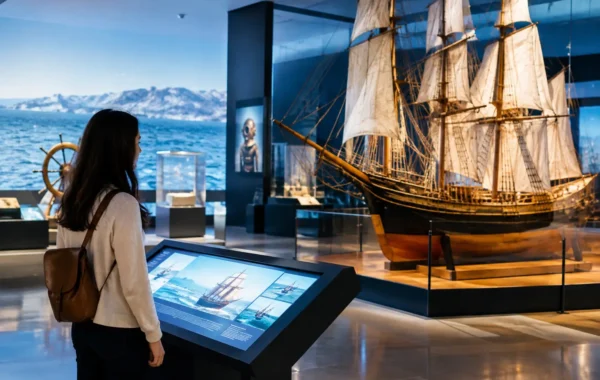
This is what makes heritage in Penang especially rewarding. The city does not present history as something sealed behind glass. It appears in facades, neighbourhoods, institutions and shared memory. A revolutionary meeting house, a maritime collection, a preserved street – each offers a different route into the same larger truth: Penang has long been connected to the wider currents of Asia.
For those drawn to cultural experiences with depth, Sun Yat Sen’s legacy offers more than a historical footnote. It reveals George Town as a place where commerce, migration and political imagination met. That combination is central to understanding Penang itself.
Visitors who are already interested in trade routes, diasporic exchange and the movement of people across the region may find this story particularly rewarding. It sits naturally alongside the wider heritage of the island, where every artefact, building and street can point to a larger world beyond the harbour. In that sense, Sun Yat Sen’s connection to Penang is not an isolated tale from the past. It is part of the same living fabric that continues to make George Town one of Southeast Asia’s most intellectually and culturally satisfying places to explore.