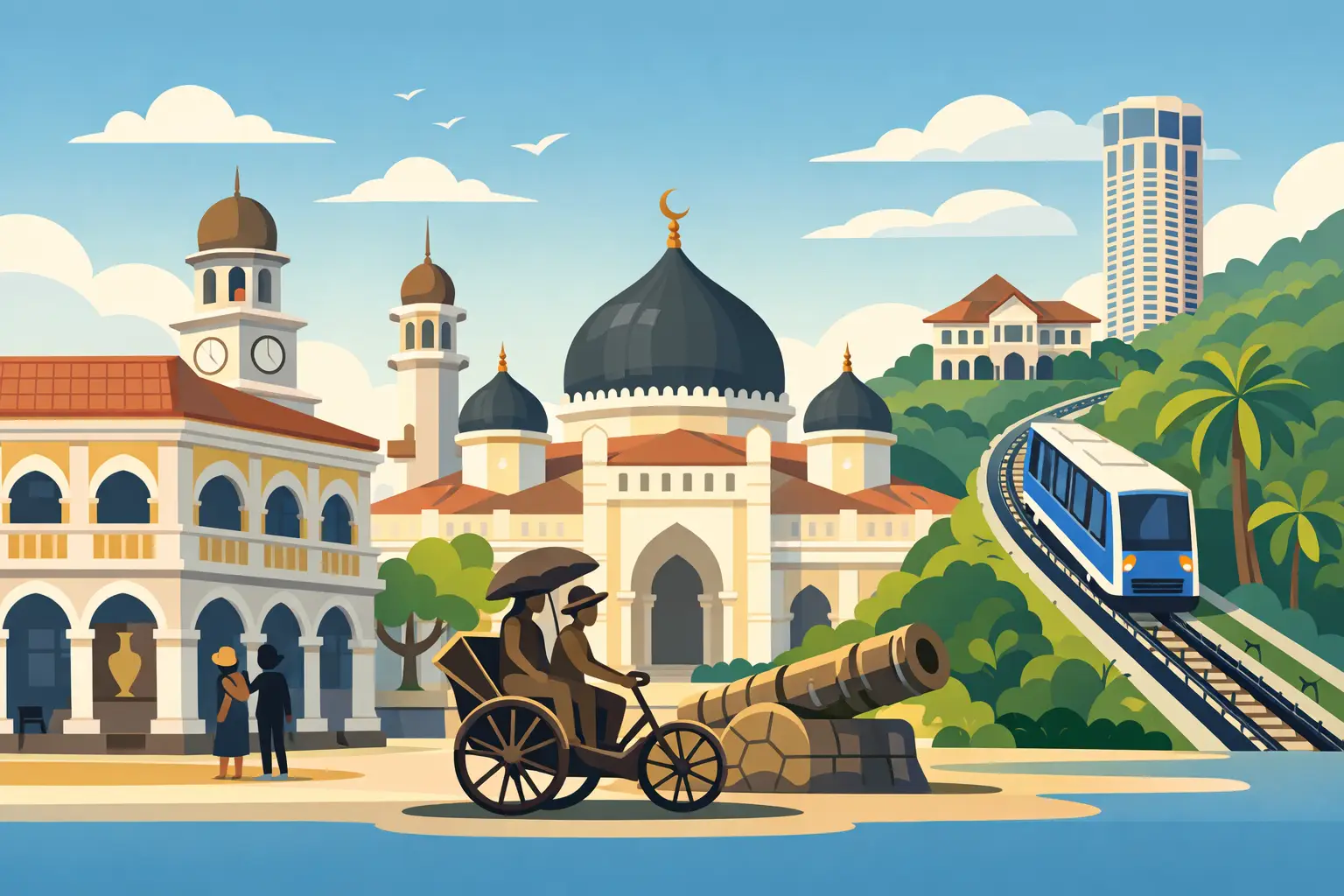

George Town rewards the curious. Turn one corner and you are in the world of clan houses and trading families; turn another and you are face to face with contemporary art, wartime memory or porcelain lifted from long-lost ships. This guide to George Town museums is for visitors who want more than a quick tick-box itinerary – those looking for places that reveal how Penang became one of the region’s most layered cultural capitals.
The first thing to know is that George Town’s museums are not all trying to do the same job. Some are quiet and archival. Some are highly visual and family-friendly. Some place objects at the centre, while others lean on atmosphere and storytelling. That is precisely what makes museum-going here so rewarding. You can shape the day around what draws you in most – architecture, maritime history, living communities, design, food culture or the city’s many cross-cultural histories.
How to use this guide to George Town museums
If your time is short, resist the urge to pack in too much. George Town is best enjoyed at an unhurried pace, with time for coffee, conversation and the unexpected details that appear between one stop and the next. Two museums in a day is often enough if you want the visit to feel thoughtful rather than rushed.
It also helps to choose by mood rather than by checklist. On some days, a deeply historical museum will feel right. On others, you may want somewhere lighter, more visual or easier with children. The right museum is not always the most famous one – it is the one that suits the kind of afternoon you want to have.
Start with the story you most want to follow
George Town’s identity was shaped by trade, migration, faith, craftsmanship and colonial exchange. Museums here tend to reflect those themes, but from very different angles.
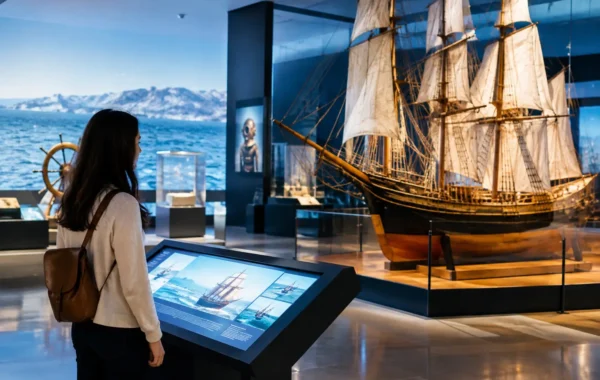
If you are drawn to the sea, commerce and the movement of objects across Asia, a museum centred on maritime heritage offers one of the richest ways into Penang’s story. Ports are not just places where goods arrive. They are where tastes, beliefs, materials and ideas meet. That is why shipwreck ceramics, trade porcelain and marine archaeology can feel surprisingly intimate – they tell you what people valued, used, gifted and carried across dangerous waters.
For visitors seeking that perspective, Straits & Oriental Museum stands apart. As Penang’s first museum of its kind and Malaysia’s first integrated heritage and lifestyle museum, it presents authentic ceramics and porcelain recovered from historic Asian shipwrecks including the Wanli, Turiang, Royal Nanhai, Nanyang, Xuande and Desaru. What makes the experience distinctive is not only the rarity of the collection, but the setting around it – a place where exhibition, hospitality and cultural atmosphere belong to the same journey through time.
If, instead, you want to understand local communities and domestic life, heritage houses and culture-led museums can be more revealing. These spaces often show how families lived, how rooms were used, what values shaped the home, and how identity was expressed through furniture, ritual and decoration. They tend to be especially rewarding for travellers interested in architecture and social history.
Art-focused visitors may prefer galleries and museums that show George Town as a living cultural city rather than a preserved one. Here, the emphasis shifts from inheritance to interpretation. You may not leave with a tidy historical timeline, but you will leave with a stronger sense of the city’s creative pulse.
What different museum experiences offer
Not every museum visit needs the same kind of attention. Some collections reward close looking. Others are better approached as a broader atmosphere.
Object-led museums are ideal if you enjoy detail. Labels matter. Provenance matters. Material, glaze, age and craftsmanship become part of the pleasure. These places often appeal strongly to collectors, history enthusiasts and anyone who appreciates the authority of original artefacts. The trade-off is that they can feel slower paced, especially for younger visitors, unless the interpretation is handled with care.
Immersive or lifestyle-led museums tend to widen the audience. They can be easier for families, couples and casual visitors because the experience is more varied. There may be design-led spaces, food and drink, retail or changing exhibitions that make the visit feel social as well as educational. The balance matters, though. If style outweighs substance, the museum can feel decorative rather than meaningful. The best venues avoid that problem by pairing visual appeal with genuine historical depth.
Community and heritage-house museums often sit somewhere in between. They usually give strong context and a memorable sense of place, but they rely heavily on storytelling. A good guide or clear interpretation can make all the difference.
Choosing museums for different kinds of visitors
For first-time visitors, the best approach is variety. Pair one museum that explains history through objects with another that shows how people lived. That combination gives George Town texture. You see both the grand currents of trade and the intimate details of daily life.
For families, visual impact and pacing matter more than sheer quantity of information. Museums with striking displays, manageable galleries and room to pause will usually work better than those that demand long stretches of concentrated reading. Children often connect most strongly with stories of travel, treasure, survival and craftsmanship, which is one reason maritime collections can be so effective.
For collectors and design-minded travellers, quality matters above all. Look for institutions where the collection itself has authority – not reproductions, not generic displays, but material with provenance and significance. A beautifully presented object with a strong story behind it is often more memorable than a room full of undistinguished pieces.
For couples or leisure travellers, the wider setting can shape the day. A museum attached to a refined dining space, exhibition venue or gift house allows the visit to unfold more naturally. Instead of a brief stop, it becomes a cultural outing with its own rhythm.
A smarter way to plan your museum day
One of the pleasures of George Town is that museums sit within a broader heritage landscape. That means your day should not be planned museum by museum alone. Think in terms of neighbourhood flow.
Start with a museum that asks for your fullest attention in the morning, when energy is high and the city still feels gentle. Follow it with lunch somewhere characterful, then choose a second stop that is lighter, more atmospheric or easier to absorb. Leave room for the streets in between. George Town’s story is not confined to vitrines and labels. It continues in shophouse facades, religious landmarks, old businesses and the texture of everyday life.
Weather is another practical consideration. On hotter or wetter days, museums become especially valuable as places of calm and focus. But that does not mean every indoor hour should be packed. Better to spend longer in one exceptional place than hurry through three without really seeing them.
What makes a museum memorable in George Town
The museums visitors speak about afterwards are rarely the ones with the longest text panels or the biggest claims. They are the ones that create a sense of encounter.
Sometimes that encounter comes through rarity – an object that has crossed centuries and seas to arrive before you. Sometimes it comes through setting – a building that still holds the mood of another era. Sometimes it is the blend of culture and hospitality that makes the experience linger a little longer.
George Town is particularly strong when museums recognise that heritage is not static. It is lived, tasted, collected, debated and revisited. That is why the city’s best cultural spaces feel neither dusty nor over-produced. They understand that serious history can still be inviting, and that elegance need not come at the expense of substance.
A guide to George Town museums for visitors who want depth
If there is one principle worth holding onto, it is this: choose fewer places and see them properly. George Town is not a city that yields its meaning at speed. Its museums are most rewarding when you let them build on one another – the port and the parlour, the gallery and the archive, the recovered ceramic and the living street outside.
A well-chosen museum day here can sharpen your sense of the city in unexpected ways. You begin by looking at objects, rooms or images, and end by understanding trade, migration, craftsmanship and hospitality rather differently. That is the quiet power of George Town’s cultural landscape.
Leave a little space in your plans for the museum that was not on your original list. In a city shaped by arrivals, the most memorable discoveries are often the ones you did not expect.