

A blue-and-white bowl can tell you as much about ambition as any royal chronicle. The most compelling ming and qing dynasty stories are not only about emperors, court rituals or dynastic change. They are also stories carried by cargo holds, dining tables, merchant networks and the hands of ordinary people who used porcelain every day.
For visitors drawn to heritage with texture and atmosphere, these stories matter because they make history visible. A dish recovered from the seabed, a jar shaped for export, or a finely painted cup once made for elite use can reveal how China’s great dynasties spoke to the wider world. What survives is more than ceramic. It is evidence of taste, trade, belief and status moving across Asia by sea.
Why ming and qing dynasty stories still feel alive
The Ming dynasty, from 1368 to 1644, and the Qing dynasty, from 1644 to 1912, are often remembered for imperial splendour, refined craftsmanship and powerful state control. Yet what keeps these eras vivid is their reach beyond palace walls. Their objects travelled. Their styles shifted. Their goods were wanted in ports, courts and homes far from the kilns where they were first fired.
That is where the story becomes especially resonant for a maritime audience. Ceramics from these periods were never static art objects alone. They were part of a living commercial system. They were commissioned, packed, sold, copied, gifted and sometimes lost at sea. Each stage added another layer to the narrative.
There is also a useful distinction between the two dynasties. Ming porcelain often carries a sense of clarity and confidence – strong cobalt blues, balanced forms, and an imperial aesthetic that became globally admired. Qing production, especially at its height, expanded that language with technical brilliance, richer palettes and a striking ability to serve both courtly taste and export demand. One is not simply better than the other. The appeal depends on what story you want an object to tell.
The sea as a storyteller
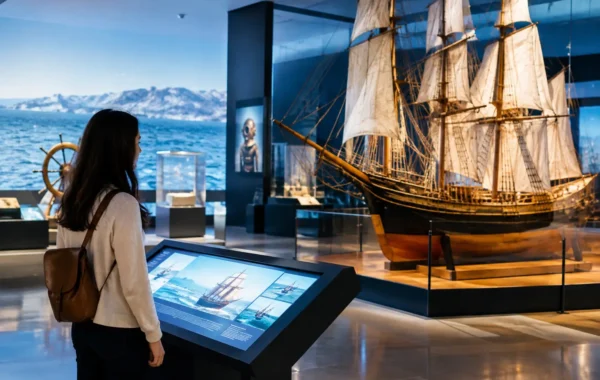
Many of the finest ming and qing dynasty stories begin not in a palace, but on a ship. Maritime trade made porcelain one of Asia’s most travelled cultural ambassadors. Cargoes crossed the South China Sea and beyond, supplying regional markets with wares that were practical, prestigious and immediately recognisable.
When a vessel sank, its cargo was sealed in time. That is part of what makes shipwreck ceramics so powerful in a museum setting. On land, an object may pass through many owners and contexts. Underwater, a collection can remain bound to a single historical moment. It preserves a snapshot of trade routes, consumer demand and production habits with unusual clarity.
A shipwreck cargo also reminds us that history is not neat. Some wares were made for imperial circles, others for merchants and households. Some were exquisite, others utilitarian. That mix is precisely the point. Maritime archaeology rarely flatters us with a perfect display of only the rarest masterpieces. Instead, it reveals the fuller truth of what people valued enough to transport in volume.
For an institution such as Straits & Oriental Museum, this perspective has particular force. Ceramics recovered from Asian shipwrecks do more than decorate a gallery. They document movement – between maker and buyer, dynasty and market, origin and destination. They show how the splendour of porcelain was inseparable from the realities of regional exchange.
Three kinds of stories hidden in porcelain
Power and prestige
Porcelain in the Ming and Qing periods was never culturally neutral. Certain forms, motifs and colours carried clear associations with rank, prosperity and refinement. Dragons, phoenixes, lotus scrolls and imperial reign marks all signalled layers of meaning that buyers would have understood.
Yet prestige was not confined to the throne. Merchants, local elites and overseas trading communities also used porcelain to project status. A carefully chosen service on a domestic table could say as much about aspiration as a formal robe. This is one reason these artefacts remain so compelling today. They let us see how luxury travelled down and across society, not just from the top.
Belief and symbolism
Many ceramic motifs from the Ming and Qing eras were shaped by wish, ritual and encoded symbolism. Bats suggested good fortune. Peonies implied wealth and honour. Cranes could evoke longevity. Even when objects were made for export, these visual languages often stayed embedded in the design.
That creates a fascinating tension. A bowl purchased in a Southeast Asian port might have been admired for its beauty alone, yet it also carried symbolic messages from the culture that produced it. In that sense, porcelain acted as both commodity and conversation. It crossed borders while retaining traces of its original worldview.
Everyday life
Grand narratives can make dynastic history feel distant, but domestic objects pull it back into human scale. Small cups, storage jars, pouring vessels and plates reveal habits of eating, serving, storing and presenting food. They hint at family routines, hospitality, seasonal rituals and local preferences.
This may be the most underrated of all ming and qing dynasty stories. Not every meaningful object belonged to a court. Some belonged to kitchens, shops and households. Their significance lies in use, not rarity alone. In a gallery, they help visitors imagine not only what people admired, but how they lived.
What changed from Ming to Qing
If you place Ming and Qing wares side by side, the shift is not merely chronological. It is visual and commercial.
Ming ceramics are often celebrated for blue-and-white porcelain that feels disciplined and elegant, especially under the influence of famous kilns and court commissions. There is a purity to many Ming designs that modern viewers still find immediately arresting. At the same time, export demand encouraged wide production, so not every Ming piece was made to the same standard. That variation is part of the historical reality.
Qing ceramics, by contrast, often display greater experimentation in enamel colours, decorative complexity and market segmentation. Imperial workshops pushed technical perfection, while export producers adapted quickly to foreign tastes. That flexibility made Qing porcelain extraordinarily influential, but it also means the category is broad. Some pieces are breathtakingly refined. Others were clearly commercial wares made to satisfy volume demand.
This is where nuance matters. If your interest lies in formal restraint, you may be drawn to Ming aesthetics. If you are captivated by variety and innovation, Qing objects can be irresistible. Neither dynasty sits neatly in a single style. Both reward close looking.
Why these stories resonate in Penang
A port city understands movement instinctively. In George Town, where maritime history shaped commerce, migration and taste, ming and qing dynasty stories feel especially at home. They connect China’s kilns to Southeast Asia’s trading world, and they remind visitors that cultural exchange in this region was not abstract. It arrived in crates, crossed docks and entered daily life.
That makes porcelain more than a beautiful survivor. It becomes a witness to the very networks that helped define this part of the world. For travellers and collectors alike, there is something quietly thrilling about standing before an object that once moved through the same sea lanes that built regional fortunes.
Looking beyond beauty
It is easy to admire porcelain for its gloss, balance and painterly detail. That first reaction is valid. These objects were made to impress the eye. But their deeper power lies in what they preserve about human intention.
A shipper saw profit in them. A kiln saw demand. A household saw usefulness. A ruler saw prestige. A collector now sees continuity. The object remains the same, yet its meanings multiply across time.
That is why ming and qing dynasty stories continue to travel so well into the present. They do not ask us to choose between art and history, or between scholarship and pleasure. They offer all of it at once – beauty, evidence, commerce, ritual and memory held in fired clay.
The next time you pause before a porcelain dish or jar, it is worth resisting the urge to see it as merely delicate. It may have crossed oceans, survived disaster and outlasted empires. Few storytellers have done more with such quiet grace.