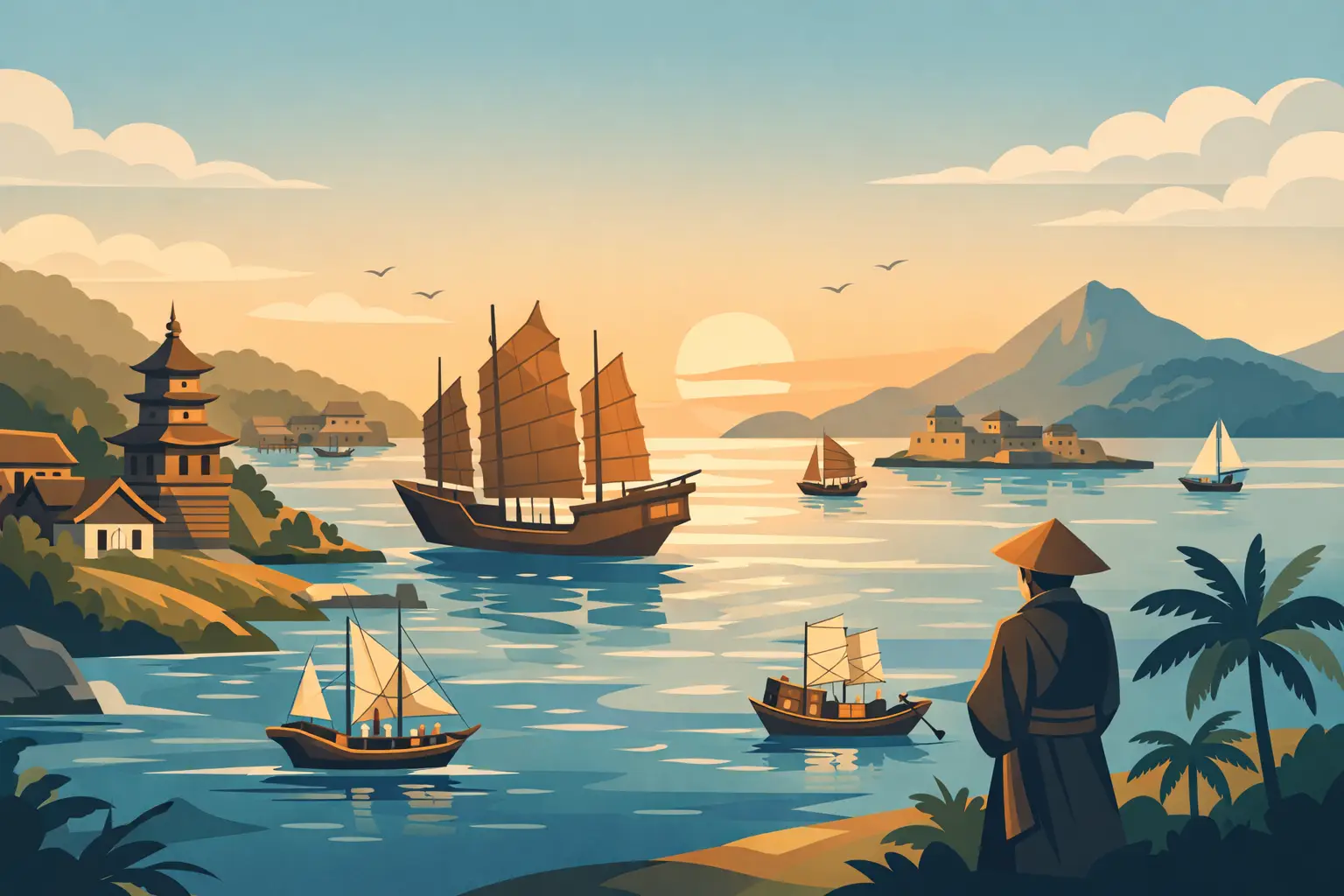

Long before George Town became a celebrated heritage city, Penang’s early history was already being written on water. The island’s story did not begin with a single founding moment, but with shifting sea routes, coastal settlements, merchant exchange and the quiet accumulation of cultures along the northern Strait of Malacca. To understand Penang properly, you have to begin with the ships.
Penang’s early history before British rule
Popular narratives often start in 1786, when Captain Francis Light established a British settlement on Penang Island. That date matters, but it can also flatten everything that came before it. Penang was not an empty stage waiting for empire. It stood within an older regional world shaped by Malay polities, maritime trade, seasonal monsoons and connections stretching across the Bay of Bengal, the Malay Archipelago, China and the wider Indian Ocean.
The island, known historically as Pulau Pinang, fell within the sphere of the Sultanate of Kedah. Kedah was one of the oldest and most commercially active states in the Malay Peninsula, and its relationship with the sea was fundamental. Coastal exchange linked Kedah to traders dealing in forest products, spices, textiles, ceramics and metal goods. Penang’s location near the northern entrance to the Strait of Malacca gave it strategic value even before it became a colonial port. It was a stopping point, a lookout, a shelter and part of a much larger maritime network.
This is where nuance matters. Penang was not necessarily a major urban centre in the pre-colonial period in the way George Town later became one. Yet its significance lay in position rather than scale. In maritime history, small anchorages and island outposts often mattered precisely because they sat along active routes. Their importance could rise or fall with political stability, monsoon timing and commercial demand.
A seaborne world of trade, tribute and movement
Penang’s early history is inseparable from the trading systems of Southeast Asia. For centuries, merchants moved through these waters carrying ceramics from China, cottons from India, spices from the archipelago and luxury goods intended for courts and wealthy buyers. Alongside these came more everyday cargoes – earthenware, foodstuffs, timber and tools – the practical materials of life in port settlements.
The Strait of Malacca was one of the great arteries of Asian commerce, but it was never just about goods. Beliefs, languages, technologies and artistic tastes travelled by sea as well. Islam spread through maritime contact. So did forms of diplomacy, marriage alliances and patterns of settlement. Penang stood at the edge of these movements, receiving influence from larger centres while contributing to the circulation that made the region prosperous.
Ceramics are especially revealing here. Porcelain and stoneware moved widely across Asian waters, prized for both utility and prestige. When recovered from shipwrecks or found in trading contexts, they show how deeply connected this region was long before modern borders. A bowl fired in China could pass through several hands before reaching a court, household or market in the Malay world. Penang’s maritime setting placed it firmly within that exchange.
Why Kedah and the wider region mattered
To read Penang’s early history well, it helps to look beyond the island itself. Kedah’s political fortunes shaped Penang’s place in the region. The state had long balanced local authority with external pressures from Siam, Aceh, Bugis powers and European trading companies. Such pressures affected coastal security, tribute relations and the ability of rulers to negotiate from strength.
By the eighteenth century, regional politics had become more volatile. European commercial interests were increasingly aggressive, and local rulers were often compelled to bargain for protection as much as for trade. Penang’s eventual cession to the British emerged from that pressure-filled environment. It was not simply a neat transaction between local ruler and foreign power. It reflected wider anxieties over defence, influence and survival.
This is one reason simplified versions of Penang’s founding can feel incomplete. If Francis Light appears as the sole protagonist, Kedah disappears into the background. Yet the island’s transfer cannot be understood without Kedah’s strategic concerns and the changing balance of power in the region.
1786 and the making of a port
When the British East India Company took possession of Penang in 1786, the island entered a new phase. Light renamed it Prince of Wales Island, while the new settlement became George Town. The British saw clear advantages in the site – a harbour with commercial promise, a position along key sea lanes and an opportunity to expand influence in a competitive region.
What followed was rapid transformation. George Town developed as a free port, a policy that attracted merchants by reducing duties and barriers to trade. This mattered enormously. In a maritime world where costs and restrictions could redirect shipping patterns, a free port offered immediate appeal. Traders from across Asia came to exchange goods, resupply vessels and build new commercial relationships.
Yet growth was not only about British planning. It depended on people who chose to come and stay. Malays, Chinese, Indians, Armenians, Arabs and Europeans all became part of Penang’s emerging social fabric. Labourers, merchants, sailors, interpreters, religious leaders and artisans turned a strategic outpost into a living port city. Penang’s diversity was not a decorative feature added later – it was there at the making of the place.
The human texture of an early port city
Ports are often described in economic terms, but their real character lies in encounter. In early Penang, trade brought together different legal systems, faiths, foodways and languages. That produced opportunity, but also friction. Port cities can be welcoming and unequal at the same time. Wealth circulates, yet not everyone benefits equally from it.
Still, Penang developed a distinctive cosmopolitanism. Religious buildings, merchant houses, markets and waterfront activity all reflected the mingling of communities. The island’s identity began to take shape not as a single tradition, but as a layered one. This helps explain why Penang remains so compelling today. Its heritage is not static. It is the record of movement.
Maritime life also created a particular rhythm. The arrival of ships affected prices, labour demand and social life. News came by sea. So did fashions, technologies and tastes. Even domestic objects could carry traces of distant worlds. A ceramic dish on a table might speak of kilns in China, merchant capital in regional ports and consumption in a Penang household.
Penang’s early history through maritime artefacts
For anyone drawn to heritage, one of the most powerful ways to understand Penang’s early history is through material culture. Documents tell us how officials described the island, but artefacts reveal how trade was lived. Ceramics, cargo fragments and maritime finds allow us to see the textures of exchange with unusual clarity.
Shipwreck ceramics are especially eloquent because they capture trade in motion. They show not only what was valued, but what was being transported across dangerous waters where commerce always involved risk. A vessel could promise profit and still be lost to weather, reefs or conflict. What survives on the seabed can therefore illuminate entire economic worlds.
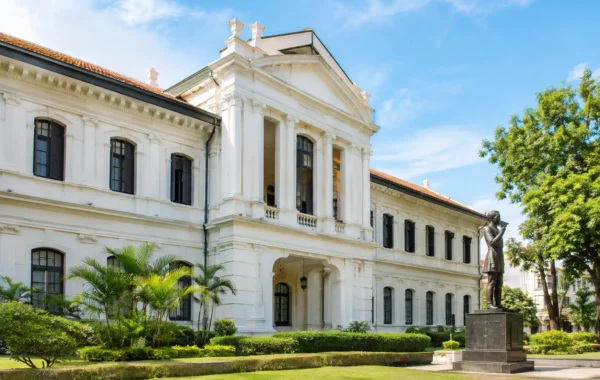
That is why maritime collections have such resonance in Penang. They do more than display beautiful objects. They connect the island’s historical identity to the sea routes that made it possible. At Straits & Oriental Museum, this connection is brought vividly to life through authentic shipwreck ceramics and refined storytelling that place Penang within the splendour of regional seafaring history.
More than a colonial origin story
One of the most useful shifts in recent historical thinking is moving away from the idea that Penang began with empire. British rule unquestionably shaped the island, its architecture and its place in global commerce. But the deeper story begins earlier and extends wider. It includes Malay political worlds, Asian merchant networks, religious circulation and the material traffic of the sea.
That broader view does not diminish the importance of 1786. It simply places it where it belongs – as a turning point within a longer continuum. Penang became a major port under British administration, but its rise made sense because the island already occupied a meaningful maritime position.
For visitors, this is often the moment the island becomes most interesting. Penang is not merely a colonial city with an attractive façade. It is a place shaped by older currents of trade and migration, where local and global histories met on the shoreline.
If you want to feel the character of Penang rather than just memorise dates, look to the sea. Its early history lives in routes, cargoes, crossings and the objects that endured them – and that perspective makes every walk through the island feel richer.