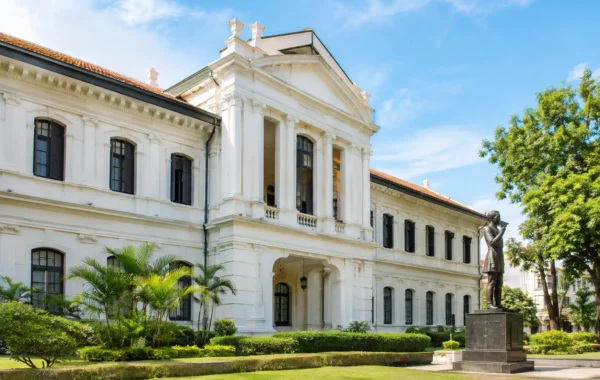
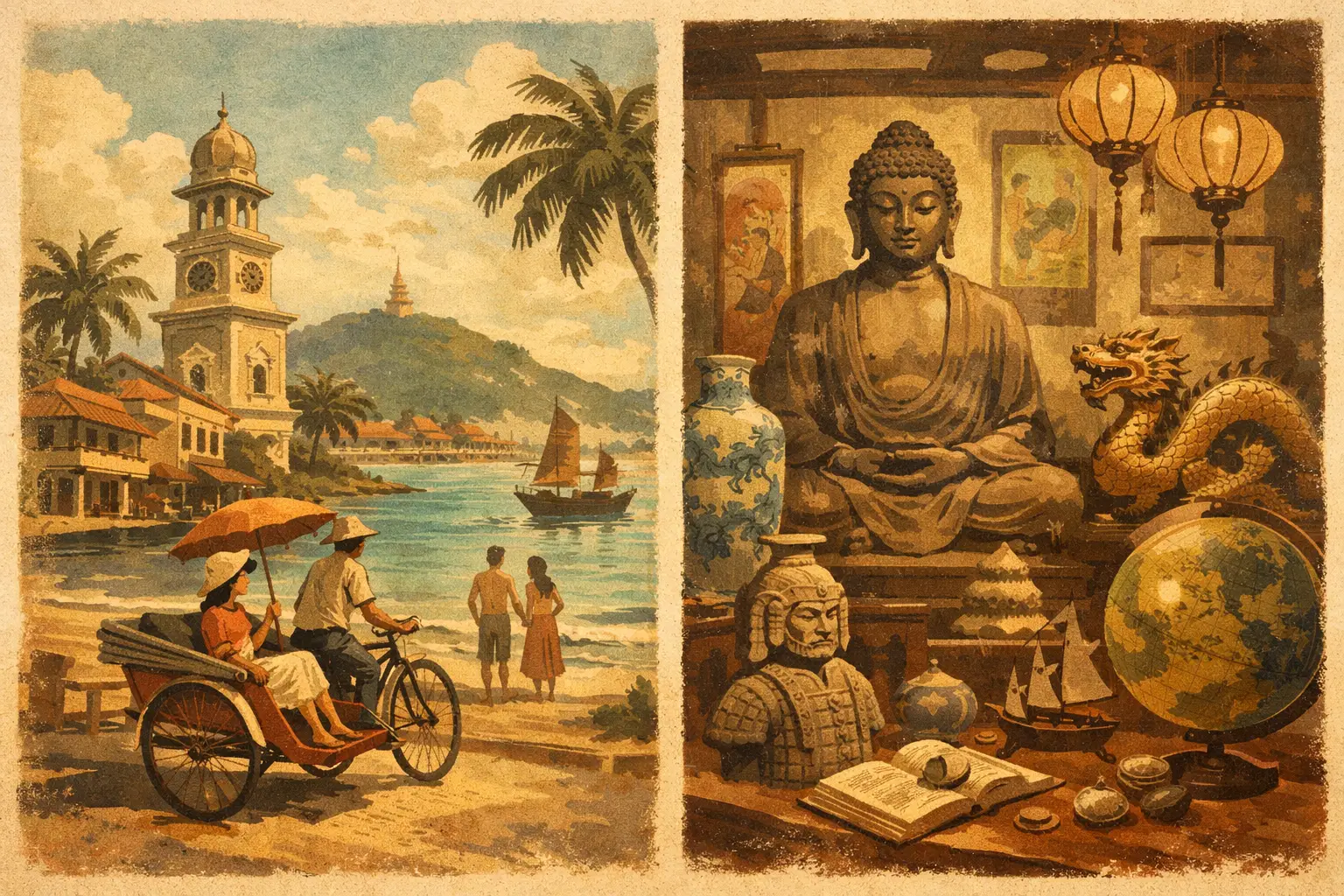

Penang is rarely short of distractions. A morning can begin with kopi and char kway teow, drift through shophouse lanes and end at a sunset-facing bar without a single quiet moment in between. Yet travellers comparing Things to Do in Penang vs Straits and Oriental Museum are not really choosing between two equivalent attractions. They are deciding what they want their time in George Town to mean: a broad taste of the city, or a more focused encounter with the stories that made this port significant.
The best itineraries make room for both. Penang’s pleasures are immediate and abundant, while a museum devoted to maritime heritage offers something less easily found on a wandering afternoon: the chance to stand before objects that crossed seas centuries ago, survived shipwreck, and now document the movement of people, trade, craft and ideas across Asia.
Penang offers variety. The museum offers a story
Penang rewards curiosity. Its historic streets hold temples, mosques, clan houses, murals, markets and cafés within easy reach of one another. Food is a principal attraction in its own right, whether the plan is a hawker-centre classic or a long lunch at a contemporary restaurant. Beyond the old town, visitors may choose hill views, beaches, gardens or a slower drive along the coast.
That variety is its great strength, but it can also make a short visit feel fragmented. A heritage walk may reveal beautiful façades without explaining the regional networks that brought wealth, communities and goods to this island. A meal can be exceptional without showing the centuries of maritime exchange behind the ingredients, porcelain and trading culture that shaped the Straits.
A visit to Straits & Oriental Museum gives that wider day a centre of gravity. Its collections of authentic shipwreck ceramics are not decorative stand-ins for history. They are material evidence of it: porcelain made for trade, loaded aboard vessels, lost beneath the sea and recovered long after the routes that carried them had changed.
Things to Do in Penang vs Straits and Oriental Museum: choose by pace
If the question is simply how to fill an hour, Penang offers countless options. If the question is how to create a memorable half-day in the heritage quarter, the distinction becomes clearer.
Choose open-ended city exploration when the pleasure lies in surprise. Walk without a fixed agenda, pause where architecture or aroma catches your attention, and allow the city to set the rhythm. This approach suits repeat visitors, confident independent travellers and anyone with several days to spend.
Choose the museum when you want a considered cultural experience with a beginning, a narrative and a satisfying sense of place. It is particularly well suited to first-time visitors who want context before exploring further, couples seeking an elegant interval between sightseeing and dinner, and families looking for an experience with greater depth than another photo stop.
Neither choice needs to exclude the other. The more useful comparison is between a day that collects highlights and one that connects them. A museum visit can sharpen the eye for what follows: the port-facing city, the cosmopolitan food culture and the long relationship between Penang and the wider maritime world.
Why shipwreck porcelain changes the experience
Ceramics are often admired for their beauty first: the glaze, the painted detail, the clarity of form. In a maritime collection, however, each piece carries a second identity. It was also cargo. It had a destination, a buyer and a place within commercial routes that linked China, Southeast Asia and markets beyond.
The permanent displays bring together artefacts recovered from renowned Asian shipwrecks, including the Wanli, Turiang, Royal Nanhai, Nanyang, Xuande and Desaru. These names matter because they anchor the objects in distinct moments of seaborne history. A bowl, jar or dish ceases to be merely old when it is understood as part of a vessel’s lost consignment and a record of the tastes, economies and ambitions of its time.
This is where the museum differs from a conventional display of antiques. The appeal is not simply rarity, although authentic shipwreck ceramics have undeniable collecting significance. The appeal lies in provenance and passage. Visitors are invited to consider what was being carried, who commissioned it, where it may have been bound, and how such objects travelled through a region whose coastal cities were already connected by trade.
For collectors, this context deepens appreciation of porcelain as both art and historical document. For younger visitors, it makes the past tangible. A shipwreck is an immediate idea: a voyage interrupted, cargo resting underwater, and discoveries returning stories to the surface.
A cultural outing, not a static stop
Many travellers hesitate over museums because they imagine hushed rooms, fixed routes and a visit that ends at the exit. That expectation does not reflect the integrated heritage and lifestyle experience here.
Alongside the maritime collection, the destination brings together exhibition and gallery spaces with places to dine, pause for coffee, enjoy a drink and browse for considered keepsakes. The result is a cultural outing with room to linger. One guest may be drawn to the historical displays, another to the visual atmosphere, and another to the simple pleasure of continuing a conversation over food and refreshments.
This matters when planning with different interests in mind. A family day does not have to divide neatly into ‘education’ for adults and ‘entertainment’ for children. A couple’s itinerary does not have to choose between heritage and hospitality. The setting accommodates both, with storytelling at its heart rather than treated as an interruption to leisure.
There is a trade-off, of course. Visitors seeking the scale of a major national museum or a comprehensive chronology of Malaysian history may wish to add other institutions to their itinerary. The strength here is focus. It offers a distinctive chapter of regional history, presented through rare physical artefacts and framed as an experience rather than an encyclopaedia.
How to build it into a Penang day
The most rewarding approach is to pair the museum with the city rather than treat it as an alternative to it. Begin with a walk through George Town’s historic streets while the day is still cool. Notice the shophouses, places of worship and trading-era architecture, then visit the collection once those streets have begun to suggest their own questions about commerce and migration.
Afterwards, allow time for a meal, coffee or a drink rather than rushing immediately to the next landmark. This gives the experience space to settle. The glazed surfaces, painted motifs and stories of lost voyages are the sort of details that become more interesting in conversation, especially when viewed against a city shaped by the sea.
For visitors on a short stay, it can be an especially intelligent choice on a hot or rainy afternoon, when outdoor sightseeing loses some of its charm. It is also a graceful answer to the familiar problem of travelling companions with uneven enthusiasm for museums. The broader setting means that one person’s fascination with antique porcelain need not dictate the entire outing.
Who will value it most?
History enthusiasts and museum-goers will find a collection with a clear regional identity and an unusual lens on Asian trade. Collectors may appreciate the emphasis on authentic ceramics and the opportunity to see objects whose value extends far beyond decoration.
International visitors will find an accessible introduction to the maritime networks behind Penang’s cosmopolitan character. Families can use the shipwreck story as a way into questions of travel, craft and discovery. For couples and cultural travellers, the combination of heritage, art, food and atmosphere makes it a more polished proposition than a quick stop between attractions.
The museum is less about ticking off another sight and more about changing the texture of the sights around it. After seeing porcelain recovered from the sea, Penang’s port-city inheritance feels less like background scenery and more like a living record of exchange.
The better question for your itinerary
Rather than asking whether to spend time on Penang itself or at Straits & Oriental Museum, ask what your itinerary is missing. If it needs spontaneous colour, street life and a wide range of flavours, follow the lanes and let the island surprise you. If it needs a meaningful encounter with the maritime history beneath that richness, make time for the shipwreck collections.
Penang is at its most memorable when its pleasures are not consumed in isolation. A plate of food, an old street, a porcelain bowl and a story of a lost vessel can all belong to the same journey through time.