
Some museums ask you to admire history from a distance. A maritime museum does something more compelling – it places you on the route of empires, merchants, sailors, storms and shipwrecks, then lets the story unfold through objects that were truly there. If you have ever wondered why visit a maritime museum, the answer begins with this rare immediacy: maritime history is not abstract. It is cargo, porcelain, navigation, survival and exchange made tangible.
For travellers, families and culturally curious visitors, that matters. The sea shaped ports, cities, taste, trade and identity across Asia and far beyond. To understand a place with a coastal past, you need to understand what arrived at its harbour, what departed from its shores and what was lost along the way.
Why visit a maritime museum instead of a general history museum?
A general museum may give you the broad sweep of a civilisation. A maritime museum often gives you its pulse. Sea routes carried not only goods, but ideas, religions, technologies and aesthetics. Looking at maritime collections can reveal how connected the world was long before modern tourism and aviation made movement feel ordinary.
That difference is especially striking when the collection includes recovered artefacts from historic wrecks. A ceramic bowl, storage jar or finely painted porcelain dish is no longer simply decorative. It becomes evidence of commerce, craftsmanship and human ambition. It tells you what people valued enough to transport across dangerous waters, and what a ship was carrying when fortune turned.
There is also a stronger sense of drama. Maritime history is full of risk – monsoon crossings, contested trade routes, fragile wooden vessels and precious cargoes resting on the seabed for centuries. Museums built around this world naturally carry tension and intrigue, which makes them engaging even for visitors who do not usually think of themselves as history enthusiasts.
The power of seeing shipwreck artefacts in person
Photographs rarely prepare you for the effect of standing in front of objects recovered from the sea. There is a particular gravity to artefacts that have survived disaster, time and submersion. You are not simply looking at an old object. You are looking at something interrupted mid-journey and brought back into view.
That is one of the strongest reasons why visit a maritime museum becomes such a worthwhile question. The experience is physical and emotional at once. You notice the delicacy of porcelain, the precision of glaze, the repetition of forms made for trade, and the subtle differences that hint at changing tastes and markets. Suddenly, history is not a chapter. It is a shipment.
For collectors and design-minded visitors, maritime collections can be especially rewarding. Ancient ceramics and porcelain reveal a remarkable dialogue between utility and beauty. These were commercial objects, yes, but they were also expressions of artistic achievement. Their patterns, shapes and finishes still feel sophisticated centuries later.
Maritime museums make trade history feel human
Trade can sound dry when reduced to dates and routes. In a maritime setting, it becomes deeply human. Every cargo was packed by hand, loaded with intent and entrusted to weather, skill and luck. Every port welcomed strangers, languages and customs. Every recovered artefact hints at the hands that made it, sold it, transported it and once expected to receive it.
This is where a strong maritime museum excels. It connects regional history to personal imagination. You can picture a merchant calculating profit, a crew navigating uncertain waters, a workshop producing porcelain for distant markets, or a family in a port city using imported wares as part of everyday life. The result is a fuller, more textured understanding of the past.
For destinations shaped by seafaring exchange, this perspective is particularly valuable. Port cities are rarely defined by one story alone. They are layered places, formed by arrivals as much as origins. A maritime museum helps visitors understand that complexity without making it feel academic or remote.
A richer cultural outing for travellers and families
Not every visitor wants a museum experience that feels formal or overly scholarly. That is fair. Some museums can feel demanding if you are travelling with children, balancing a packed itinerary or simply hoping for a memorable afternoon rather than a lesson. The best maritime museums avoid that trap by giving visitors strong visual storytelling, atmosphere and a clear sense of discovery.
Families often respond well to this format because the subject is naturally vivid. Ships, trade routes, underwater recovery, rare cargo and lost journeys tend to capture attention quickly. Adults can appreciate the historical significance, while younger visitors engage with the drama of the sea and the fascination of recovered treasure.
There is, of course, a trade-off. If you are looking solely for highly interactive, screen-heavy entertainment, some heritage museums may feel more contemplative than fast-paced. Yet that slower rhythm is part of the appeal. It gives you space to look closely, ask questions and remember what you have seen rather than rushing through a spectacle.
More than objects – a sense of place
The most memorable maritime museums do not present artefacts as isolated masterpieces. They place them within a wider story of geography, movement and cultural exchange. That sense of place is what turns a good visit into a meaningful one.
In a destination such as George Town, where heritage and trade are central to the city’s identity, maritime interpretation adds real depth to the visitor experience. It explains why certain influences are visible in architecture, cuisine, collecting traditions and local culture. The sea is not background scenery. It is one of the main reasons the place became what it is.
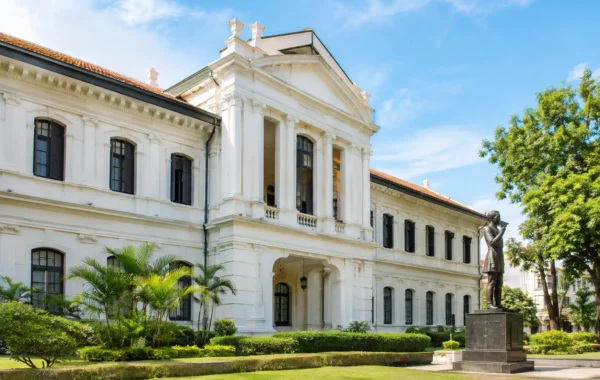
That is also why an integrated heritage destination can be so appealing. At Straits & Oriental Museum, for instance, the experience reaches beyond display cases alone. When exhibitions, art, dining and atmosphere are thoughtfully brought together, a museum visit becomes a cultural outing with texture and ease. You can spend time with rare shipwreck ceramics, then let the wider setting extend the mood of discovery.
Why maritime museums appeal to seasoned travellers
Frequent travellers often reach a point where standard sightseeing no longer feels satisfying. They want substance, not just photographs. A maritime museum answers that desire because it offers a story tied to trade, migration and cross-cultural influence – forces that shaped entire regions.
It also offers rarity. Not every museum can show authentic artefacts recovered from notable shipwrecks or interpret them within a coherent regional story. When it does, the visit feels less interchangeable. You are not seeing a generic local attraction. You are encountering a collection with genuine historical weight and a narrative that could only belong to this part of the world.
That distinction matters for culturally minded visitors who choose experiences carefully. They are not merely asking what to do for an hour. They are asking what is worth remembering from a journey.
A museum visit that rewards curiosity at different levels
One of the understated pleasures of maritime museums is that they suit different kinds of visitors at once. You may arrive with a broad interest in history, a fascination with ceramics, a love of sea stories or simply the desire to do something distinctive on your trip. A good museum meets you where you are.
If you want visual beauty, the objects provide it. If you want context, the stories of trade and shipwrecks add depth. If you want a family-friendly cultural stop, the themes are accessible without becoming simplistic. If you are a collector or connoisseur, details of form, provenance and period become part of the reward.
That flexibility is not accidental. Maritime history sits at the meeting point of art, commerce, technology and identity. Few museum themes can speak to so many interests without feeling forced.
The real reason to go
So, why visit a maritime museum? Because few places show so clearly how objects travel, how cultures meet and how history survives in material form. Few places combine beauty with evidence so effectively, or make the past feel both grand and intimate at once.
A fine maritime museum does not simply tell you what happened at sea. It shows how the sea shaped taste, trade and daily life across generations. It reminds you that a plate, a jar or a porcelain dish can hold far more than aesthetic value – it can carry the memory of a voyage, a marketplace and an entire world in motion.
If you choose your cultural stops with care, make room for one that lets history rise from the water and speak for itself.