
Some museum objects ask to be glanced at. Ming and Qing Dynasty Fine Ceramic in George Town asks for something more – time, attention, and a sense of wonder. Behind the glaze, painted motifs, and elegant proportions lies a larger story of imperial taste, maritime trade, risk at sea, and the cultural currents that shaped Penang and the wider region.
For visitors drawn to George Town for its layered heritage, fine ceramics offer a particularly rewarding way to read the past. They are beautiful at first sight, but their deeper value lies in what they reveal. A bowl can speak of courtly refinement. A dish can point to international commerce. A shard recovered from a shipwreck can tell a story of ambition interrupted by storm, conflict, or misfortune. This is what makes the study of historic porcelain so compelling in a maritime city – it is never only about the object itself.
Why Ming and Qing ceramics still fascinate
The Ming dynasty, which ruled from 1368 to 1644, and the Qing dynasty, which followed from 1644 to 1912, produced some of the most admired ceramics in the world. Their porcelain was prized not only in China but across Asia, the Middle East, and Europe. Even today, these works hold an unusual power. They combine technical precision with artistic restraint, and they carry the prestige of an era when porcelain functioned as both an everyday luxury and a marker of status.
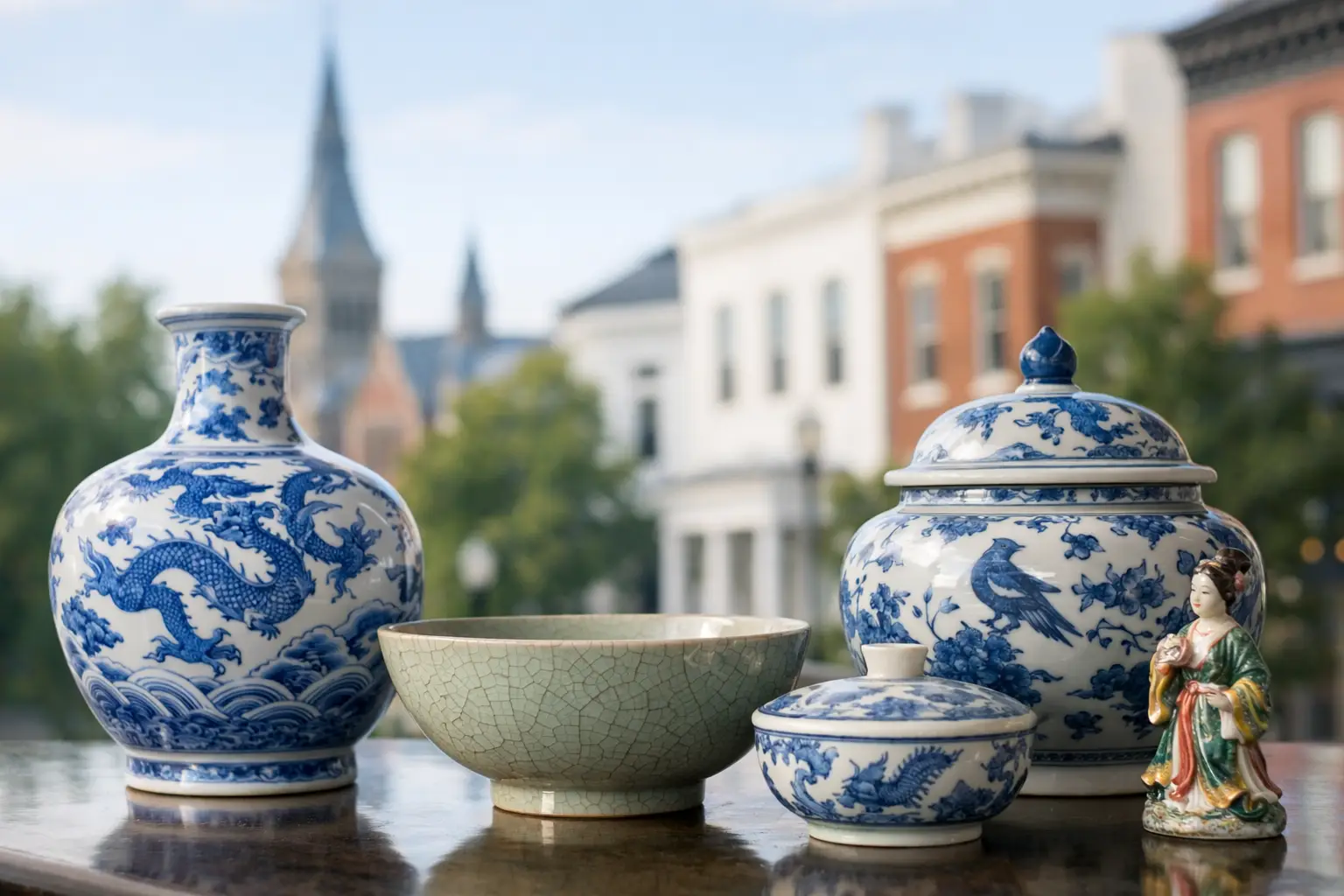
What distinguishes these ceramics is not merely age. It is the extraordinary control behind their making. Kilns perfected high-fired porcelain bodies of remarkable fineness. Cobalt blue decoration, famille verte palettes, famille rose enamels, celadon glazes, and underglaze techniques all developed into highly refined traditions. The result was ware that could be practical, ceremonial, commercial, and artistic at once.
For modern audiences, that layered identity matters. A Ming blue-and-white jar may look serene in a gallery case, yet it may also represent trade networks that linked ports, merchants, rulers, and collectors across continents. A Qing export plate may appear decorative, but it also reflects changing taste, workshop innovation, and the demands of buyers far beyond China.
Ming and Qing Dynasty Fine Ceramic in Georgetown as a maritime story
In George Town, ceramics are especially meaningful because the city’s history has always been tied to the sea. This is not a setting where porcelain feels detached from place. On the contrary, it belongs here. Penang emerged within regional routes shaped by exchange, migration, and commerce, and fine ceramics sit naturally within that narrative.
That is why shipwreck ceramics are so arresting. They restore movement to objects that might otherwise be seen as static antiques. Cargo once packed carefully into the holds of trading vessels becomes evidence of a living commercial world – one that connected Chinese kilns to Southeast Asian ports and beyond. When such pieces are recovered archaeologically, they preserve not only design and craftsmanship but also context.
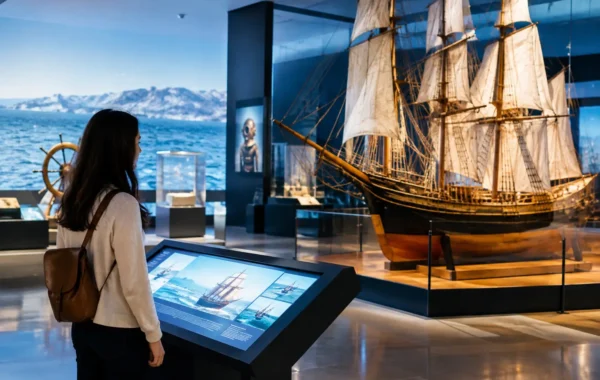
This is where a museum experience can become far richer than a conventional display of decorative arts. Visitors are not only looking at porcelain as collectors might. They are encountering the remains of voyages, trade ambitions, and regional exchange. At Straits & Oriental Museum, this maritime lens gives historic ceramics an added dimension of rarity and drama, particularly through artefacts associated with notable Asian shipwrecks.
How to recognise the character of Ming porcelain
Ming ceramics are often the first style many visitors think of, and with good reason. Blue-and-white porcelain reached a level of confidence and elegance during this period that still defines the popular imagination. Surfaces tend to feel balanced, motifs are often lively but controlled, and forms can range from sturdy export ware to highly sophisticated courtly pieces.
One hallmark of Ming blue-and-white is the use of cobalt under a clear glaze. Depending on the source of the cobalt and the kiln period, the blue can appear deep and intense or softer and more diffused. Floral scrolls, waves, dragons, lotus blooms, and landscape elements all appear with varying degrees of complexity. Even when decoration is dense, the best examples retain a sense of harmony.
It is also worth noting that not every Ming ceramic is delicate in the same way. Some export pieces were made for circulation in large volumes and may feel more utilitarian than imperial wares. That difference is part of the story, not a flaw. It reminds us that porcelain was produced for many audiences, from elite patrons to commercial buyers navigating the demands of long-distance trade.
What changes in Qing dynasty ceramics
If Ming porcelain often impresses through clarity and composure, Qing ceramics can feel more expansive in palette and experimentation. The Qing period saw technical innovation and decorative variety reach remarkable heights. Enamel colours became more varied and painterly. Decorative schemes could be highly intricate, and workshops responded to both domestic and overseas demand with confidence.
This does not mean Qing pieces are always more ornate. Some remain restrained and elegant. But as a broad impression, visitors often notice greater colour diversity and a wider decorative vocabulary. Famille rose wares, for example, introduced soft pink enamels that allowed for delicate floral and figural designs with a more nuanced tonal range than earlier blue-and-white traditions.
There is also an important trade dimension here. Qing export porcelain became deeply embedded in international markets. That means some pieces were shaped by foreign taste, commission patterns, and evolving commercial preferences. For visitors, this makes Qing ceramics especially revealing. They show Chinese mastery, certainly, but also the flexibility of production in response to a globalising world.
What to look for when viewing fine ceramic up close
The pleasure of historic porcelain lies in details that reward slow looking. Shape comes first. A vessel’s profile often reveals just as much as its decoration. Notice the confidence of a rim, the balance of a foot, the curve of a shoulder, or the proportion of a neck. Fine ceramics tend to feel resolved. Nothing is awkward without reason.
Then look at the glaze. Is it glassy, soft, cool, luminous, or slightly uneven? Glaze can transform the entire mood of a piece. Decoration should be read in relation to the form rather than as surface pattern alone. A dragon wrapped around a jar, a spray of peonies on a dish, or a border encircling a bowl is usually carefully placed to work with volume and movement.
Condition also tells a story. In archaeological or shipwreck contexts, signs of wear, encrustation, or minor imperfections may enhance historical significance rather than diminish it. Museum visitors sometimes expect pristine perfection, but heritage objects are often more powerful when they bear the traces of journey and survival.
Why shipwreck provenance changes the experience
A ceramic displayed simply as an antique can be admired for beauty. A ceramic displayed with shipwreck provenance carries another kind of presence. It has been part of an interrupted voyage. It may have sat underwater for centuries before recovery. It belongs not only to art history but also to maritime archaeology.
That distinction matters for visitors who want more than surface appreciation. Provenance gives an object narrative weight. It places it within trade routes, cargo systems, and the material realities of seafaring Asia. In practical terms, it can also help explain why certain forms appear in quantity, why some wares were destined for export, and how ceramics functioned within broader patterns of exchange.
In a destination such as George Town, where port history and multicultural heritage are deeply intertwined, that context feels especially resonant. The ceramics do not sit apart from the city’s identity. They illuminate it.
A richer way to experience Georgetown’s heritage
For many travellers, heritage visits can feel divided into separate interests – architecture here, food there, museums elsewhere. Fine ceramics invite a more connected experience. They bring together artistry, trade, travel, status, ritual, and everyday life in one medium. Seen in the right setting, they enrich a wider understanding of place.
This is why a visit centred on ceramic heritage can appeal equally to serious collectors, curious families, design enthusiasts, and international visitors looking for cultural depth. The objects are visually striking enough for first-time viewers, yet they also reward specialist interest. A child may notice the blue patterns. A collector may study kiln character. A history enthusiast may be drawn to the shipping routes behind the collection. Everyone enters through a different door.
That breadth is part of the appeal of an integrated heritage destination. One can move from artefacts to exhibitions, from historical reflection to conversation over a meal, from quiet looking to a fuller cultural outing. The experience becomes less about ticking off a museum stop and more about spending meaningful time with the stories that shaped the region.
Ming and Qing ceramics endure because they do two things at once. They preserve splendour, and they preserve evidence. In Georgetown, that double value feels particularly alive. These are not only beautiful remnants of dynastic China. They are witnesses to the maritime world that carried ideas, goods, and people across Asia – and they still have the power to stop a visitor in their tracks.