
Few places in Southeast Asia preserve the texture of Chinese communal life as vividly as Penang. To understand Chinese clan houses and society in Penang from the 19th to the 20th century is to see how migration, trade, kinship and urban ambition were woven into the making of George Town itself.
This story begins at the waterfront. Penang was never simply a colonial port with ships coming and going. It was a meeting ground where merchants, labourers, craftsmen and middlemen arrived from Fujian, Guangdong and beyond, carrying dialects, deities, business ties and village loyalties with them. In a fast-growing entrepot, clan houses became one of the most important institutions through which these communities organised survival and success.
Why clan houses mattered in Penang
A clan house was far more than an impressive building with carved timber, painted beams and ancestral tablets. It was a social headquarters. For a newcomer stepping off a vessel into an unfamiliar port, the clan house could provide introductions, temporary shelter, employment contacts, mediation in disputes and ritual belonging.
In 19th-century Penang, the Chinese population was far from uniform. Communities were often divided by surname, home district, dialect group and trade interests. Hokkien merchants, Cantonese artisans, Teochew traders, Hakka labourers and other groups all moved within overlapping but distinct networks. Clan houses helped turn these fragmented migrations into stable communities.
Some associations were based on a shared surname, linking members through a common ancestor. Others were district associations, uniting migrants from the same county or prefecture in China. In practice, these boundaries could blur. What mattered was mutual recognition. In a colonial society where state welfare was absent and social mobility depended heavily on relationships, the clan house offered structure, dignity and practical security.
Chinese clan houses and society in Penang from the 19th to 20th century
The rise of Chinese clan houses in Penang followed the island’s growth as a regional trading centre. Maritime commerce brought not only goods but people – and with them, the need for institutions that could absorb waves of migration. Clan houses emerged as anchors in this shifting world.
Their role was economic as much as cultural. Merchants used these associations to build trust across commercial networks stretching from Penang to Malacca, Singapore, Phuket, Medan and southern China. Credit, partnership and reputation often rested on personal ties rather than formal contracts alone. A clan house could validate a trader’s standing and connect him to buyers, shippers and financiers.
At the same time, these institutions had a deeply moral dimension. They upheld codes of conduct, encouraged charity, funded funerals and maintained ancestral rites. In doing so, they gave public shape to values such as filial piety, reciprocity and collective honour. The Chinese social world in Penang was not governed only by profit. It was also held together by ritual obligation and community discipline.
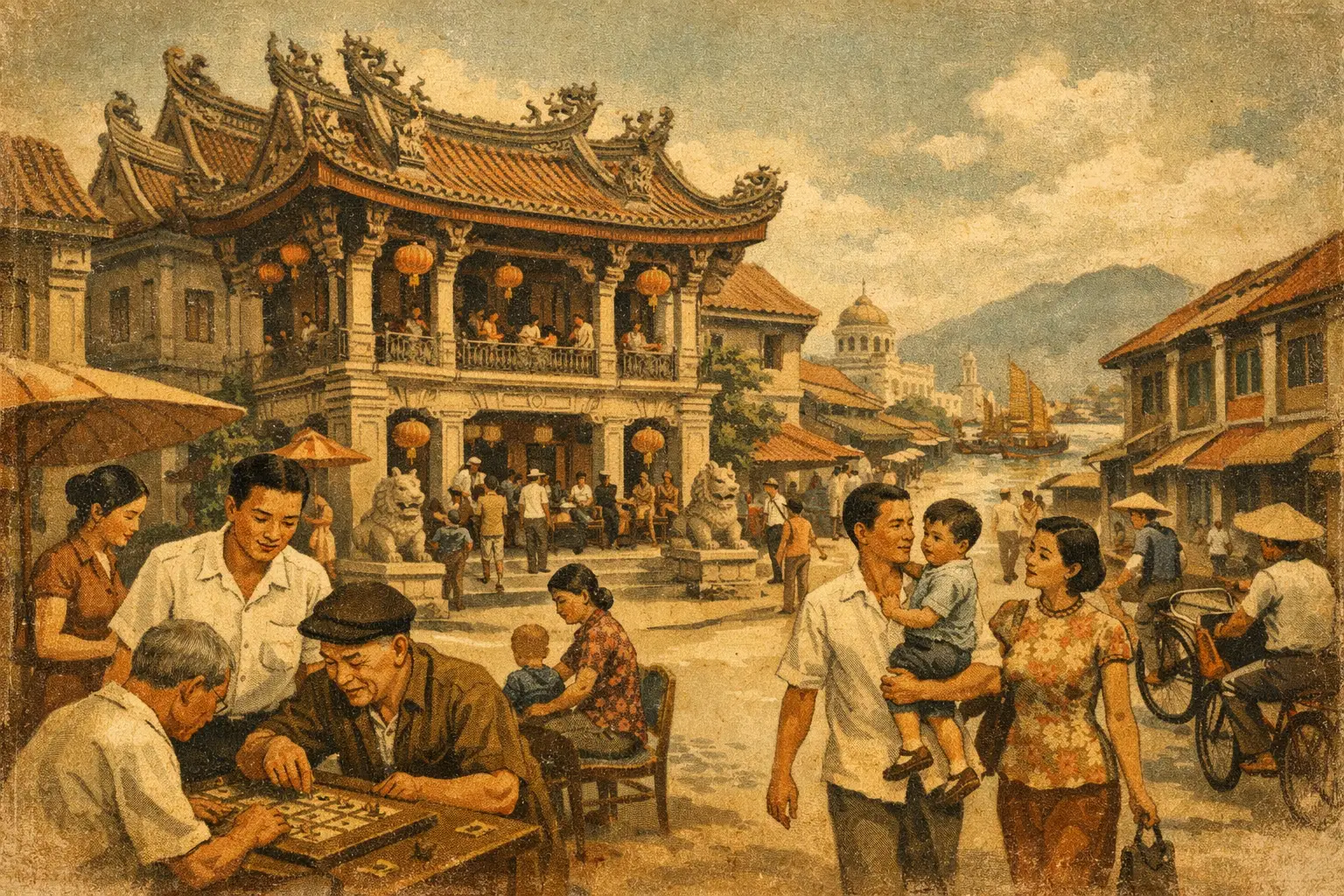
By the early 20th century, many clan houses had become established urban landmarks. Their architecture reflected both confidence and continuity. Courtyards, altars, decorative ceramics and calligraphic plaques made these spaces visible statements of rootedness. They were announcing, in built form, that the Chinese community was not transient but integral to Penang’s civic and commercial life.
More than architecture – centres of welfare, ritual and power
It is tempting to view clan houses mainly as heritage monuments, admired for ornament and craftsmanship. Yet their original power lay in what happened inside them. Meetings were held, disputes settled, marriages acknowledged, festivals organised and educational efforts funded. These were living institutions with influence over everyday life.
They often acted as a welfare mechanism before modern bureaucracy took shape. A sick member might receive assistance. A recently arrived migrant might be guided towards work. A family in difficulty could appeal to the association. This practical role helps explain why clan houses retained importance over generations, even as Penang modernised.
They also served as stages for prestige. Wealthy patrons donated generously to building funds, temple repairs and ceremonial events. Such contributions reinforced status within the community while also benefiting the wider group. Philanthropy and influence were closely linked. A grand hall or richly decorated ancestral chamber was not mere display – it signalled collective achievement and the standing of those who sustained it.
That said, society within these networks was not always harmonious. Leadership could be contested. Rivalries between dialect groups and secret societies occasionally spilled into conflict, particularly in the 19th century when competition for labour, territory and economic control was intense. Clan houses offered order, but they could also reflect social hierarchies and exclusions. Women, labourers and poorer migrants did not always hold equal influence within these institutions, even when they depended upon them.
The maritime world behind the clan house
Penang’s Chinese social landscape cannot be separated from the sea. Every clan house story is, in some sense, a maritime story. Wealth flowed through shipping lanes. Ceramics, tea, silk, opium, spices and everyday goods moved across the Straits, carrying fortunes and risks in equal measure.
For this reason, the history of Chinese society in Penang is best read not as an isolated ethnic narrative but as part of a wider port-city ecology. Merchants funded temples and clan houses from trade profits. Dockside labour fed urban growth. Maritime insurance, warehousing and inter-Asian commerce shaped the fortunes of families whose names later appeared on association boards and donor tablets.
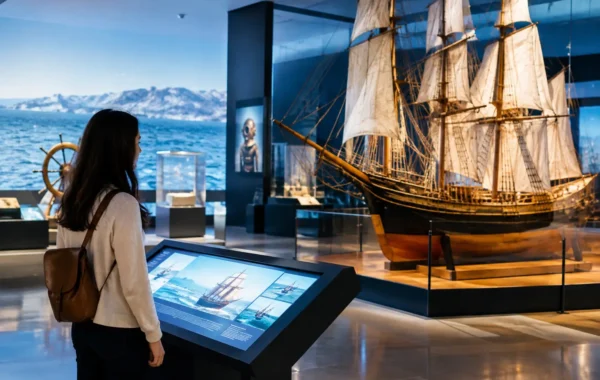
This is also why material culture matters. Porcelain, export wares and household ceramics were not decorative sidelines to history. They were part of the commercial and domestic world these communities inhabited. At institutions such as Straits & Oriental Museum, maritime artefacts illuminate the wider networks that made Penang’s Chinese society possible. A bowl recovered from a shipwreck and an ancestral hall in George Town may seem far apart, yet both belong to the same story of movement, exchange and settlement.
Change in the 20th century
The 20th century did not erase clan houses, but it changed their function. As formal schools, municipal systems, banks and legal institutions expanded, the clan house was no longer the only gateway to security or advancement. English education, new professions and a more complex colonial and later national political environment altered community life.
Chinese identity in Penang also became broader and more layered. People remained attached to surname and dialect associations, but they were increasingly shaped by local birth, Straits Chinese culture, nationalist movements, labour politics and modern education. Some younger generations saw clan institutions as old-fashioned; others treated them as vital custodians of heritage.
Even so, clan houses adapted. Many continued to sponsor festivals, maintain ancestral worship and preserve communal memory. In some cases, they became guardians of architecture and archives. Their importance shifted from immediate social welfare towards cultural continuity. This transition matters because it explains why they survive today not as relics, but as witnesses to how communities evolve without severing themselves from origin.
What these houses reveal about Penang society
Chinese clan houses reveal a Penang shaped by negotiation rather than simplicity. They show how migrants created belonging in a colonial port, how commerce fed culture, and how architecture became a declaration of permanence. They also remind us that society was built through institutions people trusted long before modern public systems could do the same work.
For visitors, this history adds depth to the streetscape of George Town. Ornamental facades and ceremonial halls are not merely picturesque backdrops. They are records of courage, adaptation and ambition. They speak of men and women who crossed seas, built networks, honoured ancestors and transformed a trading settlement into one of the region’s most layered urban societies.
To walk through Penang with this in mind is to notice more than buildings. You begin to see courtyards as social maps, shrines as anchors of memory, and decorative ceramics as traces of the wider maritime routes that connected households to the world beyond the harbour. That is where the history becomes especially rewarding – not in isolated facts, but in the way trade, ritual, family and place come together in one enduring Penang story.