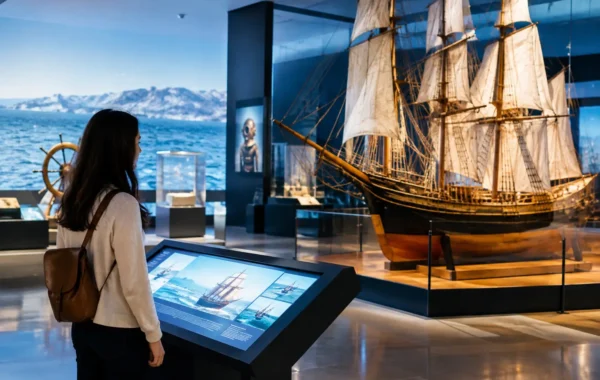


Some museum objects ask to be viewed. Fine Ceramics At Straits and Oriental Museum in Penang ask to be read – as cargo, as craftsmanship, and as evidence of the maritime world that shaped this island’s place in Asia.
These are not decorative pieces removed from history and placed behind glass for quiet admiration alone. They are survivors of trade routes, monsoon crossings, commercial ambition, and sudden disaster. Recovered from storied Asian shipwrecks, the ceramics on view offer something unusually powerful for visitors to Penang – the chance to stand before authentic porcelain and stoneware that once moved across seas, linking ports, merchants, dynasties, and households.
For travellers, collectors, and culturally curious visitors, that changes the experience entirely. You are not simply looking at fine ceramics. You are seeing the material record of a region built by exchange.
Why fine ceramics matter here
Many museums present ceramics through style, period, or technique. That approach has its place, but shipwreck ceramics demand a broader reading. Their value lies not only in glaze, form, or rarity, but in context. Once lifted from the seabed, each bowl, dish, jar, ewer, or storage vessel carries with it a second story – where it may have been made, who it was intended for, how it travelled, and what its survival reveals about maritime commerce.
That is what makes this collection so compelling. The museum frames ceramics not as isolated works of beauty, but as part of a living network of trade and cultural transmission. A blue and white porcelain dish, for example, may speak of kiln technology and imperial taste, but it also speaks of shipping systems, merchant demand, and the appetite for fine goods across Southeast Asia.
In Penang, that perspective feels especially apt. This is a destination long associated with crossroads, commerce, migration, and layered histories. Ceramics recovered from shipwrecks belong naturally in that story because they show how connected the region was long before modern tourism or air travel made movement appear effortless.
Fine Ceramics At Straits and Oriental Museum in Penang
What distinguishes Fine Ceramics At Straits and Oriental Museum in Penang is the authority of provenance. These are authentic artefacts associated with significant wreck sites including the Wanli, Turiang, Royal Nanhai, Nanyang, Xuande, and Desaru. For the general visitor, that means the collection has depth and credibility. For the collector or serious enthusiast, it means every object is part of a bigger archaeological narrative.
That distinction matters. Fine ceramics can easily be admired for surface beauty alone, and there is beauty here in abundance – refined forms, luminous glazes, intricate painted motifs, and the calm confidence of objects made with exacting skill. Yet the shipwreck dimension gives the collection a dramatic and historical force that many conventional displays cannot match.
A plate from a terrestrial collection may tell you about manufacture. A plate from a wreck can tell you about manufacture, trade, destination, circulation, and loss. It invites a different kind of looking. Visitors tend to spend longer with such objects because they are not merely asking, “Is this beautiful?” They are also asking, “How did it get here?” and “What world did it belong to?”
What you will notice when viewing the collection
The first surprise for many visitors is variety. Maritime cargoes were not composed only of elite display wares. They often included ceramics made for different markets, uses, and price points. This means the experience of viewing shipwreck finds can be richer than expected. You may encounter delicate porcelain intended for refined dining, but also sturdy trade wares designed for practical circulation on a much wider scale.
That range helps explain the social life of ceramics. Some pieces were luxurious, signalling status and taste. Others were made for broader consumption, proving that ceramic exchange was not reserved for courts and aristocrats alone. Together, they reveal a commercial ecosystem rather than a narrow aesthetic category.
You will also notice how well many pieces have endured. There is always something arresting about porcelain that has survived centuries underwater and still retains clarity of line, balance of proportion, and elegance of decoration. That endurance is part of the fascination. It reminds visitors that ceramics are both fragile and astonishingly durable – vulnerable in use, yet capable of outlasting the ships that carried them.
Another detail worth attending to is repetition. Cargo ceramics often appear in groups, related forms, or standardised designs. Far from making them less interesting, this points to organised production and established demand. In other words, these objects were not only beautiful things. They were part of highly developed systems of trade.
More than porcelain – a story of maritime Asia
The museum’s collection does not reduce maritime history to a romantic tale of sunken treasure. That is an important strength. Shipwreck ceramics naturally carry a sense of drama, but their deeper significance lies in what they document about the economic and cultural life of Asia.
Ceramics were among the most important traded goods in the region for good reason. They were practical, desirable, and transportable at scale. They moved between production centres and port cities, between makers and merchants, and between cultures with different tastes and dining traditions. As a result, they became one of the clearest material markers of exchange.
Seen in this light, the fine ceramics on display are evidence of circulation across the South China Sea and beyond. They reflect patterns of consumption, aesthetic preference, and commercial reach. They also suggest how closely linked Asian ports once were through systems of trade that were sophisticated, ambitious, and deeply international in character.
For visitors to George Town, this offers a richer way to understand place. Penang’s heritage is often appreciated through architecture, food, and urban atmosphere. The ceramics add another layer. They reveal the maritime backdrop that made such a place possible in the first instance.
Why this experience appeals beyond museum lovers
A collection like this speaks naturally to historians and collectors, but its appeal is wider than that. Families respond to the sense of discovery. Travellers appreciate the rarity of seeing authentic shipwreck artefacts in a setting that is accessible rather than overly academic. Design-minded visitors are drawn to the grace of the objects themselves, while culturally engaged tourists value experiences that feel specific to destination rather than interchangeable.
That breadth is part of the museum’s achievement. It presents fine ceramics in a way that remains elevated without becoming remote. The experience is visually rewarding, but it also carries intellectual substance. Visitors can admire craftsmanship, absorb historical context, and enjoy the atmosphere of a destination designed around heritage as lived experience rather than static display.
This integrated quality matters. A museum visit is not always chosen purely for scholarship. Often it is chosen because people want a meaningful afternoon, an enriching stop in a heritage city, or a cultured outing that combines learning with leisure. In that sense, the setting supports the collection well. It allows visitors to move from artefacts to conversation, from reflection to hospitality, without losing the sense of occasion.
How to get more from the ceramics on display
The most rewarding approach is to slow down. Instead of trying to “cover” the gallery, choose a few objects and spend time with them. Notice the shape first, then the glaze, then any painted detail. After that, consider the object as cargo. Why this form? Why this quantity? What kind of buyer might it have served?
It also helps to compare unlike objects. Place a refined porcelain piece mentally beside a sturdier utilitarian vessel and ask what each reveals about trade. One may speak of prestige, the other of daily use. Together, they show that maritime exchange moved both luxury and necessity.
If you are travelling with children or companions who are less museum-oriented, shipwreck ceramics give you an easy point of entry. The human story is immediate: these objects were made, packed, transported, lost, and found again. That narrative invites curiosity even before questions of dynasty, kiln, or typology enter the picture.
For collectors and connoisseurs, the pleasure is slightly different. Provenance, preservation, production quality, and regional significance all come into focus here. What you encounter is not simply a gathering of attractive pieces, but a curated statement about the splendour of porcelain and the historical reach of maritime Asia.
In a city celebrated for layered heritage, the finest cultural experiences are those that reveal something essential beneath the surface. These ceramics do exactly that. They show that the sea did not separate Asia’s great trading worlds – it connected them, and the evidence is still here to be seen.