
A porcelain bowl can appear quietly self-contained: pale glaze, measured form, a painted flourish beneath the surface. Yet an imperial ceramic collection asks us to see far beyond the object itself. It brings together the ambitions of court workshops, the technical confidence of master potters, the expectations of wealthy buyers and the sea routes that carried fragile cargoes across Asia.
For visitors to George Town, these works offer a particularly vivid way to encounter the region’s maritime past. They are not simply beautiful remnants of another age. They are evidence of how ideas, tastes and fortunes travelled between China, Southeast Asia and the wider world – often in the holds of ships that never completed their journeys.
What makes a ceramic collection imperial?
The word “imperial” carries weight, but it deserves careful reading. In the strictest sense, imperial ceramics were made for a ruling court, often in workshops working to exacting official requirements. Their materials, motifs, proportions and quality were controlled because porcelain was part of the visual language of power. A dragon, phoenix, five-clawed creature, particular yellow ground or prescribed vessel form could signal rank and ritual purpose.
Not every finely made Chinese ceramic was intended for an emperor, however. Many pieces were produced in the same great kiln centres for officials, merchants and overseas markets. A serious imperial ceramic collection therefore does more than present luxury objects. It distinguishes between courtly production, high-quality commercial wares and export pieces influenced by imperial fashions.
That distinction makes the collection more compelling, not less. It reveals a world in which the aesthetic standards of the court shaped demand far beyond palace walls. An elegant blue-and-white dish, for instance, may have travelled as an export item, but its refined composition still reflects the technical and artistic culture that made Chinese porcelain so admired.
Porcelain as a statement of power
Imperial ceramics were made to be seen. Their surfaces could record auspicious wishes, seasonal flowers, sacred symbols or scenes drawn from literature. Every element had a purpose. A lotus might suggest purity, peaches longevity and waves the authority of an ordered cosmos. Decoration was not merely ornamental; it helped communicate a system of values.
The same is true of form. Small cups, ritual vessels, covered boxes and large dishes served different practical and ceremonial settings. The curve of a foot ring, the balance of a lid or the depth of a bowl may seem like minor details, but they speak to the confidence of the maker and the intended status of the user.
Colour also tells a story. Cobalt blue beneath a transparent glaze became one of the most recognisable languages of Chinese porcelain. Copper red demanded difficult firing conditions and carried particular prestige. Celadons, with their soft green surfaces, were prized for their restrained beauty and their ability to evoke jade. Such pieces remind us that magnificence need not always be loud.
The sea changed the meaning of every piece
Once porcelain left the kiln, it entered a far larger story. Packed in jars, crates or nested stacks, ceramics travelled through ports and trading networks that connected coastal China with the Malay Archipelago, India, the Middle East and Europe. These journeys made porcelain one of Asia’s most influential cultural exports.
Shipwreck ceramics are especially powerful because they preserve this commercial moment. A vessel lost at sea is a time capsule, holding objects that were selected, packed and shipped together. The cargo can show what merchants believed customers wanted, from practical bowls for household use to more elaborate wares intended for elite tables and ceremonial gifts.
It also complicates assumptions about luxury. A ship might carry ceramics of different grades side by side. Courtly taste was not limited to the court: its patterns and techniques were interpreted for diverse markets. A motif that had one meaning in China could acquire another in a Southeast Asian home, where it became part of local dining, gifting and display traditions.
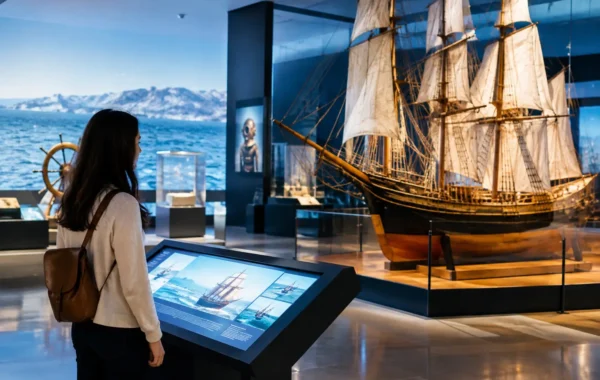
At Straits & Oriental Museum, the shipwreck collections provide this wider maritime frame. Ceramics associated with wrecks such as Wanli, Turiang, Royal Nanhai, Nanyang, Xuande and Desaru invite visitors to consider porcelain not as an isolated art form, but as cargo shaped by the currents of regional history.
How to look closely at an imperial ceramic collection
The pleasure of such a collection lies in slowing down. Begin with the silhouette before looking at the decoration. Is the vessel broad and generous, compact and formal, or designed to be held in one hand? Form often offers the first clue to function and date.
Then study the surface. Hand-painted decoration has a rhythm that differs from printed or moulded patterning. Look for the movement of the brush, the varying depth of cobalt and the way a design responds to the curve of the vessel. On an older piece, tiny firing marks, glaze pooling or an uneven tone are not necessarily flaws. They can be traces of a demanding handmade process.
The base matters, too. Foot rings, reign marks and unglazed areas can help specialists identify production methods and periods. Yet a mark alone is never a final answer. Marks were copied, honoured and reused across generations. Attribution depends on a combination of material, style, archaeological context and connoisseurship.
Finally, ask where the object has been. A piece excavated from a documented shipwreck carries a different kind of evidence from one that has passed through many private collections. Both may be beautiful, but provenance changes what can responsibly be said about date, journey and use.
Why fragments deserve attention
Visitors are naturally drawn to complete vessels, especially those with luminous glazes or intricate painted scenes. But fragments can be equally revealing. A shard may preserve the edge of a rare motif, a distinctive glaze or a kiln-specific body clay. In maritime archaeology, a fragment can help establish the date of a wreck or show how a cargo was organised.
Breakage also brings a human dimension to the gallery. These objects survived fire, firing, packing, transport, storms, wreckage, burial and recovery. A chipped rim or softened surface may record a long journey that a flawless museum piece can conceal. The object has not lost its story through damage; in many cases, it has gained one.
Courtly ideals, regional lives
An imperial ceramic collection is most rewarding when it is understood as part of a living exchange rather than a closed world of palaces. Porcelain moved because people desired it. It was used to honour guests, furnish homes, mark celebrations and create connections across languages and shores.
That is why these collections belong naturally in Penang’s cultural landscape. The island’s history has long been shaped by movement, trade and encounters between communities. Looking at a ceramic vessel recovered from the sea can become a journey through time, but it can also sharpen our sense of the networks that continue to define this place.
When you next stand before a finely painted dish or a quietly glowing celadon bowl, resist the urge to take in only its beauty. Consider the hands that shaped it, the courtly ideals that informed it, the merchant who loaded it and the table where it may once have been expected to arrive. In that pause, porcelain becomes more than an artefact. It becomes a witness.