

A heritage day should not feel like a race between plaques, photographs and souvenir shops. The most rewarding days have a thread running through them: a trade route, a family story, a building style, a local craft or a turning point in a place’s history. If you are wondering how to plan a heritage day, begin by deciding what you want to understand by the time the day is over – not simply how many sights you can fit in.
For travellers, heritage is often the reason a destination stays with you long after the return flight. For families and local visitors, it can make familiar streets feel newly significant. The difference lies in thoughtful choices: authentic places, enough time to notice details, and pauses that let the experience settle.
Begin with one compelling story
The temptation is to plan around a checklist of famous landmarks. That approach can work for a very short visit, but it often leaves little room to appreciate why those places matter. A stronger heritage day is built around one central story.
In a historic port city, for example, you might follow the movement of people and goods across the sea: from the waterfront to a museum collection, then to a neighbourhood shaped by merchant communities. In a rural town, your story may be craftsmanship, agriculture or the lives behind a grand house. The subject does not need to be vast. In fact, a narrower focus usually produces a richer day.
Ask three useful questions before you set out. What period or theme interests us most? Which place can bring that theme to life most vividly? What do we hope to remember or discuss afterwards? Your answers create a natural filter for every stop you add.
How to plan a heritage day around an anchor experience
Choose one substantial experience as the heart of the itinerary. This might be a guided walk, a historic building, an archaeological site, a gallery exhibition or a museum with a collection that cannot be encountered elsewhere. Book it first if timed entry is required, then plan the rest of the day around it.
An anchor experience gives the day authority. Rather than moving through a series of disconnected attractions, visitors have time to meet the objects, architecture and stories properly. A museum is especially valuable when it places individual artefacts within a larger human story. A recovered ceramic bowl, for instance, is not only beautiful. It can reveal the routes of trade, the tastes of households, the skill of makers and the risks taken by sailors carrying cargo across unpredictable seas.
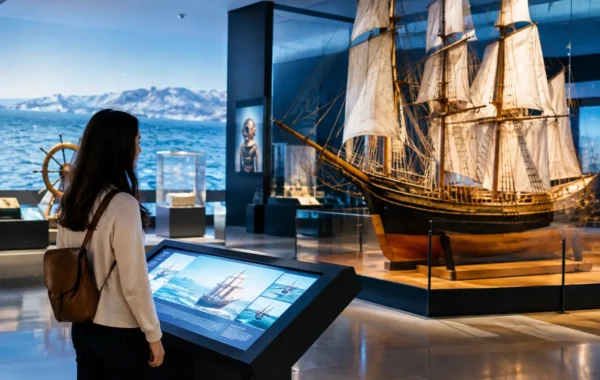
At Straits & Oriental Museum in George Town, shipwreck ceramics provide precisely this kind of starting point. The porcelain of the Wanli, Turiang, Royal Nanhai, Nanyang, Xuande and Desaru wrecks offers a tangible way to consider Southeast Asia’s long maritime connections. Allow enough time to look closely rather than treating rare objects as a backdrop for a hurried photograph.
If your group has mixed interests, choose an anchor that offers more than one way in. Children may respond to a shipwreck story or decorative motifs; collectors may look for kiln traditions and condition; first-time visitors may be drawn to the visual splendour of porcelain. A good heritage setting welcomes each perspective without reducing the history to a single fact.
Leave room before and after
Do not schedule the main visit at the first possible minute of the day. Start with a short walk through the surrounding area, or a quiet coffee, so everyone arrives attentive rather than flustered. Afterwards, allow a similar pause. It is often then that people begin to connect what they have seen with the streets, food and communities around them.
This is also where an itinerary becomes a cultural outing rather than a sequence of appointments. Heritage deserves a little unstructured time.
Build a rhythm, not an endurance test
A well-paced heritage day usually includes one major visit, one shorter complementary stop, a proper meal and time outdoors. That may sound modest, but historical places ask for concentration. Reading, listening, observing and discussing are rewarding forms of attention, and they become tiring when every hour is programmed.
Think in contrasts. If the morning is spent indoors with a collection, make the afternoon a walk through an old quarter, waterfront or garden. If the main experience is a busy guided tour, choose a calm café or a smaller gallery afterwards. If your central stop involves dense political or social history, balance it with a craft demonstration, market visit or architectural detail that brings texture and colour to the day.
Travel time matters more than it seems. Two excellent sites on opposite sides of a city can turn a promising day into one spent in traffic. Group stops by neighbourhood and keep transfers simple. In George Town, for instance, a day is more enjoyable when its cultural experiences are close enough to be joined on foot, allowing historic façades, five-foot ways and everyday street life to become part of the story.
Aim for no more than three purposeful stops. Four can work if two are brief and close together, but more than that tends to replace curiosity with fatigue. The goal is not to prove that you have covered a destination. It is to leave with a clearer sense of its character.
Let food belong to the story
A heritage day should include a meal chosen with as much care as the cultural programme. Food is not merely a convenient interval. It reflects migration, trade, belief, climate and the accumulated preferences of communities over generations.
Choose somewhere with a connection to the area, whether through local ingredients, a longstanding recipe tradition or a setting that keeps you within the historic district. Discuss what is on the table. A spice, a tea, a noodle dish or a dessert can open a conversation about the same networks that carried ceramics, textiles and people across Asia.
There is no need to turn lunch into a lecture. A simple question is enough: where might these ingredients have come from, and who helped bring them here? Shared meals create the relaxed moments in which heritage becomes personal.
Prepare well, but do not over-script the day
A little preparation prevents avoidable disappointment. Check opening hours, admission arrangements, accessibility information, photography policies and whether a venue has guided tours at useful times. If you are travelling during a public holiday or school break, book key experiences in advance and have a sensible alternative in mind.
Read just enough before your visit to recognise the main themes. Over-researching can sometimes make people feel they are completing an assignment rather than making a discovery. Leave space for the unexpected object, local recommendation or side street that catches your attention.
Bring water, sun protection and comfortable footwear, especially where walking forms part of the itinerary. A small notebook can be surprisingly useful for families, students and curious travellers alike. Ask each person to note one object, detail or story they would like to investigate further. The practice encourages looking, and it gives the day a gentle purpose.
If you are planning for international visitors, be realistic about energy levels. Jet lag, heat and unfamiliar food can affect even enthusiastic travellers. A shorter, beautifully paced afternoon may be more memorable than a full day that asks too much.
Plan for the people you are with
The best heritage day changes according to the group. With young children, prioritise places with strong visual stories and build in space to move. Ask them to find an animal, pattern, map or object they would choose to take home. With teenagers, connect history to questions of identity, technology, trade or inequality rather than assuming dates alone will hold attention.
For older relatives or guests with limited mobility, check seating, lifts, distances and toilet facilities before confirming the route. This is not a compromise in ambition. It is how you make cultural experiences genuinely welcoming. A heritage day is better when everyone can participate without worry.
Couples and small groups may enjoy a slower format: an exhibition, a considered meal and a final drink or dessert in a setting that invites conversation. Collectors and enthusiasts might prefer extra time for close observation, catalogues and specialist interpretation. There is no single ideal itinerary; the right pace depends on what your companions value most.
Finish with a question worth carrying home
Before the day ends, resist the urge to rush straight to the next plan. Sit somewhere nearby and ask what surprised each person. Perhaps it was the scale of an old trading network, the delicacy of a centuries-old glaze, or the way a familiar building revealed an overlooked past.
A small keepsake can extend the experience, but it need not be expensive. A postcard, exhibition publication or carefully chosen object from a gift house can become a prompt for future conversations. What matters is that it relates to a story you encountered, rather than being purchased out of habit.
The finest heritage days do not try to contain an entire past. They offer one vivid encounter with it – enough to make the next historic street, old recipe or museum display feel less distant, and far more alive.