
The best Chinese art exhibitions do more than assemble beautiful objects behind glass. They make the visitor feel the weight of a painted brushstroke, the precision of a kiln-fired bowl and the vast distance travelled by a piece of porcelain across the seas. For cultural travellers in Penang, that sense of connection is especially powerful: Chinese art is not simply an imperial story, but a living thread within the trading, culinary and family histories of the region.
A memorable exhibition should leave room for admiration, certainly, but also for questions. Who made this object? What did it mean in its original setting? How did it arrive here? The finest presentations bring these questions to life through carefully chosen works, confident interpretation and an atmosphere that rewards unhurried looking.
What makes the best Chinese art exhibitions stand apart?
Chinese art spans millennia, dynasties, materials and philosophies. It can encompass ceremonial bronze vessels, quiet ink landscapes, Buddhist sculpture, lacquer, jade, textiles and ceramics made for imperial courts or everyday homes. No single exhibition can hold all of that history. Its strength lies in making a thoughtful choice and giving visitors a clear way into it.
The best exhibitions have a point of view. An exhibition centred on blue-and-white porcelain, for instance, becomes far more compelling when it explains how cobalt pigments, kiln technology, court taste and international trade came together. A display of brush painting becomes richer when it considers the rhythm of calligraphy, the symbolism of plum blossom or bamboo, and the belief that a landscape can express an inner state of mind.
Context matters as much as rarity. A flawless porcelain dish may first draw the eye because of its luminous glaze, but its real significance emerges when visitors understand its date, place of manufacture and original journey. Was it commissioned for a palace? Made for export? Carried in the hold of a merchant ship? These details turn a handsome object into a witness to history.
There is a trade-off, however. Large exhibitions can offer breadth, moving from ancient ritual objects to contemporary installation art in a single visit. Smaller displays often offer greater intimacy and a stronger story. Neither is automatically better. Families and first-time visitors may prefer a focused exhibition with accessible interpretation, while collectors and specialists may seek the chance to examine a particular period, kiln or school in depth.
Chinese art is best understood through material and meaning
One useful way to approach Chinese art is to begin with the material in front of you. In Chinese traditions, material is rarely neutral. It carries technical knowledge, social status and symbolic associations.
Porcelain: art shaped by fire
Porcelain remains one of China’s greatest artistic achievements, admired for its strength, translucency and extraordinary capacity for decoration. From the refinement of celadon wares to the crisp drama of blue-and-white designs, ceramic objects reveal changing tastes as clearly as paintings or architecture do.
Look beyond the surface pattern. A dragon might signal imperial authority; peonies can suggest wealth and honour; lotus flowers evoke purity; and scrolling vines may reflect both Chinese decorative traditions and the influence of overseas markets. The shape of a vessel also matters. A bowl, ewer, jar or dish had a purpose before it became a museum object, and that practical beginning is part of its story.
Maritime ceramics add another dimension. Pieces recovered from shipwrecks show that Chinese porcelain was prized far beyond China’s shores. Their journeys connected kilns and ports with Southeast Asian communities, merchants and households. In this context, a ceramic shard or storage jar can speak just as eloquently about exchange and movement as a complete courtly treasure.
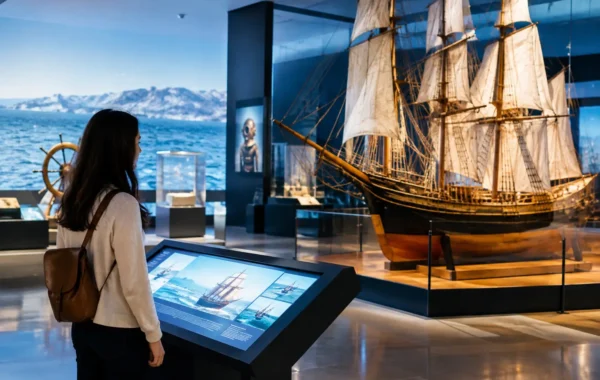
At Straits & Oriental Museum, shipwreck ceramics provide precisely this perspective, presenting authentic porcelain recovered from notable Asian wrecks within a broader journey through maritime history. It is a reminder that the history of Chinese ceramics is not confined to dynasties and kiln sites. It is also a history of sea routes, risk, commerce and enduring cultural influence.
Ink, painting and the art of looking slowly
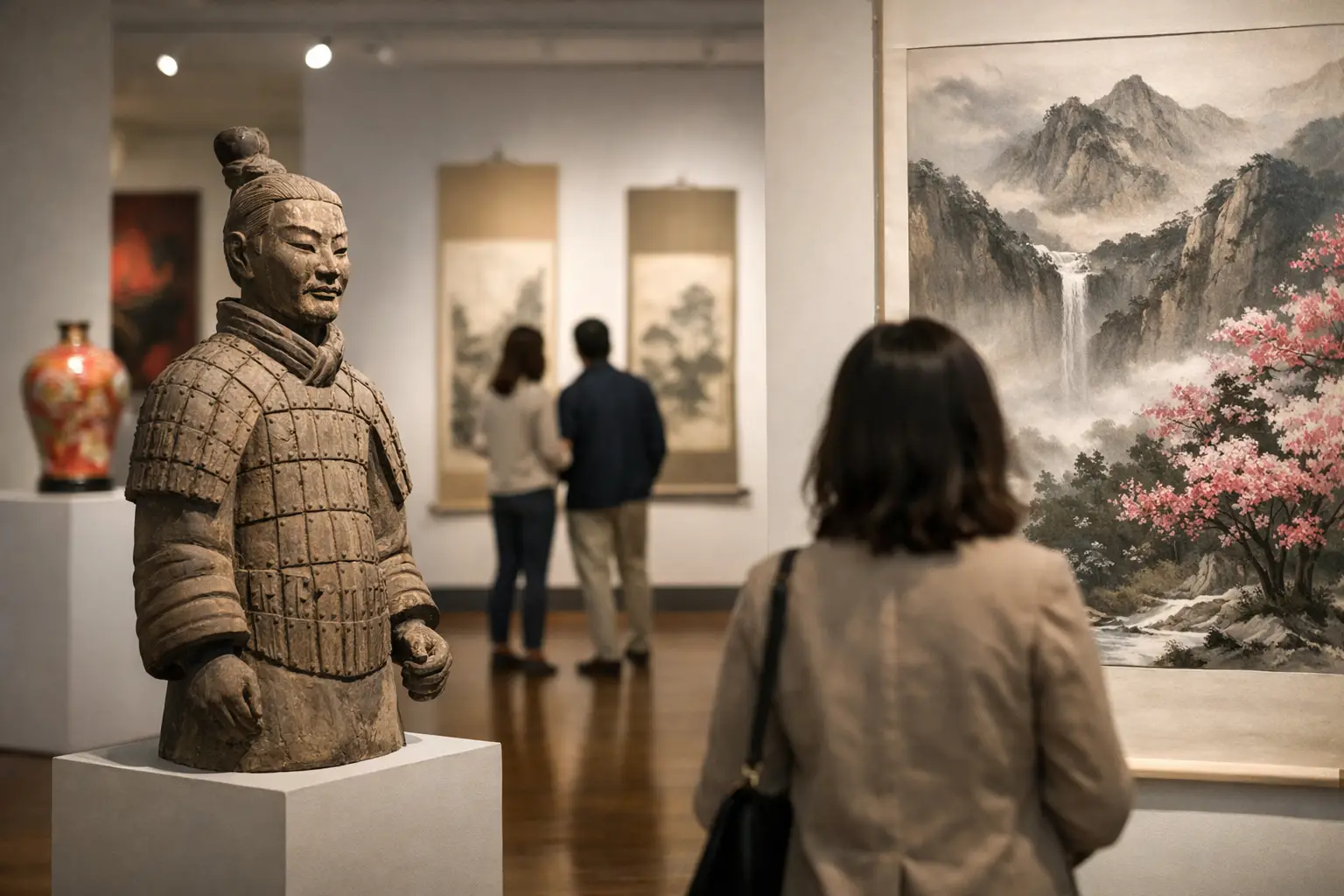
Chinese painting asks for a different kind of attention. A scroll may appear spare at first glance, with a mountain rendered in diluted ink, a small pavilion tucked among trees or a line of poetry beside the image. Yet its economy is deliberate. Empty space is often as expressive as the painted form.
When viewing ink painting, give your eyes time to travel. Notice the pressure and speed of the brush, the shifts from dense black to pale wash, and the relationship between image and inscription. In many works, calligraphy is not an addition but part of the composition itself. A painted landscape can be an imagined retreat, a response to political upheaval or a gesture of friendship between scholars.
The same principle applies to contemporary Chinese art. The most rewarding exhibitions do not treat contemporary work as a break from the past. Artists may use photography, video, installation or bold abstraction, yet still respond to inherited ideas about language, landscape, memory, craft and identity. The medium changes; the conversation continues.
How to choose a Chinese art exhibition that suits your visit
Before setting aside an afternoon, consider what you would like to take away from it. If you are travelling with children or a mixed-age group, choose an exhibition with a strong visual narrative: ceramics, trade, animals, colour and maps tend to create immediate points of connection. If you are interested in collecting, seek displays that identify dates, kiln traditions, materials and provenance clearly. These details build confidence and sharpen the eye.
For visitors drawn to history, exhibitions about trade routes, imperial patronage or archaeological discoveries offer the richest sense of place. They show how art moved through the world rather than remaining fixed in a palace or workshop. This is particularly resonant in George Town, where the heritage streets themselves reflect centuries of maritime exchange.
It is also worth considering the setting. A gallery visit need not be a hurried checklist between other plans. The most satisfying cultural outings allow time to pause, discuss a favourite object and continue the conversation over a meal or coffee. Museums that combine interpretation with hospitality can make art feel less remote, especially for visitors who do not consider themselves experts.
Questions that make every gallery visit richer
You do not need specialist knowledge to look well. A few simple questions can transform the experience. Ask what the object was made for, who might have owned it, and how its material affected its form. Consider whether a motif is decorative, symbolic or both. Look for signs of use: a repaired rim, worn gilding, a maker’s mark or an uneven glaze can reveal a life beyond display.
With ceramics, compare proportions and decoration from one piece to the next. With painting, stand close enough to see the brushwork, then step back to understand the whole composition. With archaeological material, imagine the conditions in which it was found and the journey it completed before reaching the gallery.
The finest Chinese art exhibitions offer a meeting with objects that have survived extraordinary distances in time and place. Approach them with curiosity rather than a need to know everything, and a single bowl, brushstroke or fragment of porcelain may stay with you long after the visit ends.