
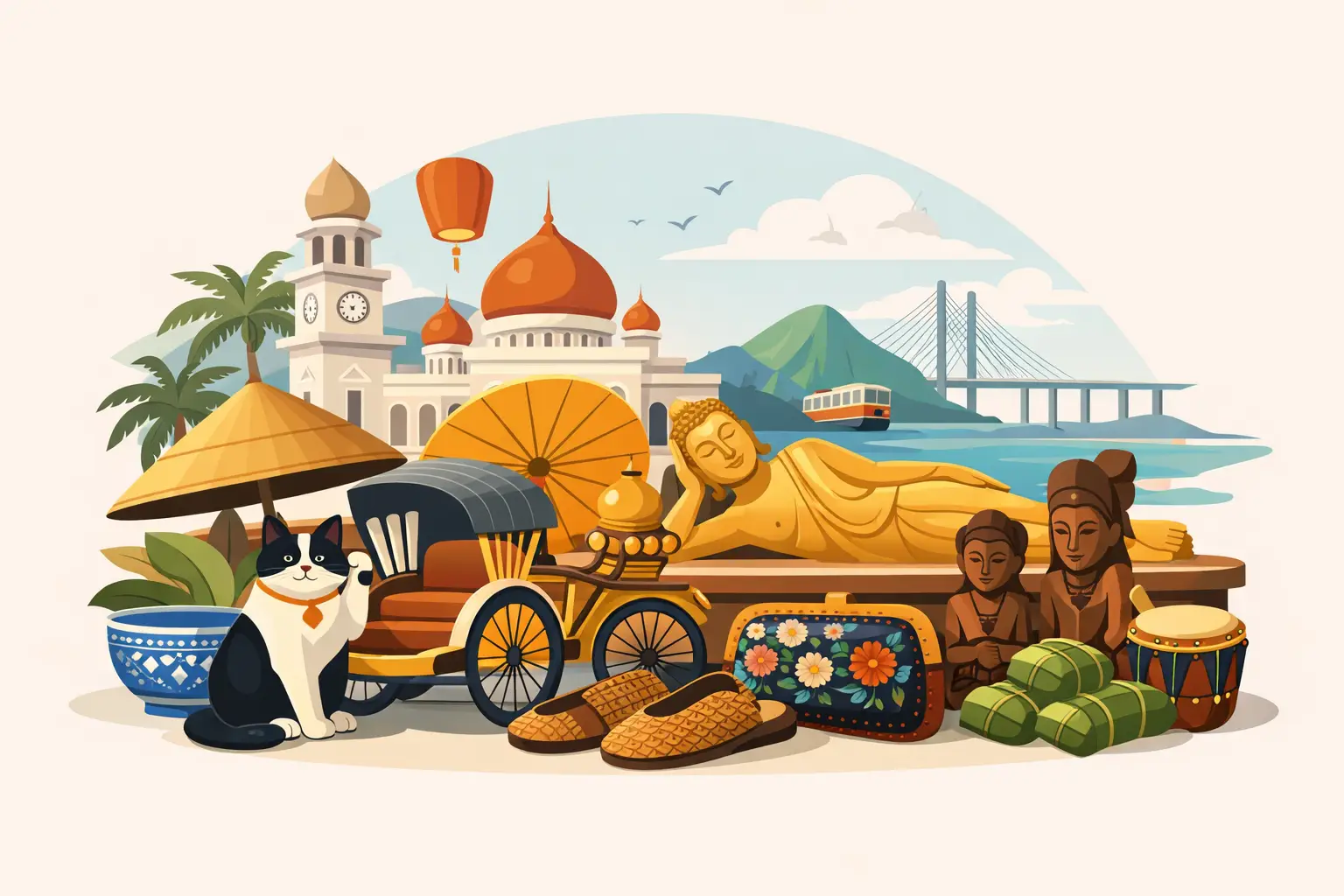

Some souvenirs are bought in a rush, wrapped in tissue, and forgotten before the return flight. The best cultural souvenirs in Georgetown do the opposite. They hold their place long after a journey ends because they carry a story – of trade, craft, migration, ritual and daily life in one of Southeast Asia’s most layered historic cities.
That is what makes shopping in George Town so rewarding when done well. This is not simply a place for fridge magnets and generic keyrings. It is a city shaped by maritime exchange, Chinese, Malay, Indian and Peranakan traditions, colonial-era commerce, and a living street culture that still produces beautiful things by hand. The right souvenir should feel less like a transaction and more like a small act of remembrance.
What makes the best cultural souvenirs in Georgetown?
Authenticity matters, but so does context. A meaningful keepsake is not necessarily the most expensive object, nor the most overtly traditional. It is the piece that reflects something true about the place – its craftsmanship, its communities, its materials, or its visual language.
In Georgetown, that often means choosing items with a visible link to heritage. Hand-painted ceramics, Peranakan-inspired objects, batik textiles, spice blends, seal-carved chops, beadwork, and old-style confectionery all carry a stronger sense of place than mass-produced trinkets. The trade-off, of course, is that truly well-made pieces may cost more and require a little more searching. Yet they tend to reward the buyer with depth, beauty and lasting value.
Ceramics with a Penang story
If there is one category that feels especially resonant in a historic port city, it is ceramics. Penang’s identity has long been shaped by sea routes, trade networks and the movement of precious goods, and porcelain remains one of the most eloquent reminders of that world.
A ceramic piece can be both practical and collectible. A small tea cup, a serving dish, a decorative plate or a porcelain jar offers something more enduring than novelty. It brings craft into daily life while echoing the region’s long relationship with Chinese export ware and maritime exchange.
For visitors drawn to objects with stronger historical character, carefully curated ceramic reproductions or heritage-inspired pieces can be particularly rewarding. They speak to the splendour of porcelain without demanding the budget or expertise required for serious antique collecting. For those who want a souvenir with greater narrative weight, this is where a museum-led experience can feel especially valuable. At Straits & Oriental Museum, the encounter with shipwreck ceramics and maritime artefacts lends a richer frame to any heritage-inspired piece you choose to bring home.
Peranakan items that carry design and memory
Georgetown’s Peranakan heritage has produced some of the city’s most recognisable aesthetics. The palette is often vivid, the detailing meticulous, and the mood unmistakably refined. Souvenirs influenced by this tradition can range from beaded accessories and embroidered slippers to lacquerware, brooches, home décor and tableware.
The appeal here is obvious. Peranakan design is visually striking, but it is also deeply tied to a specific cultural history born from exchange, adaptation and domestic artistry. A well-chosen piece feels celebratory rather than decorative for decoration’s sake.
That said, not every so-called Peranakan item is made with the same care. Some are simplified for tourist demand, with motifs reproduced mechanically and stripped of their original elegance. If detail matters to you, look closely at finish, materials and proportion. A smaller, beautifully made object often has more cultural presence than a larger, cheaper imitation.
Batik and textiles worth wearing or gifting
Textiles remain among the most useful souvenirs to buy in Georgetown because they travel well and continue to be enjoyed long after the trip. Batik, in particular, offers both artistry and versatility. It can be worn as a scarf, styled in contemporary clothing, used as a wall hanging, or given as a gift that feels personal without being overly formal.
The strongest pieces show clarity in the pattern and a sense of intention in the dye work. Some are bold and contemporary, while others lean into classical floral and geometric traditions. It depends what you want from the souvenir. If your aim is everyday wear, choose something light and understated. If you are buying for memory and display, a more intricate textile may be the better choice.
Beyond batik, embroidered cloths and traditional fabrics can also make elegant keepsakes. They are especially fitting for travellers who want something tactile and transportable, with a clear connection to regional making traditions.
Food gifts that still feel rooted in place
Edible souvenirs are sometimes dismissed as temporary, but in Georgetown they can be among the most culturally expressive things you buy. Food has always been central to Penang’s identity, and certain pantry gifts capture that heritage beautifully.
Nutmeg products are an easy example, with the fruit closely associated with Penang’s history. Traditional biscuits, spice mixes, white coffee, old-style sweets and locally made sauces can also make excellent choices when sourced carefully. The best of them evoke domestic kitchens, kopitiam culture and festive tables rather than airport retail.
There are practical limits. Food gifts can be harder to pack, customs rules vary, and not everything has a long shelf life. Still, for visitors who measure travel through taste and memory, these are often the souvenirs people talk about most once they are home.
Handcrafted objects from living trades
Another strong category includes objects made by artisans whose work still reflects older trades and neighbourhood skills. Chops carved with Chinese characters, hand-bound notebooks, paper goods, rattan items, traditional brushes, incense holders and artisanal homewares can all carry that sense of place if chosen thoughtfully.
What makes these pieces compelling is not nostalgia alone. They show Georgetown as a living city rather than a preserved backdrop. The value lies in supporting contemporary makers who are keeping visual languages and manual skills alive.
This is also where personal preference matters most. Some travellers want a display object with immediate visual impact. Others prefer something modest that slips into daily use. A carved seal, for instance, may be less showy than a painted tray, yet it can feel more intimate because it is tied to name, identity and ritual.
Antique-inspired pieces for collectors and serious browsers
For visitors with a collector’s eye, Georgetown offers a different kind of souvenir hunt. Rather than buying only for sentiment, you may be looking for provenance, material quality and decorative significance. In that case, antique-inspired objects, vintage wares and collectible ceramics can be especially alluring.
This approach requires patience. The line between genuinely interesting and merely old-looking can be thin, and prices reflect expertise as much as rarity. If you are not comfortable judging age, condition or authenticity, it is wiser to buy from curated settings and ask questions. The pleasure here is in the story as much as the object itself.
A well-chosen collectible does more than commemorate a holiday. It becomes part of a broader personal collection, carrying with it the atmosphere of George Town’s trading past and its enduring relationship with beauty, craftsmanship and exchange.
Souvenirs to avoid if you want something meaningful
Not everything with a heritage motif deserves suitcase space. Generic T-shirts, plastic ornaments and factory-made souvenirs stamped with borrowed imagery can flatten the city into a caricature. They may be inexpensive, but they rarely age well.
That does not mean every souvenir must be artisanal or precious. Sometimes a simple postcard set or a modest tea towel can be exactly right. The question is whether the item reflects a place with care, or merely uses its name. If it could have been bought in any tourist district anywhere, it probably is not the best choice here.
How to choose the right souvenir for your style of travel
The best souvenir depends on how you like to remember a journey. If you are drawn to interiors and entertaining, ceramics, tableware and textiles will likely give the greatest pleasure. If you travel through food, edible gifts and spice-based items may feel most authentic. If you are a history-minded visitor, heritage-inspired objects with a clear narrative connection will resonate more deeply.
Budget matters too. Georgetown rewards both thoughtful modest purchases and more elevated acquisitions. A beautifully made small object can be enough. Souvenir shopping does not need to become collecting, though for some visitors it certainly can.
The more useful question is this: will the item still mean something once it is no longer new? The strongest cultural souvenirs do. They continue to remind you not just of where you went, but of what you noticed.
A worthwhile memento from Georgetown should feel like the city itself – layered, elegant, and full of passage. Choose the piece that carries a real story, and it will keep speaking long after the journey is over.