
Few objects carry power quite like imperial porcelain. Made for courts, commanded by emperors, and prized across oceans, these wares were never merely decorative. An Imperial Ceramic Collection opens a rare view into authority, taste, diplomacy, and trade – and, in the most compelling cases, into the maritime journeys that carried such treasures far beyond the palace walls.
For visitors drawn to history with substance and beauty, imperial ceramics offer both. Their appeal lies in the immediate visual splendour of finely potted bodies, controlled glazes, cobalt blues, celadon greens, and richly painted motifs. Yet their deeper significance rests in what they reveal: the ambitions of dynasties, the refinement of kiln technology, and the commercial networks that linked courts, ports, and distant markets across Asia.
What makes an Imperial Ceramic Collection different
Not every historic ceramic belongs in the imperial category. The distinction matters. Imperial wares were produced for the ruling court or under direct court supervision, often to exacting technical and artistic standards. Form, decoration, colour, and even inscription could be regulated. In many periods, the finest examples came from highly organised kiln systems that existed to serve official demand.
That official connection gives an Imperial Ceramic Collection a special gravity. These pieces reflect elite patronage rather than ordinary domestic life. A bowl, dish, ewer, or covered box may look graceful at first glance, but it also speaks of rank, ceremonial use, and the aesthetics favoured by a ruling order. In practical terms, imperial ceramics often show greater consistency of craftsmanship, more ambitious ornament, and higher material quality than export wares made in volume for broader trade.
Even so, the boundaries are not always neat. Some kilns produced both court commissions and export ceramics. Styles developed for imperial taste could influence wares made for merchants abroad. That overlap is part of the fascination. It reminds us that ceramics were never isolated artworks sitting quietly in vitrines of history. They were part of a living world of production, prestige, imitation, and movement.
The language of power in porcelain
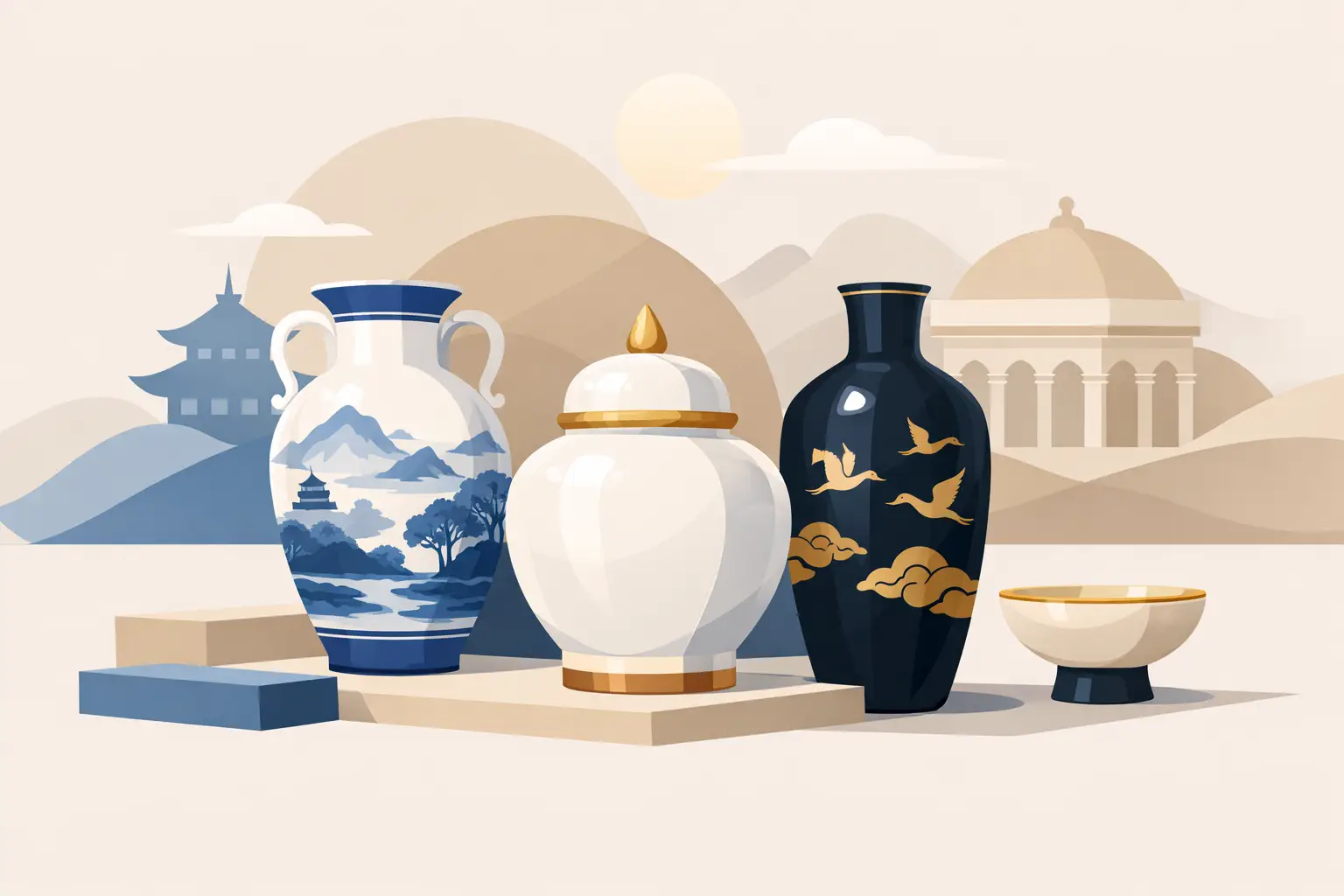
Imperial ceramics are rich in visual codes. Dragons, phoenixes, lotus scrolls, cloud bands, waves, peonies, and geometric borders were not chosen at random. Many motifs carried associations with authority, prosperity, protection, longevity, or cosmic order. Shape also mattered. Certain vessel types answered ritual needs, banquet culture, or the formal requirements of court life.
Colour could be equally meaningful. Deep cobalt underglaze blue became one of the most admired achievements in ceramic history, but monochromes also held great prestige. Celadon, white porcelain, and later famille palettes each reflected changing tastes and technical confidence. An informed Imperial Ceramic Collection does more than gather attractive objects – it helps visitors read these choices as a language of empire.
Marks and reign associations add another layer. Reign marks can indicate aspiration, workshop practice, commemoration, or official designation, though they should never be treated too casually. A mark alone does not settle every question of date or status. Serious interpretation weighs body, glaze, footrim, decoration, firing quality, and archaeological context together. That is where a well-curated museum display becomes so valuable: it guides the eye beyond surface admiration towards historical understanding.
Why maritime history gives these ceramics new meaning
Imperial wares are often discussed through dynastic chronology, kiln centres, and connoisseurship. All of that is essential. But when viewed through maritime history, they gain another dimension. Ceramics were among the most important cargoes in Asian trade, packed in great quantities and carried across regional sea routes for courts, merchants, and consumers of many ranks.
This is where shipwreck archaeology changes the conversation. A recovered cargo can preserve a moment of exchange with extraordinary clarity. Instead of seeing one surviving plate detached from its original context, we can encounter a larger assemblage tied to a specific route, period, and commercial environment. The result is not simply a prettier display case. It is a more complete historical story.
In the context of Southeast Asia, that story is especially resonant. Ports prospered because they connected worlds – China, the Malay Peninsula, the Indonesian archipelago, India, the Middle East, and beyond. Ceramics moved through these networks as luxury goods, diplomatic gifts, and trade staples. An Imperial Ceramic Collection shown alongside maritime narratives reveals how courtly production and oceanic commerce were deeply intertwined.
The value of shipwreck ceramics in an Imperial Ceramic Collection
Shipwreck ceramics have an immediacy that land finds do not always possess. They speak of departure and interruption, of intended destinations never reached, and of the sea as both pathway and archive. When rare porcelains are recovered from historic wrecks, they illuminate not only craftsmanship but circulation.
That distinction is crucial for public audiences. Visitors do not need to be specialists to feel the drama of a cargo lost beneath the waves and recovered centuries later. At the same time, collectors and historians appreciate the evidential strength of archaeological provenance. A documented wreck assemblage can help date forms, confirm trading patterns, and clarify the relationship between imperial styles and export demand.
There is, however, an important nuance. Not every fine shipwreck ceramic is imperial, and not every imperial-looking object was made exclusively for a palace. Maritime collections often show the full spectrum – official taste influencing trade wares, luxury goods travelling with merchants, and ceramics made specifically for overseas markets while borrowing visual prestige from court production. A thoughtful display acknowledges these gradations rather than flattening them.
How to look at imperial ceramics with a collector’s eye
For many visitors, the first instinct is to admire beauty. That is a fine place to begin, but the richest experience comes from looking slowly. Start with the body and proportion. Is the piece delicately potted or heavier than expected? Does the shape feel ceremonial, practical, or purely display-oriented? Then move to glaze quality. Imperial-level wares often reward close attention with remarkable control, depth, and finish.
Next, consider decoration. Is the painting confident and balanced? Are motifs repeated with discipline or allowed to move freely? Borders, central medallions, cavetto designs, and underside treatment can all reveal workshop standards. Finally, examine the foot and base if visible. Specialists often learn as much from the unseen parts of a ceramic as from the face presented to the room.
Context should always accompany aesthetics. A blue-and-white dish viewed in isolation is attractive. The same dish, understood as part of a wreck cargo circulating through historic Asian trade, becomes far more significant. Place, route, date, and patronage transform admiration into insight.
Imperial Ceramic Collection as a visitor experience
The finest museum experiences do not separate scholarship from atmosphere. They bring them together. An Imperial Ceramic Collection is particularly well suited to this approach because it offers instant visual pleasure while inviting deeper enquiry. Families can appreciate pattern and colour. Travellers can connect the objects to the wider story of Asian seafaring. Collectors can study distinctions of quality and provenance. Each audience enters through a different door, yet the collection holds them in the same narrative space.
This is why such collections remain enduringly powerful in a destination setting. They offer more than information panels and isolated artefacts. They create a journey through court culture, craftsmanship, trade, and loss at sea. In a place like George Town, with its layered mercantile history and cosmopolitan heritage, that encounter feels especially fitting.
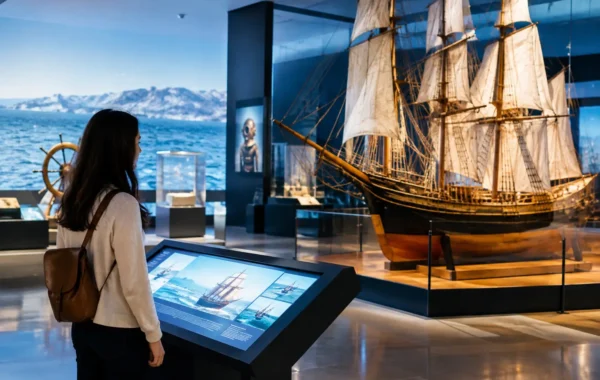
At Straits & Oriental Museum, this perspective comes into sharp focus. Rare ceramics recovered from notable Asian shipwrecks are not presented as detached treasures alone, but as witnesses to the maritime worlds that shaped the region. That framing gives visitors something more memorable than a catalogue of objects. It offers a cultural experience rooted in authenticity, beauty, and historical movement.
Why these collections continue to fascinate
Imperial ceramics endure because they satisfy several kinds of curiosity at once. They appeal to the eye, certainly, but also to the historical imagination. They show how power was expressed through material culture. They reveal how technical mastery travelled across centuries. And when tied to marine archaeology, they remind us that even the most refined works were part of risky, expansive human networks.
For some visitors, the attraction will always be rarity. For others, it is the pleasure of standing before an object that has crossed dynasties, oceans, and accidents of survival. Both responses are valid. The real strength of an Imperial Ceramic Collection lies in its ability to connect them.
The next time you stand before a finely painted bowl or a luminous celadon dish, look beyond its surface finish. Ask who it was made for, what world it belonged to, and how it travelled. That is where porcelain stops being simply beautiful and starts becoming unforgettable.