
A porcelain bowl may appear quietly self-contained behind glass, yet it can hold the evidence of an entire world: a kiln town’s skill, an emperor’s taste, a merchant’s ambition and a vessel’s passage across dangerous seas. Chinese antiques are valued not simply for age or ornament, but for this remarkable ability to make history tangible.
For visitors to Penang, where the Straits once connected merchants, sailors and collectors from across Asia and beyond, shipwreck ceramics offer an especially vivid way to encounter that history. A piece recovered from the sea is more than a beautiful object. It is a surviving witness to the trade routes that shaped homes, dining tables and cultural exchange throughout the region.
Why Chinese antiques command such lasting interest
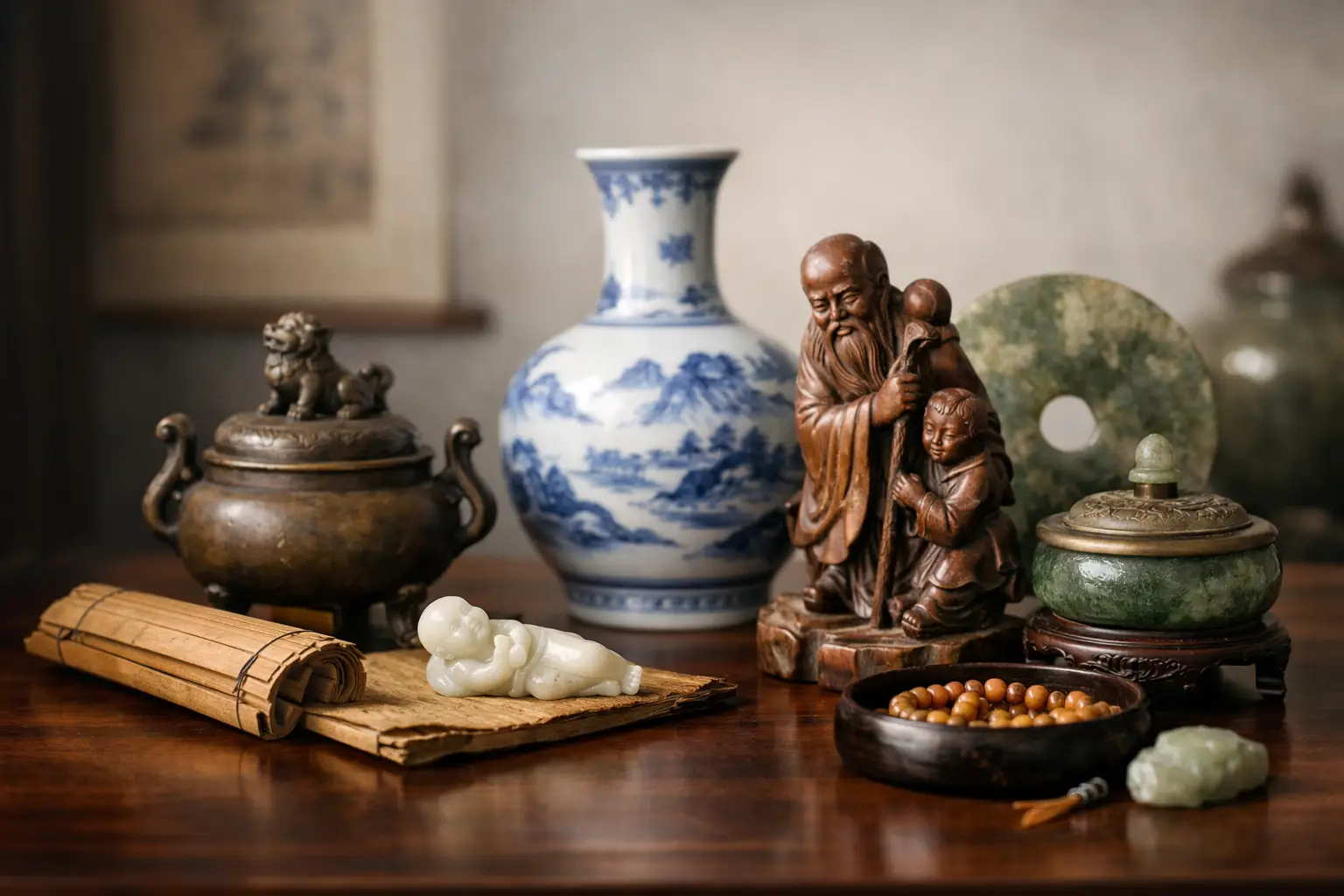
The term Chinese antiques covers a wide field. It may describe imperial porcelain, everyday export wares, scholar’s objects, bronze vessels, jade carvings, furniture, textiles and works made for religious or ceremonial use. Their value lies in a combination of material, craftsmanship, rarity, condition and provenance – the documented history of where an object has been and who has cared for it.
Porcelain remains one of the most celebrated categories because it embodies technical achievement as well as artistic refinement. Chinese potters developed sophisticated methods of preparing clay, controlling high-temperature kilns and applying glazes with remarkable precision. The result could be exceptionally thin yet strong, luminous in colour and finely painted with a confidence that still feels fresh centuries later.
A collector may be drawn to the imperial quality of a finely painted dish, while a historian may look for clues in a modest storage jar. Neither response is lesser. One object might represent the height of courtly taste; another may reveal what merchants thought would sell in busy ports thousands of miles from the kiln where it was made.
Porcelain was made for both palace and port
Not all historic Chinese ceramics were created for the same audience. Some were produced for imperial courts, where strict standards governed form, colour and decorative motifs. Others were made for domestic households, temples or export markets. This distinction matters when looking at Chinese antiques, because rarity alone does not explain significance.
Export ceramics were often tailored to overseas preferences. Shapes could suit foreign dining customs, while decoration might combine Chinese motifs with patterns popular in Southeast Asia, the Middle East or Europe. These wares demonstrate that trade was never simply a one-way movement of goods. It was a conversation, expressed in clay, cobalt and glaze.
Blue-and-white porcelain is perhaps the best-known example. Its deep cobalt decoration against a pale ground travelled widely and became admired far beyond China. Yet other wares deserve equal attention: celadons with their soft green glazes, monochrome pieces whose beauty rests on subtle surfaces, and stonewares made for everyday use. Looking closely at these differences reveals the breadth of Chinese ceramic traditions.
Reading the details
Decoration is often the first feature visitors notice, and it can be highly revealing. Dragons, phoenixes, lotus scrolls, peonies, landscapes and auspicious symbols carried associations of power, prosperity, longevity or harmony. Their meaning can shift according to period, place and intended owner, so a motif is best read as a clue rather than a final answer.
The base, foot rim and glaze are equally important. Specialists examine how an object was potted, the quality of its glaze, signs of kiln firing and the character of its painted lines. A genuine historic piece will often show the traces of hand-making and use. However, age marks alone never prove authenticity. Repairs, soil, wear and even damage require careful interpretation.
What shipwreck ceramics add to the story
Objects on land can be separated from their original setting over generations of ownership. A shipwreck collection offers a rarer kind of context. When ceramics are recovered and carefully documented alongside other cargo, they can show what was being traded together, where a vessel may have been travelling and how maritime commerce operated at a particular moment.
The sea has also preserved objects in unexpected ways. Some pieces emerge with marine encrustation, staining or surface changes caused by long submersion. Such marks are not necessarily flaws to be erased. They can form part of an artefact’s journey, provided conservation is conducted with care and the object’s archaeological evidence is respected.
This is where shipwreck ceramics become more than collectibles. They help connect the refined world of porcelain with the physical reality of seafaring: packed cargo holds, monsoon winds, port communities and the risks that accompanied long-distance trade. A dish that never reached its buyer can now tell a fuller story than one that remained in private use.
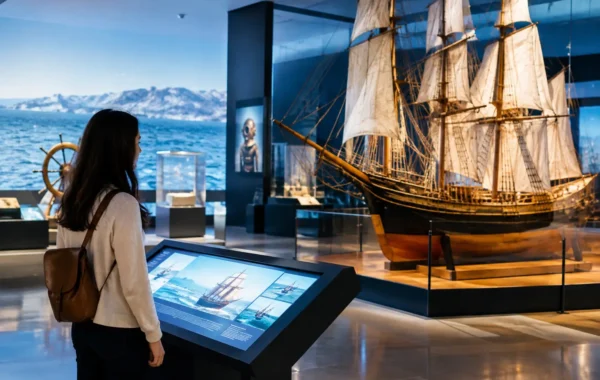
At Straits & Oriental Museum, artefacts associated with wrecks including the Wanli, Turiang, Royal Nanhai, Nanyang, Xuande and Desaru collections place this maritime history in a regional setting. Seen together, they encourage visitors to consider Penang not only as a heritage destination, but as part of a much older network of movement across the seas.
How to look at Chinese antiques in a museum
The most rewarding museum visit begins by slowing down. Rather than trying to identify every dynasty or memorise every term, choose one or two objects and ask practical questions. What was this made for? Who might have used it? How was it made? What does its design suggest about its destination?
Start with form. A small cup, a broad dish and a sturdy storage vessel served different purposes, and their shape often explains their decoration. Then look at the surface. Is the painting bold or restrained? Is the glaze glassy, soft, crackled or uneven? Finally, consider scale. A large jar would have occupied very different space in a ship’s cargo from a delicate tea bowl.
It also helps to compare similar pieces. Repeated patterns can reveal workshop production and commercial demand, while small variations show the hand of individual painters or potters. A group of objects is sometimes more informative than a single masterpiece because it illustrates the rhythm of trade and manufacture.
Authenticity, condition and responsible collecting
For collectors, the appeal of Chinese antiques should always be matched by patience. The market includes authentic objects of many periods and price points, but it also includes later copies, altered pieces and objects with uncertain origins. A convincing appearance is not the same as reliable provenance.
Condition affects both value and interpretation. A hairline crack, restored rim or replaced handle may make a piece less desirable to some buyers, yet a repaired object can still be historically engaging. The key is transparency. Repairs should be declared, documentation should be examined and claims about date or origin should be proportionate to the available evidence.
Responsible collecting also means asking whether an object has been lawfully exported and ethically acquired. Archaeological material, particularly from maritime sites, carries responsibilities that go beyond private ownership. Context is fragile: once objects are removed without proper recording, much of their historical meaning can be lost. Museums, researchers and informed collectors share an interest in protecting that evidence.
A living heritage, not a distant luxury
Chinese ceramics are sometimes treated as symbols of distant luxury, admired only for their market value or decorative appeal. That view misses their human dimension. Many were made by skilled workers whose names were never recorded, bought by households seeking useful and beautiful goods, and carried by crews whose journeys linked far-flung communities.
Their legacy also lives on in the language of hospitality. The cups, bowls and dishes that shape a table are never merely functional. They carry rituals of tea, shared meals, celebration and welcome. In this sense, porcelain continues to speak to contemporary life, especially in places where food, trade and cultural exchange remain central to local identity.
The next time a painted bowl catches your eye, begin with its beauty, then stay for the questions it raises. A closer look may lead from a single brushstroke to a kiln, a port, a ship and a story that still belongs to the waters of Asia.