
George Town rewards the visitor who resists the urge to treat it as a checklist. Among the many Penang things to do, the most memorable are often found in the pauses: a shaded five-foot way, the scent of incense drifting from a temple, a cup of kopi after rain, or a porcelain bowl that has crossed centuries beneath the sea.
This is a city shaped by exchange. Chinese, Malay, Indian, Peranakan, European and Arab influences are not neatly separated into chapters here; they meet in the streets, kitchens, places of worship and shopfronts. A satisfying day in Penang should leave room for that texture. Start with its built heritage, follow your curiosity into its living culture, then give the evening to food and the waterfront.
Begin with the streets that made George Town
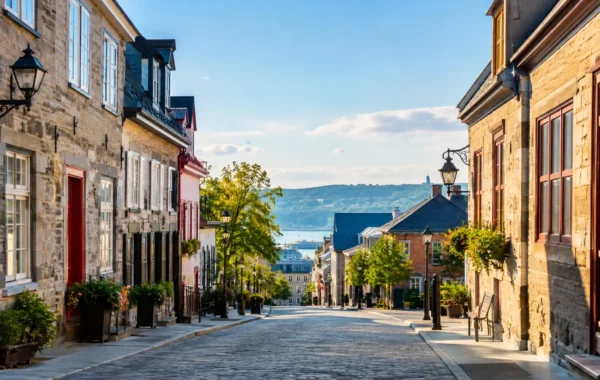
George Town’s historic core is best encountered on foot, particularly in the morning before the heat gathers. Armenian Street, Cannon Street, Love Lane and the lanes around Lebuh Chulia reveal the city at its most intimate: faded shutters, carved timber doors, clan houses and family-run businesses continuing their daily rhythm.
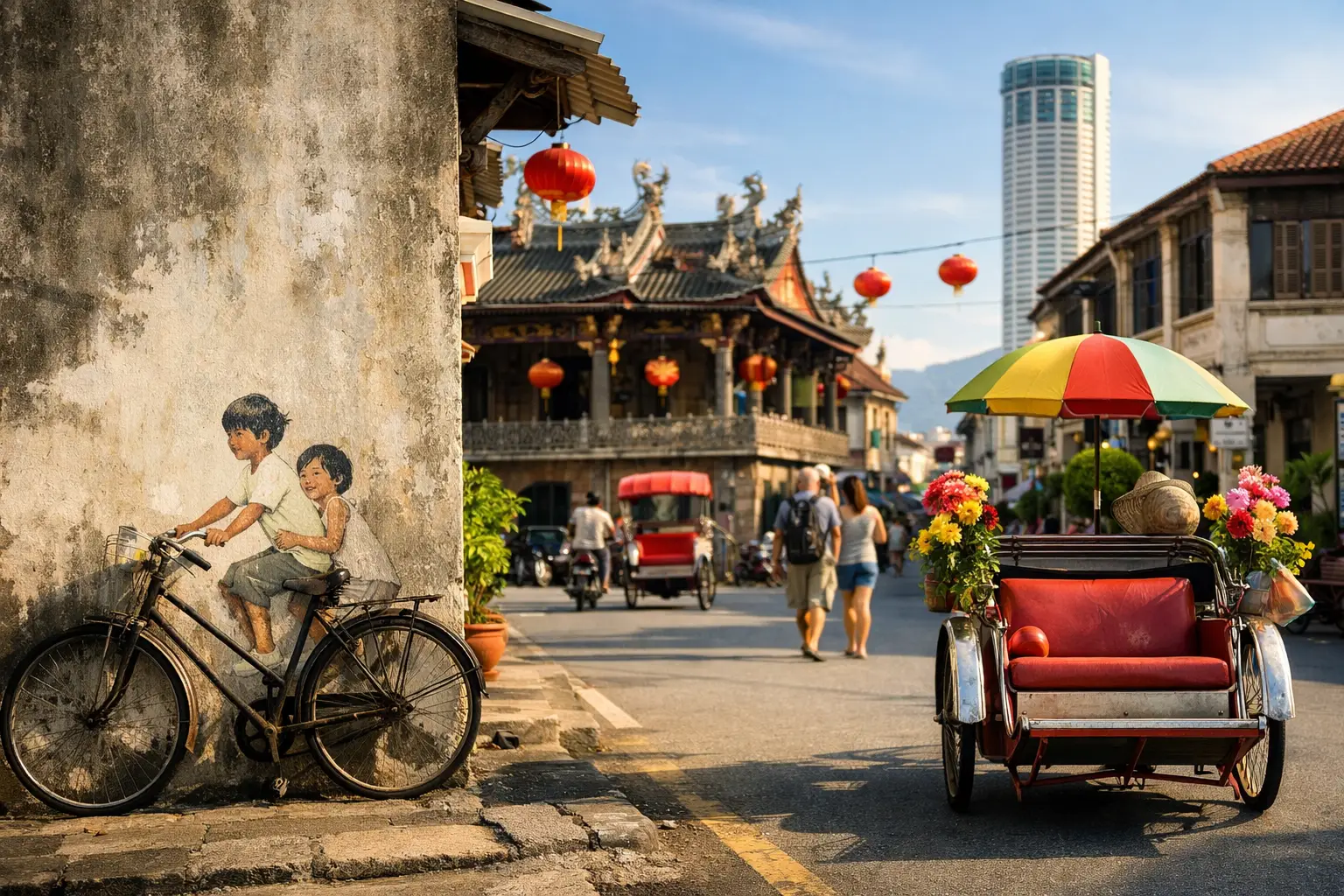
Street art can be a delightful part of this walk, especially for first-time visitors and families. The murals have become landmarks in their own right, but they are more rewarding when treated as a prompt to look beyond the queue for a photograph. Notice the old trade signs, tiled façades, narrow courtyards and the practical architecture designed for tropical life. George Town’s charm lies not only in what has been preserved, but in the fact that so much of it is still in use.
If you prefer a quieter route, move away from the busiest corners and follow the sound of morning commerce. Markets and small coffee shops offer a more immediate sense of place than any curated display. This is also the best time to appreciate the city’s scale: compact enough to explore slowly, yet layered enough to keep changing with every turn.
Make time for Penang’s sacred architecture
Penang’s religious landmarks are essential not simply for their beauty, but because they illuminate the communities that built the island’s trading culture. Kuan Yin Temple, one of George Town’s oldest Chinese temples, remains a place of active worship, its incense-filled interior offering a powerful contrast to the bustle outside.
Nearby, Kapitan Keling Mosque speaks to the longstanding presence of the Muslim Indian community, while the Sri Mahamariamman Temple offers richly detailed South Indian craftsmanship in the heart of the old town. Visitors should enter respectfully, dress modestly and be mindful that ceremonies and worship take precedence over sightseeing.
For a more dramatic setting, Wat Chaiyamangalaram and Dhammikarama Burmese Temple, just beyond the central heritage streets, make a rewarding pairing. Their elaborate ornamentation and tranquil compounds invite a slower pace. They are particularly appealing for visitors who want to see how Penang’s cultural connections extend across Southeast Asia.
See the island through the story of the sea
Penang’s position in the Strait of Malacca is central to its identity. Long before heritage walks and café culture, this was a world of monsoon routes, merchant vessels, cargoes, migration and encounters between empires. The sea brought wealth and ideas to the island, but it also claimed ships and their precious contents.
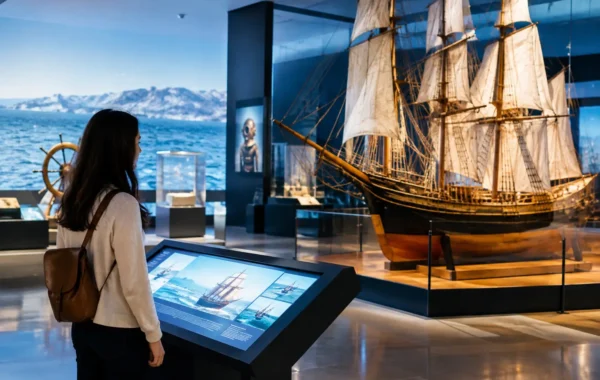
For a cultural experience with real historical weight, visit Straits & Oriental Museum in George Town. As Penang’s first museum of its kind and Malaysia’s first integrated heritage and lifestyle museum, it presents authentic ceramics recovered from notable Asian shipwrecks, including the Wanli, Turiang, Royal Nanhai, Nanyang, Xuande and Desaru wrecks.
These objects are compelling because they are both beautiful and evidential. A blue-and-white dish, a storage jar or a finely made porcelain bowl can be admired for its form, yet each piece also records a much larger story: the workshops that made it, the buyers who desired it, the ship that carried it and the sea that concealed it for generations. For collectors, history enthusiasts and curious families alike, it is an unusually tangible way to understand Penang’s place within a wider maritime Asia.
Allow enough time to look closely rather than rushing from case to case. The finest museum visits give you a changed perspective on the streets outside. After seeing shipwreck ceramics, the port city feels less like a picturesque backdrop and more like a meeting point in an enduring regional story.
Eat with intention, not urgency
Food is among the most celebrated things to do in Penang, and rightly so. Yet the island’s culinary reputation can encourage visitors to chase too many famous dishes in one day. A better approach is to choose a few experiences and enjoy them properly.
Begin with breakfast in a traditional coffee shop, where toast, eggs and strong local coffee set an unhurried tone. At lunchtime, seek out the dishes that reflect Penang’s particular blend of influences: char kway teow, assam laksa, nasi kandar, Hokkien mee or a Peranakan meal prepared with careful balance of spice, sourness and fragrance. The best choice depends on your appetite, dietary needs and tolerance for queues. A busy stall can be a good sign, but it is not the only sign of quality.
By late afternoon, give yourself a pause. Penang’s heat is part of its character, and a café stop is not wasted time. It is an opportunity to absorb what you have seen, browse a small gallery or simply watch the old town move at its own pace. For those looking for a more composed cultural outing, a museum visit followed by a meal or drink makes an elegant alternative to moving continuously from one attraction to the next.
Follow the waterfront at golden hour
The Clan Jetties offer one of the clearest reminders that George Town is a living port settlement. These timber communities were established by Chinese clans whose livelihoods were tied to the water. They are popular with visitors, especially around sunset, but they are also residential neighbourhoods. Walk gently, keep noise low and avoid treating homes as props.
From there, the waterfront provides a welcome change of pace after the close, busy lanes of the old town. The view across the channel is particularly atmospheric as the light softens and boats move through the distance. It is a fine moment for photographs, though it is equally worthwhile to leave the camera away and let the scene settle.
If you have another day, consider widening your view of Penang. The funicular up Penang Hill offers cooler air and broad island views, while the coast around Batu Ferringhi offers a different kind of leisure. Neither needs to be forced into a packed George Town itinerary. The trade-off is simple: choose the hill or beach when you want space and scenery; stay in the heritage core when you want depth, detail and an evening shaped by food.
Choose experiences that reveal a story
The finest Penang things to do are connected by more than proximity. They reveal how a small island became a significant cultural crossroads: through trade, faith, migration, craft and hospitality. Street art may bring you into an alley, but a temple can explain the community that sustained it. A bowl of laksa may lead you to think about the movement of ingredients and people across the region. A shipwreck porcelain dish can make the Strait of Malacca feel suddenly, vividly close.
Leave a little room in your plans for the unplanned discovery. Penang is at its most generous when there is time to step inside, look closer, order one more thing from the menu, and allow history to accompany you into the evening.