

A porcelain bowl lifted from the seabed may appear quiet and complete, yet it carries the drama of a lost voyage. Its glaze can reveal the kiln that made it; its shape can suggest the market it was intended for; the encrustation on its surface may preserve evidence of centuries beneath the sea. For anyone asking, why are recovered ceramics valuable, the answer begins here: they are far more than beautiful old objects. They are surviving witnesses to the movement of people, ideas and goods across Asia’s historic seas.
Recovered ceramics occupy a rare place between art, archaeology and human story. They invite us to look closely, then look outward – towards the ship that carried them, the ports that received them and the lives shaped by maritime exchange.
They preserve a history that paper rarely records
Historic trade was not always documented in official ledgers, and many records that did exist have not survived. A shipwreck cargo can therefore become an extraordinary archive. Hundreds or thousands of ceramics found together offer a direct glimpse of commercial life at a particular moment: what was being exported, how goods were packed, which styles travelled well and which consumers had the means to buy them.
A single recovered dish may be attractive. A cargo of dishes, jars, ewers and storage vessels is something more revealing. It can show the scale of a voyage and the breadth of a trading network. Chinese porcelain, Southeast Asian stoneware and other ceramics crossed the waters between production centres, entrepôts and distant households. Their presence demonstrates that the sea was not a boundary. It was an active route of connection.
This is especially meaningful in the Straits of Malacca, one of the world’s great historic maritime corridors. The waterways around Penang have long linked merchants, sailors and communities from across the region. Recovered ceramics give that vast history a tangible form – an object a visitor can stand before, study and imagine in its original setting.
Their value lies in context, not age alone
Age matters, but it is not the sole measure of importance. A ceramic’s value depends on its provenance – its documented origin and history – as well as its condition, rarity, craftsmanship and archaeological context.
A finely painted porcelain vessel from a known shipwreck can be exceptionally significant because it belongs to a traceable story. Researchers may be able to connect it to a named wreck, a likely date, a cargo assemblage and a historic trade route. That chain of evidence distinguishes an excavated or professionally recovered artefact from an unprovenanced object that has simply appeared on the market.
Context also changes how we interpret imperfections. A small firing flaw, an uneven glaze or a mark made by marine life might reduce the value of a modern decorative piece. On a recovered ceramic, however, such details can add information. They may indicate production methods, storage conditions or the object’s long underwater journey. Conservation seeks to stabilise these traces, not erase the past they represent.
Beauty was made for a global market
Recovered ceramics are valuable because they document exceptional skill. Porcelain demanded sophisticated control of materials, heat and timing. The potter’s hand, the precision of a mould, the balance of a form and the brilliance of a glaze all reflect generations of technical knowledge.
Yet these wares were not created in isolation. Many were designed with buyers in mind. Forms, patterns and colours often responded to the preferences of markets far from the kiln. A vessel might combine a technique perfected in China with a shape suited to Southeast Asian use, or carry motifs that appealed across cultural boundaries.
This is why shipwreck ceramics are so compelling in a gallery setting. They are not merely examples of a dynasty or a decorative style. They show how artisans and merchants understood demand, adapted to it and helped create an early international marketplace. Their visual splendour is inseparable from the commercial intelligence behind it.
The marks of travel add another layer of meaning
Sea recovery gives ceramics an appearance unlike objects preserved in a cabinet or buried on land. Some emerge with a soft marine patina. Others bear coral accretions, mineral deposits or signs of breakage caused by the ship’s sinking and the pressures of time.
These surfaces can be striking, but their importance is deeper than appearance. They are physical evidence of the vessel’s fate. A recovered bowl has often travelled twice: first as cargo on a historic voyage, then across centuries of darkness before returning to view. That sense of passage gives each piece a presence that reproduction cannot replicate.
Why are recovered ceramics valuable to collectors?
For collectors, recovered ceramics can unite aesthetic pleasure with disciplined research. The finest examples offer distinctive form, decorative quality, documented origin and a place within a recognised archaeological assemblage. They can be admired as works of ceramic art while also representing a chapter in maritime history.
However, rarity should never be mistaken for automatic worth. Condition matters. So do restoration, authenticity and the quality of the recovery record. A heavily restored vessel may be visually impressive but less desirable than a smaller, intact piece with sound documentation. Conversely, a fragment can hold immense scholarly value if it helps identify a kiln, date a wreck or clarify a trade pattern.
Responsible collecting is therefore essential. Artefacts should be acquired through legitimate, transparent channels, with provenance records that respect cultural heritage laws and archaeological standards. The strongest collections do not treat the past as a trophy cabinet. They preserve knowledge, invite research and make room for public understanding.
They make vast trade networks feel human
It is easy to describe maritime trade in terms of routes, empires and cargo values. Recovered ceramics bring the human scale back into view. A tea bowl suggests a table. A storage jar suggests provisions for a household. A finely decorated dish suggests a gift, a celebration or the desire to display taste and status.
They also encourage us to consider the people usually absent from grand historical accounts: kiln workers, painters, packers, porters, sailors, brokers, cooks and families. Every vessel passed through many hands before it reached a ship’s hold. When that ship was lost, the cargo became an accidental time capsule of their labour.
For families and first-time museum visitors, this is often the most immediate route into history. Rather than beginning with dates alone, begin with a question: who made this, who used it and how did it reach the sea? The answers lead naturally to craftsmanship, trade, cultural exchange and the risks of a maritime life.
Museums give recovered artefacts their fullest meaning
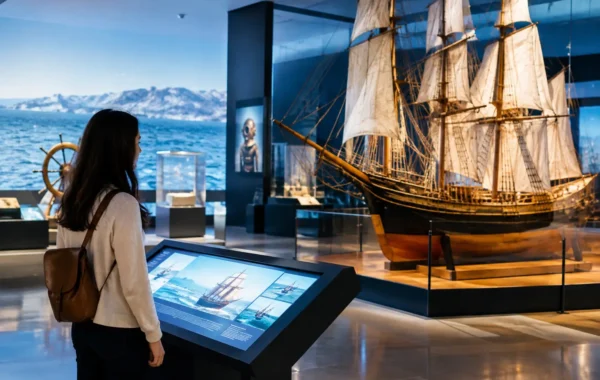
An artefact can be remarkable on its own, but a thoughtfully curated display allows it to speak more clearly. When ceramics are shown alongside maps, shipwreck histories, related forms and interpretive stories, visitors can understand both their beauty and their significance.
At Straits & Oriental Museum, authentic ceramics recovered from notable Asian shipwrecks offer precisely this kind of encounter. The collections turn a visit into a journey through time, revealing the splendour of porcelain while placing it within the seafaring world that carried it across Asia.
A museum setting also gives visitors permission to slow down. Notice the foot ring beneath a bowl, the rhythm of a painted border, the variation between pieces that were once packed together as cargo. These details make history feel less distant. They show that even an object made for trade could possess individuality, care and artistic ambition.
Value is cultural, not simply financial
Market price can be part of the conversation, particularly for rare, well-preserved and well-documented pieces. But monetary value is only one expression of significance. Recovered ceramics have educational value because they support research. They have artistic value because they embody technical and visual achievement. They have cultural value because they illuminate shared histories across coasts and communities.
That distinction matters. If we see shipwreck ceramics only as collectables, we risk reducing rich historical evidence to a commodity. If we see them only as academic material, we may overlook the wonder that draws people towards the past in the first place. Their enduring power lies in holding both truths together: they are beautiful objects, and they are evidence.
The next time you encounter a recovered ceramic, resist the urge to judge it only by its shine or apparent perfection. Look for the voyage within it. A chipped rim, a faded motif or a trace of the sea may be the detail that transforms an ancient vessel from an object of beauty into a living connection with the maritime world that made it matter.