
A blue-and-white bowl raised from the seabed can look almost untouched by time. Yet its presence beneath the water marks a moment when a voyage failed: a hull struck a reef, a monsoon turned, a captain lost sight of land, or a vessel simply could not withstand its burden. So, what caused Asian shipwrecks? There is no single answer. Across the seas linking China, Southeast Asia, India and the wider Indian Ocean, wrecks were shaped by weather, geography, commerce, technology and human judgement.
For centuries, these waters carried some of the world’s most valuable cargoes. Ceramics, spices, metals, textiles and everyday goods moved between ports in remarkable quantities. The ships that transported them travelled routes rich with opportunity, but also with hazards that could change within hours. Their losses now offer a rare, tangible record of Asia’s maritime past.
What caused Asian shipwrecks across historic trade routes?
The first point is scale. ‘Asian shipwrecks’ covers vessels of different periods, designs and origins, sailing in very different conditions. A Chinese junk carrying porcelain through the South China Sea did not face precisely the same risks as an Arab dhow crossing the Indian Ocean or a regional trading craft moving between islands in the Malay Archipelago.
Still, several pressures recur. Seasonal winds could become destructive storms. Narrow channels and coral reefs punished small navigational errors. Heavy cargoes altered a ship’s handling. Commercial urgency encouraged voyages at difficult times of year. And even highly skilled crews worked without modern charts, engines, weather forecasts or electronic positioning.
A wreck is therefore rarely just a story of bad luck. It is often the final chapter of choices made long before the ship reached dangerous water.
Monsoons: the engine of trade and a source of danger
Monsoon winds made long-distance commerce possible. Mariners learned to use predictable seasonal patterns to travel between East Africa, India, Southeast Asia and China. A favourable wind could move a laden vessel across vast distances far more efficiently than coastal sailing alone.
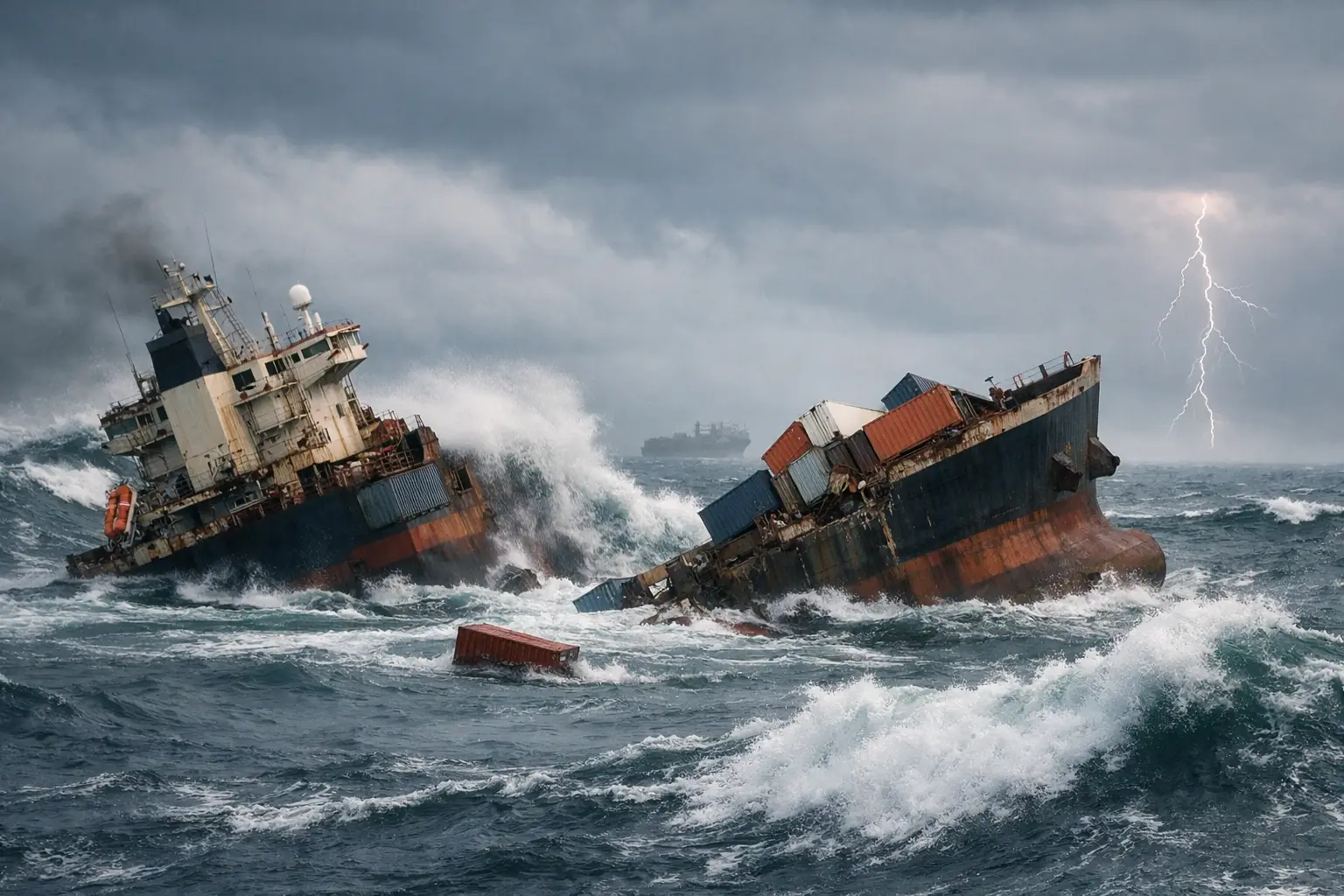
That same system demanded careful timing. Depart too late, and a vessel might encounter contrary winds, violent squalls or a sea state beyond its capacity. A sudden storm could tear sails, damage rigging, swamp the deck or drive a ship towards land. In shallow water, it did not take a dramatic hurricane for disaster to occur: persistent wind and waves could push a disabled vessel onto a reef or sandbank.
Monsoons also created a commercial dilemma. Waiting for safer conditions meant losing time, missing a market or tying up capital in cargo. A captain, merchant or port authority might judge that the possible reward justified the risk. That calculation is familiar in every age of maritime history.
The limits of local knowledge
Experienced sailors possessed sophisticated knowledge of currents, stars, cloud formations, birds and coastal landmarks. This knowledge was not primitive. It was practical, precise and often passed through generations of seafaring communities.
But knowledge could only do so much when visibility vanished or conditions changed unexpectedly. A crew sailing near an unfamiliar coast, perhaps after being blown off course, faced a much narrower margin for error. A hidden shoal or an uncharted reef could end a voyage in minutes.
Reefs, shoals and demanding coastal passages
Southeast Asian waters contain countless islands, straits, river mouths and coral formations. This geography helped create prosperous port networks, but it made navigation demanding. The same sheltered channels that offered access to markets could conceal hazards beneath clear, deceptively calm water.
Many vessels were lost close to land rather than on the open sea. That may seem surprising until one considers the pressures of arrival. A captain approaching a port needed to identify the correct channel, account for tides and currents, avoid fishing grounds or rocks, and keep a heavily laden ship under control. At night or in rain, familiar landmarks could disappear altogether.
Anchoring was not always a guarantee of safety either. If an anchor dragged during a storm, a ship could be driven ashore. In some cases, damage sustained offshore may have forced a vessel to seek refuge, only for it to founder before reaching a safe harbour.
Cargo could make a ship vulnerable
The ceramics displayed in maritime collections are admired for their beauty, but they were also commercial freight. Thousands of bowls, jars, dishes and storage vessels could be packed into a ship’s hold, often nested together and protected with organic packing materials. This was efficient, yet it created considerable weight.
A heavily loaded ship sat lower in the water and responded differently to wind and waves. If cargo was stowed unevenly, or shifted in rough seas, the vessel could list dangerously. Water entering the hull might then accumulate on one side, making recovery increasingly difficult.
There was a trade-off. Merchants wanted maximum carrying capacity because every unused space represented lost profit. Shipbuilders and captains needed sufficient stability, freeboard and structural strength to complete the journey safely. Where that balance lay depended on the vessel, its route, the season and the value of the goods on board.
Ceramics themselves could be both resilient and revealing. Their durability means they often survive where wood, rope, paper and food stores decay. A cargo of porcelain may therefore dominate the archaeological picture, even though the original ship also carried people, tools, personal possessions, ballast and perishable trade goods that have left fewer traces.
Construction, maintenance and the realities of wooden ships
Historic Asian vessels were built with great ingenuity. Different regions developed distinctive traditions in hull form, joinery, sails and steering. Yet all wooden ships faced wear from saltwater, marine borers, repeated loading and unloading, and the strain of heavy seas.
A vessel could begin a voyage with weaknesses that were not immediately visible. Planks might have opened, caulking could have failed, or an earlier grounding might have compromised the hull. Repairs made in a busy port were sometimes effective, sometimes temporary. Once a leak became serious offshore, crews had limited options beyond bailing, reducing weight and seeking land.
Fire was another threat. Ships carried cooking fires, lamps and cargoes that could burn. Collision, piracy and conflict also caused losses in certain places and periods. These explanations should not be assumed for every wreck, however. Archaeologists look for evidence such as damage patterns, weapons, burned material, the ship’s position and the distribution of its cargo before proposing a cause.
Human decisions mattered as much as natural forces
It is tempting to blame the sea alone. But many wrecks reflect the economic and political world ashore. Demand for Chinese ceramics, for example, encouraged merchants to send increasingly large and varied consignments across long distances. Competition between ports could make schedules and prices matter enormously.
Political instability could redirect ships onto less familiar routes. New taxes, conflict near a harbour, changing alliances or restrictions on trade might alter where a vessel sailed and when it departed. Piracy could force crews to avoid known routes, while the need to meet buyers could encourage passage through exposed waters.
Even a seemingly ordinary decision – to sail one more night, follow a shorter channel, take on additional cargo or continue after minor damage – could become decisive when weather deteriorated. This does not mean captains were reckless. It means they were operating in a world where information was incomplete and delay came at a cost.
Why the cause of a wreck is not always certain
A shipwreck is an archaeological site, not a complete eyewitness account. Centuries underwater can scatter timbers, move objects and reshape the seabed. Storms, currents, salvage activity and marine life may all disturb the evidence.
For that reason, the most compelling interpretations combine many clues: the cargo’s date and origin, the vessel’s construction, its resting position, the condition of the hull, environmental records and comparisons with other ships. A wreck lying beside a reef with its cargo dispersed may suggest a grounding. A vessel found in deeper water with structural damage may point towards a storm or progressive flooding. Yet responsible interpretation leaves room for uncertainty.
That uncertainty is part of the fascination. Each recovered jar, plate and storage vessel belongs not only to a lost ship, but to a network of makers, merchants, sailors and households spread across Asia.
Reading the sea through recovered ceramics
Shipwreck ceramics are often described as treasures, and rightly so. Their craftsmanship documents the splendour of porcelain and the reach of historic trade. But their greater value lies in the stories they preserve. A cargo can reveal what was fashionable in a distant market, how goods were packed for sea, and which communities were connected by commerce.
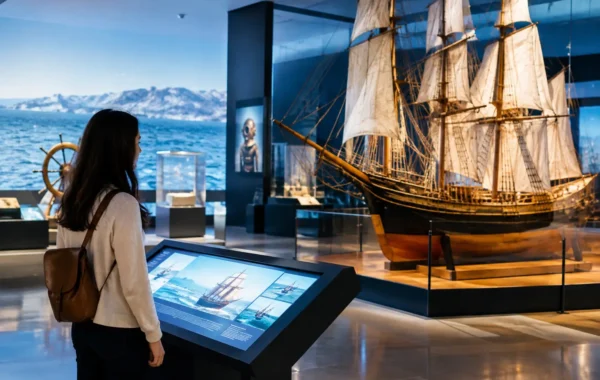
At Straits & Oriental Museum in George Town, these objects invite visitors to look beyond the surface of a beautiful vessel. Consider the route it travelled, the hands that loaded it and the risks carried with it across open water. The sea did not merely destroy ships. It also preserved extraordinary evidence of Asia’s shared maritime world.
The next time you encounter a bowl recovered from a wreck, pause before admiring its glaze alone. Its survival is a quiet reminder that every object once formed part of a living voyage – one shaped by ambition, expertise, uncertainty and the enduring power of the sea.