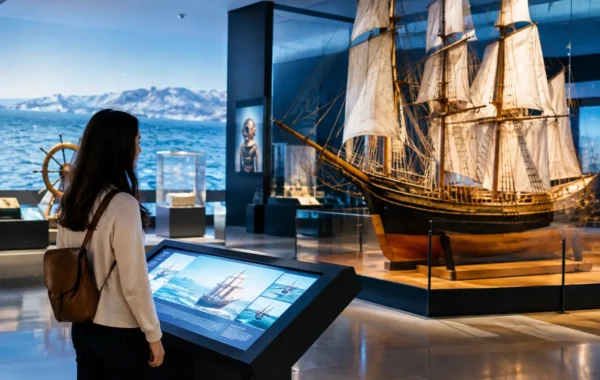
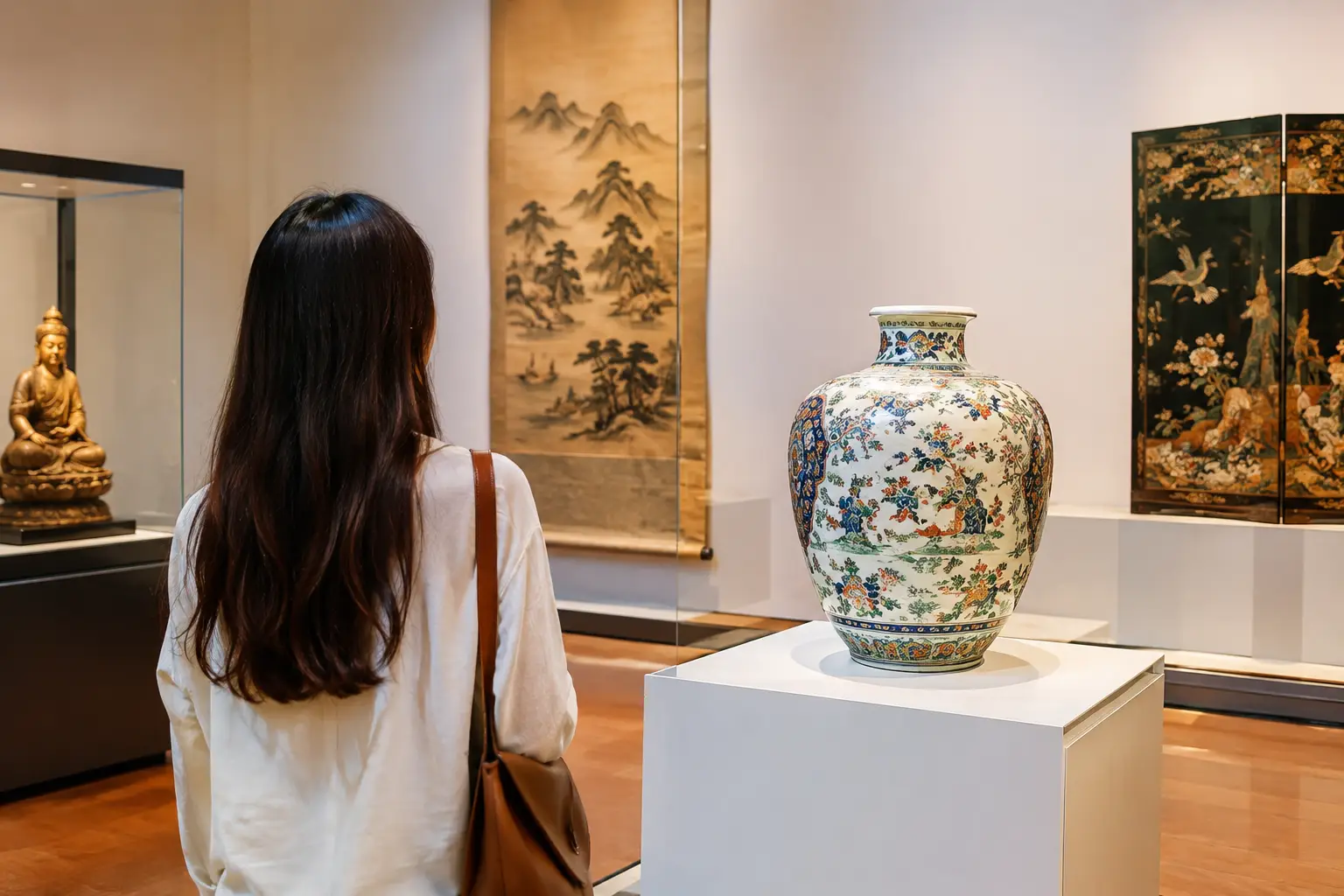

A porcelain bowl lifted from the seabed carries more than a beautiful glaze. It carries the trace of a voyage: the port where it was made, the hands that packed it, the ship that carried it, and the sea that kept it hidden for centuries. Straits & Oriental Museum is one of the best venues for Oriental arts exhibitions because it begins with that extraordinary fact. Here, the story is not simply about objects behind glass. It is about the maritime routes that connected Asia long before modern borders and air travel.
In George Town, where trading histories are woven into the streetscape, the museum gives visitors a rare opportunity to encounter authentic ceramics recovered from significant Asian shipwrecks. The experience is both visually arresting and deeply human. A single plate can reveal changing tastes, commercial ambition, technical mastery and the fragile reality of travel across open water.
Why this Oriental arts exhibition feels different
Many art displays present porcelain as an isolated luxury object, admired principally for its colour, form or maker’s mark. That is part of the pleasure, certainly, but shipwreck ceramics ask a more compelling question: how did this object move through the world?
The museum’s permanent collection brings together artefacts associated with renowned wrecks including the Wanli, Turiang, Royal Nanhai, Nanyang, Xuande and Desaru. These are not reproductions arranged to suggest an age of trade. They are recovered pieces with a direct connection to the maritime networks that linked China, Southeast Asia and wider markets across the region.
That provenance changes the atmosphere of a visit. Rather than seeing porcelain as a distant chapter in art history, visitors can understand it as part of a living exchange of goods, ideas and aesthetics. A blue-and-white vessel, a celadon dish or a finely decorated jar becomes evidence of a world in motion.
The collection also rewards different kinds of visitors. First-time museum-goers can enjoy the immediate beauty of the displays, while collectors and history enthusiasts may linger over kiln traditions, decorative motifs, condition and the distinctive character of pieces shaped by their long immersion underwater. Families, meanwhile, often find the shipwreck story an accessible route into history: treasure, trade, travel and discovery are powerful invitations to look closer.
Porcelain as a record of maritime Asia
The finest exhibitions do more than gather remarkable objects. They make relationships visible. In this case, the relationship is between ceramic artistry and the sea lanes that made its circulation possible.
For centuries, Asian ceramics travelled as highly valued cargo. Porcelain was durable enough for long-distance transport, desirable enough to cross cultural boundaries and versatile enough to suit households, ceremonial settings and elite collections. Its journey did not end at a harbour. It entered dining rooms, trading houses and homes, becoming part of daily life far from its original kiln.
Shipwreck collections preserve a particular kind of historical evidence. Objects that may have been separated in private collections can be seen in the context of cargoes, trade patterns and a shared moment of departure. The value lies not only in rarity. It lies in the way these artefacts document what was being made, purchased and transported at a specific point in time.
There is an unavoidable poignancy, too. A wreck represents interrupted movement. The cargo never reached its intended destination, yet its recovery centuries later has created another journey – one that allows present-day audiences to read the past through material evidence. That tension between loss and preservation gives shipwreck ceramics an emotional force that a conventional display of decorative arts may not always possess.
A museum visit that extends beyond the gallery
A meaningful cultural outing should leave room for reflection. This is where the museum’s integrated heritage and lifestyle setting adds genuine value. The gallery experience can continue into a meal, a coffee, a considered drink or time spent browsing pieces and keepsakes at the gift house. It is an approach that makes space for conversation rather than treating history as something to consume quickly and leave behind.
For travelling couples, this creates an elegant pause within a day spent discovering George Town. For families, it offers a more relaxed rhythm, especially when younger visitors need time between galleries. For collectors and design-minded guests, it is an opportunity to move from close observation of historic forms to a wider appreciation of how craft and hospitality still shape a sense of place.
There is a trade-off worth acknowledging. Visitors looking for a vast national museum with every period of Asian art represented may find the focus deliberately concentrated. This is not an encyclopaedia of the entire continent’s artistic history. Its distinction is more precise: maritime archaeology and the splendour of ceramics, interpreted through the stories of Asian trade.
That focus is what makes the visit memorable. Instead of moving rapidly through an overwhelming sequence of eras and styles, guests can follow a coherent thread from the ship’s hold to the gallery case, and from a single surviving object to the wider world that produced it.
How to look closely at shipwreck ceramics
The most rewarding visit is often a slower one. Begin by taking in the scale and visual rhythm of the collection, then choose a few pieces to study rather than trying to absorb every detail at once. Notice the shape of a vessel before its decoration. Was it made for pouring, storing, serving or display? Function often explains form.
Then look at the surface. Blue-and-white painting, carved detail, green celadon glazes and iron-rich tones each reflect different aesthetic traditions and technical choices. Small variations are not necessarily flaws. In hand-made historic ceramics, they can be clues to firing, production methods and the individuality of the object.
Finally, return to the shipwreck context. Ask what the piece might tell you about demand at its destination. Was it practical tableware, a prestige object or part of a large commercial cargo? The answers are not always certain, and that uncertainty is part of the fascination. Maritime archaeology is a discipline of evidence, interpretation and respectful imagination.
An invitation to see the region differently
Penang is often appreciated for its food, architecture and richly layered communities. A visit to a maritime ceramics museum adds another perspective: the island’s place within a much older network of exchange. The Straits were never merely a passage between destinations. They were a meeting place where goods, languages, beliefs and visual traditions moved together.
This is why a focused Oriental arts exhibition can resonate far beyond the gallery. It encourages visitors to see familiar objects – a bowl, a cup, a storage jar – as witnesses to immense journeys. It also restores a sense of scale to regional history. Asia’s maritime past was not peripheral; it was sophisticated, connected and globally significant.
Whether you come for the artistry of porcelain, the intrigue of sunken ships or the pleasure of an afternoon shaped by history and hospitality, allow time to stand before one object and follow its imagined route across the water. The most lasting souvenir may be a renewed sense that every beautiful thing has a story of how it arrived.