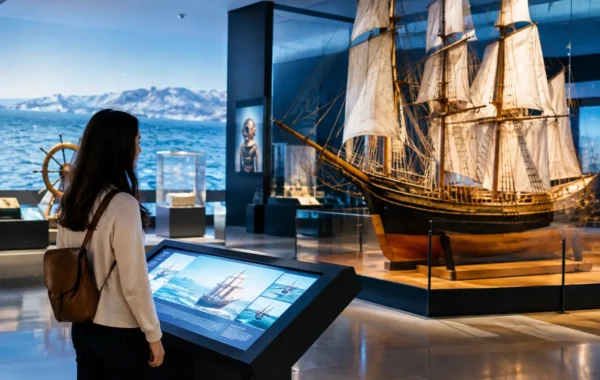
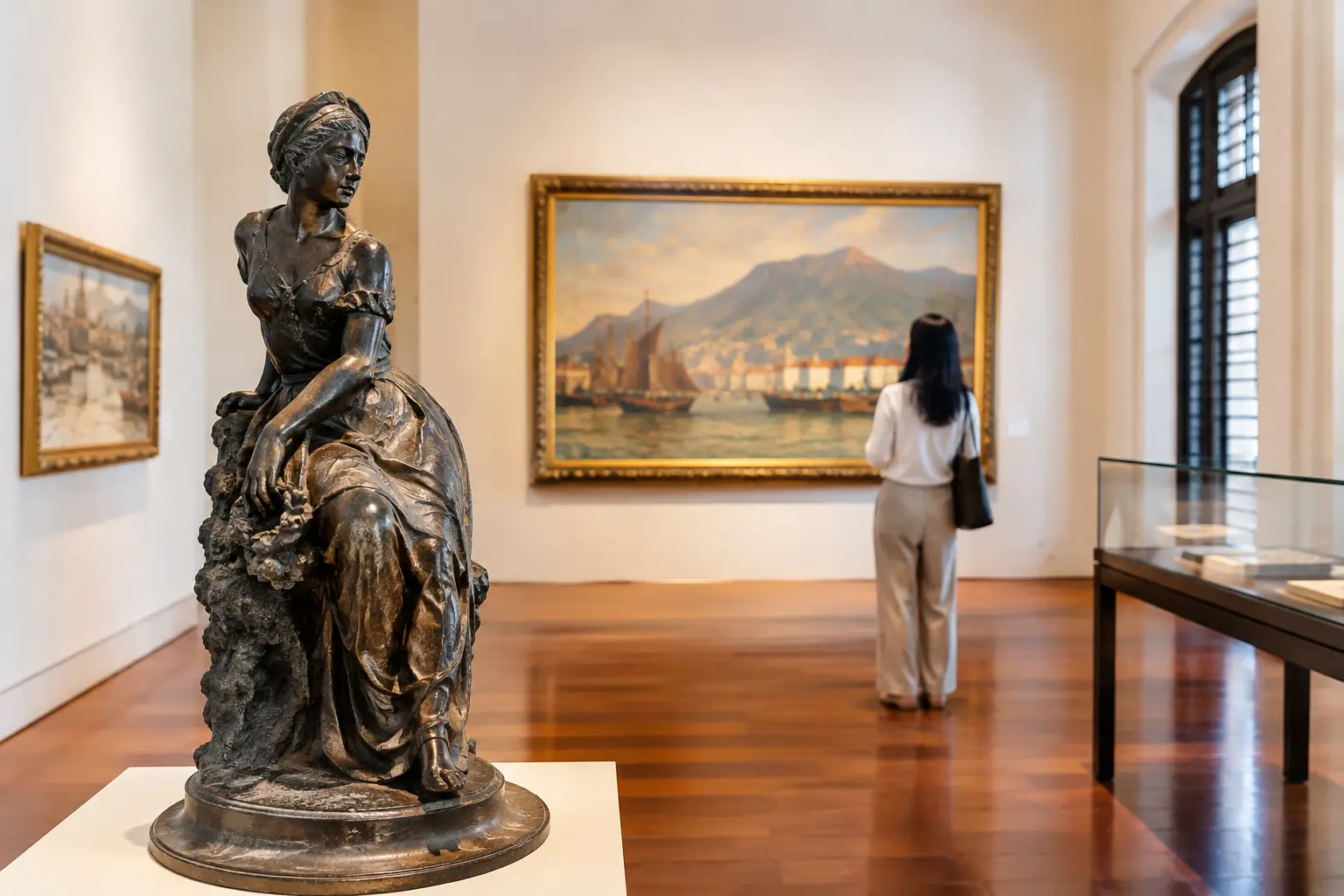

A shard of porcelain can carry more than a pattern. It can hold the trace of a trading route, a dynasty’s artistic language and a journey interrupted beneath the sea. This is why Straits and Oriental Museum sets standard for Penang oriental art scene: it places authentic maritime artefacts at the heart of an experience that is at once scholarly, visual and deeply connected to place.
Rather than treating oriental art as a decorative category detached from its past, the museum presents porcelain and ceramics as witnesses to the sea-borne exchanges that helped shape the region. For visitors to George Town, that distinction matters. Penang’s heritage has always been international in character, and its cultural institutions are at their strongest when they reveal the human stories behind that meeting of worlds.
Why the Penang Oriental Art Scene Needs Context
Oriental art can be admired for its form alone: the clarity of a blue-and-white motif, the glow of a glazed bowl, the precision of a painted rim. Yet its meaning becomes richer when visitors understand who made it, where it travelled and why it was valued.
Shipwreck ceramics offer precisely that context. Recovered from notable Asian wrecks including the Wanli, Turiang, Royal Nanhai, Nanyang, Xuande and Desaru, these objects did not arrive in a gallery through a single collector’s preference. They were part of commercial voyages across Asia, intended for markets far from the kilns where they were made. Their survival gives each vessel, jar and dish a rare double identity: an artwork in its own right, and evidence of a wider maritime world.
This perspective changes the pace of looking. A visitor is no longer simply comparing colours or periods. They are considering the hands that packed a cargo hold, the merchants who commissioned goods, the ports that received them and the sea that preserved them. It is an approach particularly suited to Penang, whose own story is inseparable from trade, migration and cultural exchange.
Straits & Oriental Museum and a Higher Standard
As Penang’s first museum of its kind and Malaysia’s first integrated heritage and lifestyle museum, Straits & Oriental Museum has an opportunity that a conventional display space does not. Its standard is not measured only by the rarity of the collection, although the authenticity of shipwreck artefacts is fundamental. It is measured by how successfully heritage is brought into a contemporary cultural outing.
The permanent displays give visitors a clear point of encounter with maritime archaeology and the splendour of porcelain. The setting then extends that encounter through gallery exhibitions, hospitality and a gift house, allowing a visit to unfold naturally rather than ending at the final display case. A family may arrive with curiosity about history and stay for a relaxed meal. A collector may come to examine ceramic traditions closely, then find further interest in the surrounding art and retail experience. Travellers can make the museum part of a considered day in the city rather than a brief stop between landmarks.
That integrated model is not about distracting from the objects. When handled with care, it makes heritage more welcoming. Museums can sometimes feel formal to first-time visitors, especially those travelling with children or those who believe specialist knowledge is required. A destination that combines thoughtful interpretation with food, drink and cultural programming creates more than one way to belong in the space.
Authenticity Is the Essential Difference
There is a trade-off in every heritage attraction. A highly academic presentation may offer considerable depth but feel inaccessible to casual visitors. A purely theatrical presentation can be memorable but risk leaving the artefacts as background scenery. The most compelling institutions do not choose one extreme. They preserve the authority of the collection while giving people a clear, enjoyable way into its stories.
Authentic shipwreck ceramics provide the necessary foundation. They are not replicas designed to suggest the past. Their imperfections, variations and signs of centuries underwater are part of their significance. A piece may be admired for its design, but it can also prompt questions about production, demand and preservation. That material truth gives the experience weight.
For collectors, the distinction is especially meaningful. Provenance, condition, period and cultural context are not minor details; they shape both scholarly and personal value. For general visitors, the same principles offer reassurance that the story being told is grounded in real objects and real histories.
A Museum Visit That Belongs in the City
George Town rewards the attentive traveller. Its streets reveal layers of commerce, faith, domestic life and craft, often within a short walk of one another. A maritime art museum belongs naturally within this setting because it adds a perspective that is sometimes felt but not always seen: the sea as a route through which ideas, materials and tastes moved.
The museum’s collection makes that movement tangible. Porcelain was portable, prized and widely traded. Across different eras, it carried artistic traditions from China and beyond into homes, ports and trading communities throughout Southeast Asia. Seeing these artefacts in Penang invites visitors to consider the island not simply as a destination with a colonial and architectural legacy, but as part of a much older regional network.
For an international visitor, this can make a holiday itinerary feel more connected. For residents, it offers another way to encounter familiar local history. The value lies in the specificity: not an abstract account of Asian trade, but objects with a physical presence, displayed in a city shaped by the same currents of exchange.
More Than a Quiet Afternoon Indoors
A good museum can be contemplative, but it need not be passive. The most memorable visits leave room for conversation: between parents and children, between travelling companions, or between an object and a question that was not expected at the start of the day.
The integrated experience supports that rhythm. Time spent among the artefacts can be followed by refreshments, a browse through thoughtfully chosen keepsakes, or an exhibition that offers a different visual register. This is particularly useful for mixed groups, where not everyone arrives with the same level of interest in ceramics. One person may be drawn to a particular dynasty or shipwreck; another may respond first to the atmosphere, design and hospitality. Both can leave with a stronger sense of why the collection matters.
It also creates a more generous relationship with time. Rather than rushing visitors through a sequence of labels, the destination allows them to pause, discuss and return to a display with fresh attention. In cultural tourism, that is often the difference between having seen something and having experienced it.
What a Strong Art Scene Should Offer
A mature oriental art scene should not rely on spectacle alone, nor should it speak only to specialists. It should offer access to exceptional objects, credible stories and spaces in which those stories can be enjoyed. It should recognise that art is inseparable from the routes, communities and ceremonies that gave it meaning.
Straits & Oriental Museum contributes to that standard by centring maritime heritage rather than presenting ceramics as isolated treasures. The result is a more expansive picture of oriental art: one shaped by kiln craft and courtly taste, certainly, but also by weather, commerce, navigation and the unpredictable fate of a ship at sea.
For visitors considering where to spend an afternoon in Penang, the invitation is simple. Choose an encounter that gives beauty its history, and history a living place at the table. A porcelain bowl that crossed an ocean centuries ago still has a story to tell – provided we take the time to listen.