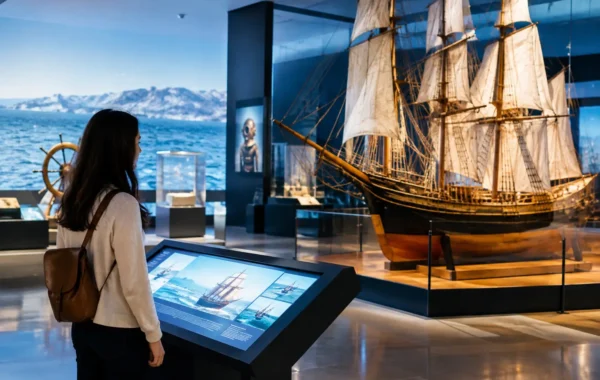


A porcelain bowl raised from the sea can reveal far more than exquisite workmanship. Its glaze, form and place of recovery may speak of imperial kilns, merchant networks, changing tastes and the perilous journeys that once connected China, Southeast Asia and the wider world. The Straits and Oriental Museum as centre of education for oriental arts and history is founded on this powerful idea: that objects carry stories, and that those stories deserve to be encountered closely.
In George Town, where centuries of exchange have shaped the streets, food and communities, maritime heritage is not a distant subject. It is part of the region’s living character. Here, rare ceramics recovered from Asian shipwrecks offer visitors an unusually direct route into the artistic and commercial worlds that once moved across the seas.
Education begins with the object
History is often presented as a sequence of dates, dynasties and distant events. Shipwreck ceramics make it tangible. A dish made for export, a storage jar intended for a vessel’s hold, or a finely painted porcelain piece once destined for a wealthy household turns broad historical narratives into something immediate and human.
The museum’s permanent collection draws attention to artefacts recovered from significant wrecks including the Wanli, Turiang, Royal Nanhai, Nanyang, Xuande and Desaru. Each vessel represents a distinct moment in Asian maritime history. Together, they show that the sea was not a boundary between civilisations. It was a route through which goods, artistic ideas, technologies and customs travelled.
For the curious visitor, this changes how a ceramic object is seen. It is not simply decorative. Its material may point to a particular production centre; its motif can reflect cultural preferences; its condition may reveal the long passage from ship to seabed to museum display. For collectors, these details also deepen an appreciation of provenance, craftsmanship and historical context.
Oriental arts and history through maritime trade
The phrase oriental arts covers a vast and varied field, and it should never suggest a single, uniform tradition. Asian visual cultures were shaped by many regions, periods and communities. The value of a maritime collection lies in its ability to show connections without erasing those differences.
Chinese porcelain is central to this story because of its remarkable technical achievement and enduring appeal across overseas markets. Yet the wider picture is equally compelling. Sea trade brought ceramics into contact with local patrons, port cities and changing dining practices throughout Southeast Asia. Objects were selected, bought, carried, exchanged and cherished by people whose lives rarely appear in formal court histories.
A museum setting gives these objects the space to be read with care. Visitors can consider why certain colours, shapes and decorative styles travelled so widely. They can compare the refinement of a courtly piece with the practical resilience of trade wares made to survive long journeys. They can also recognise the trade-off within maritime archaeology itself: a recovered artefact is precious evidence, but its original setting has been altered by time, water and recovery.
This is why informed interpretation matters. The aim is not to turn shipwrecks into treasure stories alone, but to understand them as cultural archives. They preserve evidence of artistic ambition alongside evidence of everyday commerce.
A museum that invites conversation, not passive viewing
The strongest educational experiences do not require visitors to arrive as specialists. A family may be drawn first to the sheen of blue-and-white porcelain. A history enthusiast may be fascinated by a vessel’s route. An international traveller may find an unexpected connection between the objects on display and the trading heritage of their own home city.
Thoughtful display and storytelling allow these entry points to sit together. Labels, exhibitions and guided encounters can offer useful context without making the experience feel like a classroom. The best question is often the simplest: who made this, who carried it, and who was meant to receive it?
At Straits & Oriental Museum, the educational role extends beyond an individual object or gallery. As Penang’s first museum of its kind and Malaysia’s first integrated heritage and lifestyle museum, it places learning within a fuller cultural outing. The result is more generous than a brief walk through display cases. Visitors can linger, discuss what they have seen and allow the experience to become part of a day spent in a city built on exchange.
Why the setting in Penang adds meaning
George Town’s heritage is shaped by migration, trade and the meeting of traditions. Its historic streets make an appropriate setting for a museum devoted to maritime routes and the objects that travelled along them. The connection is not merely scenic. Penang was part of the world of ports in which languages, ingredients, beliefs and goods were continually in motion.
This local context helps visitors place shipwreck ceramics within a larger regional story. The porcelain may have been produced elsewhere, but its journey through the Straits speaks to the commercial networks that helped form Southeast Asian coastal life. Looking at a cargo of ceramics in Penang encourages a more layered understanding of heritage: culture is often made through contact as much as through origin.
For visitors with limited time, this perspective is particularly valuable. A museum visit can provide the historical frame that makes a walk through George Town’s architecture, markets and dining culture feel richer afterwards. For those already familiar with Penang, it offers another way to see the city’s maritime inheritance.
Learning through art, hospitality and atmosphere
A cultural institution need not separate reflection from pleasure. In fact, hospitality can help sustain attention. A well-timed pause for coffee, a considered meal or a browse through a gift selection can turn a visit into a more relaxed encounter with history, especially for mixed-age groups and travellers planning a full day.
There is a balance to protect. Dining, retail and social spaces should support the heritage experience rather than distract from it. When they are thoughtfully integrated, however, they encourage visitors to stay longer and to speak about what they have discovered. That conversation is part of education too.
The museum’s blend of exhibitions, gallery space, food and beverage experiences, and gift house recognises that cultural memory is not consumed in only one way. Some guests will study ceramic forms and historical dates; others will remember the atmosphere of a room, the texture of an object’s decoration or a story shared over lunch. Both forms of engagement can lead to lasting curiosity.
What visitors can take away
A visit to a shipwreck ceramics museum rewards attention rather than prior knowledge. There is no need to identify every dynasty or glaze before arriving. Begin by looking closely at shape and ornament, then ask what practical or social purpose the object may have served. Notice which pieces feel familiar and which challenge modern assumptions about luxury, trade or distance.
Parents can encourage children to imagine the voyage: how were hundreds of fragile ceramics packed aboard a ship, what weather might the crew have faced, and how did goods from one shore become valued on another? Collectors may wish to consider the factors that give an artefact meaning beyond beauty, including condition, archaeological context, rarity and the story of its recovery.
Most of all, visitors leave with a sharper sense that history is not locked in the past. It remains present in the objects we preserve, the routes we remember and the cultural exchanges that still shape Penang. A single ceramic vessel can begin that journey through time, provided we pause long enough to hear its story.