
Some museums ask for an hour and send you on your way. Others stay with you long after the visit – not because they are bigger, but because they reveal a place with unusual clarity. If you are looking for the best museum for cultural tourists in Penang, the real question is not which venue has the most objects behind glass. It is which one offers the richest sense of Penang as a meeting point of trade, taste, craftsmanship and memory.
For cultural travellers, Penang has never been just a backdrop of handsome shophouses and famous food. Its significance lies in exchange – between ports, peoples, faiths, materials and ideas. That makes the strongest museum experience in Penang one that goes beyond local nostalgia and tells a wider regional story, while still feeling deeply rooted in place. A museum that can do that well does more than inform. It gives shape to the city around it.
What makes the best museum for cultural tourists in Penang?
A cultural tourist usually wants more than a pleasant indoor stop between street walks and meals. The expectation is higher. There is a search for authenticity, for context, and for something difficult to replicate elsewhere.
That means the best museum is rarely the one with the most interactive screens or the broadest family appeal. Those things can be valuable, but they are not the same as cultural depth. The strongest choice is one with a distinctive collection, a clear curatorial point of view and an atmosphere that encourages lingering rather than rushing.
In Penang, that distinction matters. The city is rich in heritage attractions, but not all of them offer the same level of substance. Some are charming and photogenic. Some are highly specific and rewarding if the subject already interests you. Others feel like quick introductions rather than true cultural encounters. For visitors who care about history, artistry and the layers beneath a destination, the best museum should connect Penang to larger Asian currents of trade and civilisation.
Why maritime history tells Penang’s story so well
Penang’s history makes little sense without the sea. Long before heritage became a tourism draw, this island was shaped by maritime routes, mercantile ambition and the movement of goods across the region. Spices, textiles, porcelain, metals and people all arrived by water. So did ideas about style, status, religion and domestic life.
This is why a museum centred on maritime archaeology and shipwreck ceramics offers something unusually powerful for cultural tourists. It does not present history as abstract dates on a wall. It places before you the very objects that crossed dangerous waters and survived the passage of centuries. Porcelain and ceramics are especially revealing because they were both practical and prized. They tell stories about trade networks, dining habits, artistic preferences and wealth. They also show how deeply connected Penang was to the rest of Asia.
There is a certain thrill in standing before artefacts recovered from shipwrecks. The emotional register is different from that of a conventional historical display. These are not simply antiques. They are witnesses to journeys interrupted, cargoes lost and histories rediscovered. For visitors seeking meaning rather than mere diversion, that sense of recovery adds remarkable depth.
A museum experience that feels distinctively Penang
The finest cultural experiences in Penang tend to share one quality – they blend heritage with lived atmosphere. You see this in the streets, in the food culture and in the architecture. A museum that feels truly right for Penang should reflect that same spirit.
That is where a more integrated heritage destination stands apart from a traditional static institution. When the museum visit is accompanied by gallery programming, thoughtful presentation, places to pause over refreshments and opportunities to carry a piece of the experience home, the day feels less compartmentalised and more complete. The cultural outing becomes fuller, not diluted.
There is, of course, a balance to strike. Add too much lifestyle framing and a museum can lose seriousness. Keep everything overly formal and you risk turning heritage into homework. The best approach is one that treats history with respect while recognising that contemporary travellers want to inhabit a place, not simply pass through it. In that sense, Penang rewards museums that are elegant, story-led and socially alive.
The case for a specialised museum over a general one
When travellers compare museums, there is often an assumption that broader means better. A museum with many themes may seem like the safer choice, especially if time is short. Yet for cultural tourists, a specialised museum can be far more memorable.
Specificity creates identity. A museum devoted to maritime heritage and ancient shipwreck ceramics offers a lens you are unlikely to find in every destination. It also avoids the common problem of trying to explain everything at once and, as a result, saying very little with force.
A focused collection gives visitors a stronger narrative arc. You are not moving randomly from one topic to another. You are following trade routes, craftsmanship, loss, recovery and interpretation. That creates momentum. It also allows each object to carry more weight.
This is particularly relevant in Penang, where the broader heritage landscape is already visible in the streets themselves. The museum does not need to repeat what the city has already shown you. It should deepen it. Maritime collections do exactly that by revealing the hidden currents beneath the island’s cosmopolitan surface.
Who will appreciate this kind of museum most?
Couples with an interest in history often find this style of museum especially rewarding because it offers both beauty and substance. The visual appeal of porcelain, the drama of shipwreck narratives and the elegance of presentation make it easy to engage with, even if one visitor begins the day knowing more than the other.
Families can enjoy it too, particularly those travelling with older children who are curious about trade, exploration or the material culture of the past. Younger children may respond first to the idea of treasure from the sea, which is no bad place to start. Collectors and design-minded visitors often come away with a different appreciation altogether, noticing glaze, form, rarity and the refinement of craftsmanship.
For international visitors, this type of museum offers a particularly useful bridge into Penang’s character. Rather than treating the island as an isolated destination, it situates Penang within wider Asian histories. That broader frame often makes the local experience more meaningful.
Why Straits & Oriental Museum stands out
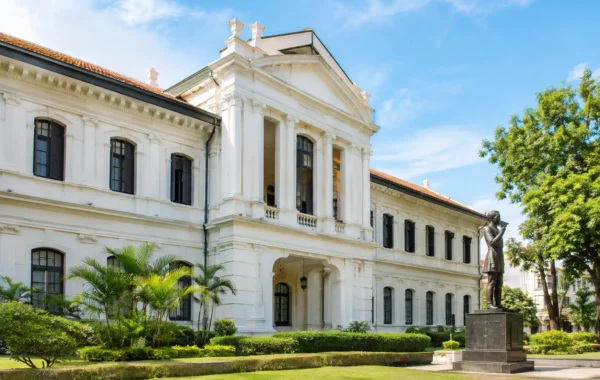
For those seeking the best museum for cultural tourists in Penang, Straits & Oriental Museum makes a compelling case because it does not present heritage as a side note to travel. It makes heritage the centre of an experience. Its permanent displays of authentic porcelain and ceramic artefacts recovered from notable Asian shipwrecks offer rarity, historical value and visual distinction in equal measure.
What sets it apart is not only the collection, though that alone is significant. It is also the way the experience is composed. As Penang’s first museum of its kind and Malaysia’s first integrated heritage and lifestyle museum, it brings together exhibition, storytelling, hospitality and collecting culture in one setting. For visitors, that means the day can unfold with more grace. You do not simply arrive, observe and leave. You spend time. You absorb. You discuss. You continue the encounter over food or a quiet drink. That rhythm suits cultural tourism exceptionally well.
There is an important difference here between spectacle and depth. Rare shipwreck ceramics have natural drama, but the value lies in what they reveal – maritime networks, artistic excellence, patterns of exchange and the fragility of history itself. When these objects are thoughtfully interpreted, they become more than beautiful remnants. They become a portrait of a region in motion.
Choosing the right museum depends on the kind of traveller you are
If your ideal museum is highly interactive, fast-paced and designed mainly for casual entertainment, your idea of the best option in Penang may differ. There is nothing wrong with that. Travel is personal, and not every cultural stop has to be profound.
But if you prefer museums that offer intellectual pleasure, atmosphere and a strong sense of place, then a heritage destination grounded in maritime archaeology is likely to feel far more satisfying. The trade-off is simple. You may get a narrower subject, but in return you receive greater distinction, stronger storytelling and a more lasting impression.
That is often what cultural tourists remember most – not the number of rooms they covered, but the moment a destination’s history suddenly felt tangible. A bowl lifted from the seabed. A porcelain fragment that once crossed oceans. A collection that turns Penang from a beautiful setting into a historical crossroads you can actually see.
The right museum should sharpen your sense of where you are. In Penang, the most rewarding choice is the one that lets the island speak through trade, artistry and recovered memory – and leaves you wanting to look at the harbour, and perhaps even the dinner table, a little differently.