
A porcelain bowl can look perfectly at home behind glass. Yet when that bowl has spent centuries beneath the sea, it becomes far more than a beautiful object. It is evidence of taste, trade, craftsmanship and the people who carried it across dangerous waters. For visitors seeking Chinese works of art in George Town, Penang, this is the most compelling place to begin: with objects that have travelled through time as well as distance.
George Town’s Chinese heritage is often experienced through streetscapes, temples, shophouses and food. These are essential encounters. But ceramics offer a quieter, more intimate route into the same history. A painted dish, storage jar or finely glazed cup reveals how Chinese artistry was admired, purchased and used across Southeast Asia, long before the modern city took shape.
Chinese Works of Art in George Town, Penang
The phrase “Chinese works of art” covers a wide field, from calligraphy and furniture to ancestral portraiture, textiles, metalwork and ceramics. In a port city such as George Town, porcelain holds particular resonance. It was both a treasured art form and a commercial force, made in workshops across China and carried by merchant vessels towards markets throughout the region.
That dual identity matters. A vessel might have been made with extraordinary skill, its surface animated by cobalt-blue painting, celadon glaze or carefully formed relief. At the same time, it was designed to survive handling, stacking and sale. Its beauty was not removed from daily life. It belonged at banquets, on household altars, in kitchens and in the hands of families who understood that a well-made object could carry status, memory and pleasure.
This is why shipwreck ceramics speak so directly to Penang. They turn the abstract idea of maritime trade into something tangible. Instead of imagining the cargo hold of a vessel, visitors can stand before the actual porcelain that crossed the sea, bearing the marks of kiln, voyage, recovery and preservation.
A Port City Shaped by Exchange
Penang did not inherit its cultural richness by accident. Its position on historic sea routes brought merchants, sailors, artisans and families from China, the Malay Archipelago, India, Europe and beyond into close contact. Goods moved alongside languages, recipes, religious practices and design ideas. The result is a city whose heritage is layered rather than singular.
Chinese porcelain was part of that exchange for centuries. Some pieces were made for imperial or elite use, while others were produced for export markets with particular shapes, motifs and quantities in mind. A plate that appears modest at first glance may therefore hold a broad story: of regional demand, a distant kiln community, a trading network and a household that once valued it enough to acquire it.
For the curious visitor, this offers a useful shift in perspective. Chinese art in Penang is not only about origin. It is also about arrival, adaptation and belonging. Objects made elsewhere became part of the visual and domestic life of Southeast Asia. Their journeys helped create the connected world that George Town still expresses so vividly.
The Artistry Hidden in a Ceramic Fragment
Porcelain rewards close looking. Begin with the form. Is the object broad and practical, perhaps intended for serving food, or fine and compact, made for tea, ritual or display? Its shape can suggest how it was used and for whom it was made.
Then look at the surface. Blue-and-white decoration may feature florals, landscapes, animals or auspicious symbols. Celadon often draws attention through restraint: a soft, green-toned glaze that changes with the light and makes the sculpted form beneath it feel almost alive. Other wares may use iron-brown, turquoise, cream or layered enamels. Each finish reflects technical choices made long before the object reached a ship’s hold.
Imperfections deserve attention too. A slightly uneven glaze, kiln grit at the foot or a small firing mark can make an object more human rather than less valuable. These details remind us that porcelain was made through heat, skill and risk. A single firing could alter colour, shape or durability. What survives today is the result of both mastery and chance.
Why Shipwreck Ceramics Matter
Museum collections of shipwreck ceramics offer a rare kind of historical encounter. Their meaning comes not only from age or aesthetic quality, but from their archaeological context. When objects are recovered from a wreck, they can help reveal what a vessel carried, where it may have travelled and what kinds of goods were in demand at a particular moment.
The collections associated with the Wanli, Turiang, Royal Nanhai, Nanyang, Xuande and Desaru shipwrecks illuminate different chapters of Asian maritime history. Seen together, they document changing styles of porcelain and the remarkable scale of seaborne exchange. They also prompt a more thoughtful question: how many hands did each piece pass through before it disappeared beneath the water?
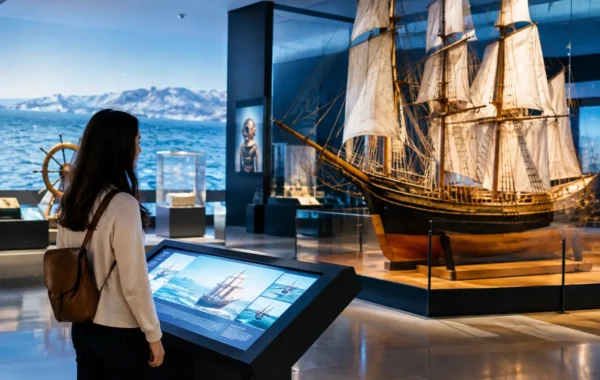
At Straits & Oriental Museum, these authentic artefacts are presented as the heart of a broader journey through maritime history. The experience is not simply about identifying dynasties or memorising dates, though both can enrich a visit. It is about recognising porcelain as a witness to movement: the movement of ships, ideas, wealth, appetite and cultural influence across the seas.
Looking Beyond the Most Famous Pieces
It is easy to be drawn to the most elaborate dish in a display case. Such works deserve their attention. Yet some of the most affecting objects are the everyday pieces: a small bowl, a simple jar, a fragment whose decoration survives in only a few lines of blue.
These objects make history feel inhabited. They suggest meals served, gifts exchanged, goods ordered by merchants and cargoes carefully packed for voyages whose outcomes could never be certain. Their value lies not only in rarity. It lies in the way they bring ordinary lives closer.
This is also where context makes a difference. A ceramic shown as a decorative object can be admired for colour and form. Displayed alongside the story of its voyage, it becomes a document of the sea. Neither approach is wrong, but the second gives the first greater depth. It asks visitors to see beauty and history together, rather than choosing between them.
A More Rewarding Way to Visit
Allow time for the labels, especially when they identify the wreck, date range, material and decorative tradition. These details help connect one object to another. Rather than trying to see every piece quickly, choose a few that arrest your attention and compare them. Notice how a glaze differs from one vessel to the next, or how the same motif changes across periods.
Families may find that a simple question opens the gallery up: where do you think this object was going, and who might have used it? For collectors, the visit can sharpen an eye for condition, proportion, technique and provenance. For travellers, it offers an elegant way to understand Penang beyond the postcard view.
A museum visit can also sit naturally within a longer cultural afternoon. Pause over the objects first, then let the conversation continue over food or a drink. Heritage is not best experienced as a checklist. It becomes memorable when there is space to reflect on what has been seen, and on the extraordinary distance a small piece of porcelain has travelled to be here.
The next time a painted bowl catches your eye, resist the urge to move on after a glance. Look at its rim, its foot, its decoration and its quiet signs of survival. In that brief act of attention, the sea routes of Asia feel unexpectedly close.