
A porcelain bowl can survive beneath the sea for centuries, yet still carry the marks of a world in motion. The Ming Dynasty Ceramic showcase at Straits and Oriental Museum brings that world into view through authentic artefacts recovered from historic Asian shipwrecks. These objects were not created as distant curiosities for modern display cases. They were packed into ship holds, carried across trading routes and intended for homes, tables, temples and markets across the region.
For visitors to George Town, this is an opportunity to encounter Ming porcelain not simply as an art form, but as evidence of the sea routes that shaped Southeast Asia. Every vessel, dish and storage jar belongs to a larger story of craftsmanship, commerce, risk and cultural exchange.
Why Ming ceramics still command attention
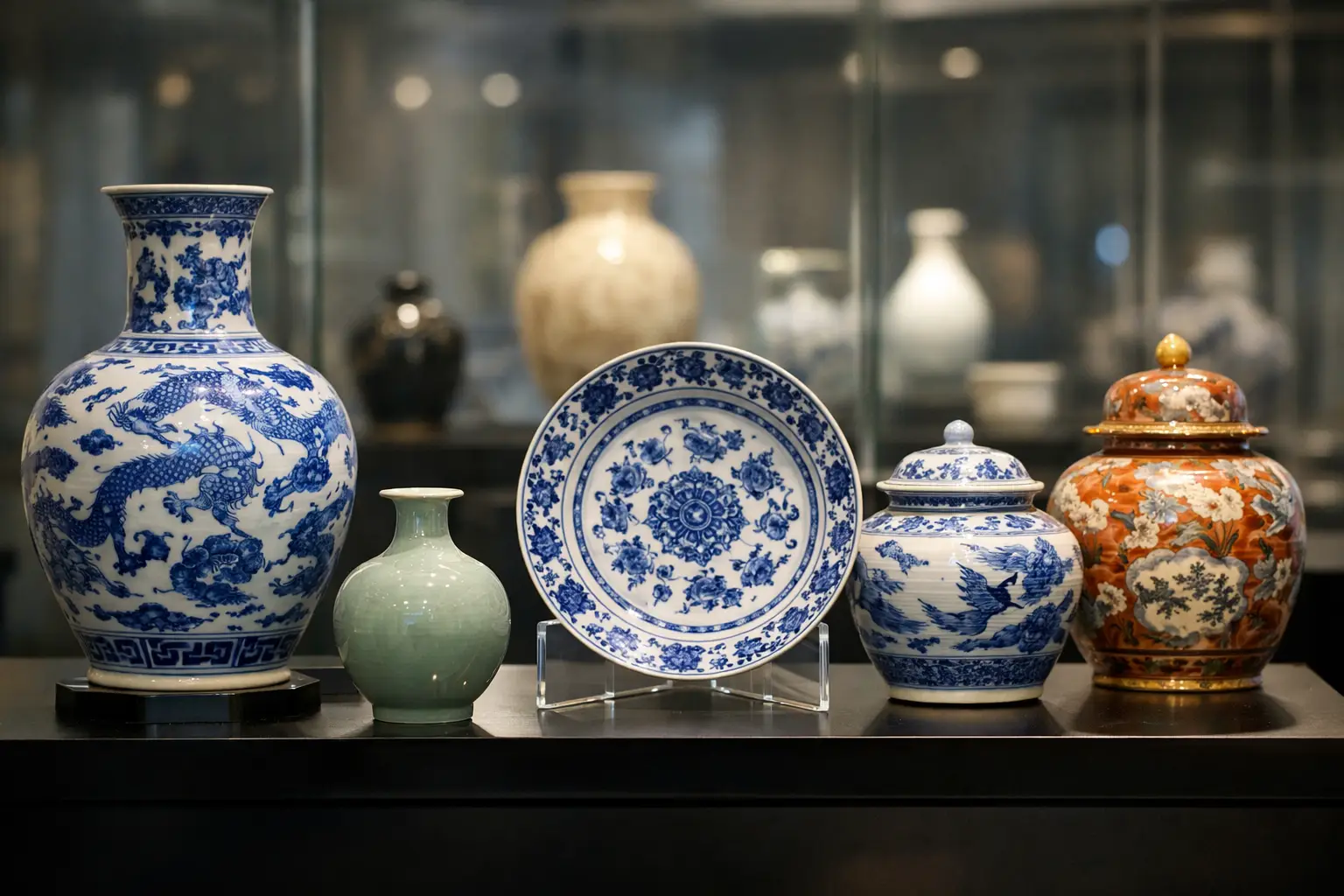
The Ming dynasty, which ruled China from 1368 to 1644, is synonymous with some of the most admired ceramics ever made. Its potters developed extraordinary technical control over porcelain bodies, glazes and painted decoration. Blue-and-white ware, in particular, became a recognisable language of luxury and trade, with cobalt-painted scenes ranging from floral scrolls and waves to birds, landscapes and auspicious symbols.
Yet the enduring appeal of Ming ceramics is not only about refinement. These were objects designed for use. A finely potted bowl might have appeared at a banquet; a covered box could have held treasured contents; a sturdy jar was made to travel. When such pieces entered maritime trade, they became part of a far-reaching network linking Chinese kilns with ports in the Malay Archipelago, India, the Middle East and beyond.
That distinction matters. A museum display of shipwreck ceramics does not present porcelain as isolated decoration. It reveals the scale of demand that turned ceramics into one of Asia’s most important seaborne goods.
The Ming Dynasty Ceramic showcase at Straits and Oriental Museum
The museum’s collection is shaped by maritime archaeology. Its permanent displays draw visitors into the remarkable afterlife of cargoes lost at sea, including material associated with shipwrecks such as the Wanli, Turiang, Royal Nanhai, Nanyang, Xuande and Desaru.
Within this setting, Ming-period ceramics become especially vivid. The sea preserved objects that might otherwise have been broken, dispersed or forgotten. Their recovery allows visitors to see not merely a single exceptional piece, but the logic of a cargo: repeated forms, varied sizes, patterns made for different buyers and ceramics chosen because they could travel well and sell widely.
A shipwreck assemblage can also challenge the assumption that every historic porcelain object was made for an imperial palace. Some pieces were undoubtedly prized, but much export porcelain was produced for commercial markets. Its beauty lay in its accessibility as well as its skill. The forms had to appeal across cultures, suit practical use and withstand a long voyage in tightly packed storage.
This makes the showcase rewarding for first-time museum visitors and experienced collectors alike. One may be drawn first to the clarity of a blue-and-white motif or the quiet sheen of a glaze. Another may look closely at foot rings, kiln grit, painted lines and the subtle differences between pieces. Both approaches lead back to the same central question: what did this object mean before it became an artefact?
From kiln to cargo hold
The route from workshop to ship was a substantial undertaking. Ceramic production involved specialist labour at every stage, from preparing clay and shaping vessels to painting, glazing, firing, sorting and packing. A single cargo could contain thousands of items, nested together with protective material to make the most of limited space below deck.
Once loaded, porcelain faced conditions no kiln master could control. Monsoon winds, unfamiliar waters, storms and navigational error made every journey uncertain. A wreck represents a moment when trade stopped abruptly, but it also preserves the evidence of a much larger system that normally worked.
For Penang, a historic port city shaped by movement across the Straits, these maritime stories have particular resonance. The ceramics speak to a region that was never peripheral to global exchange. Southeast Asian ports were places where goods, languages, beliefs and artistic tastes met, changed hands and acquired new meanings.
How to look closely at Ming porcelain
The most satisfying way to experience a ceramic showcase is to slow down. Rather than trying to identify every dynasty or decorative theme at once, begin with the object itself. Notice its proportions. Is it shallow and broad for serving food, deep for a soup or drink, or compact enough to have been carried as a personal possession?
Then consider the surface. Blue-and-white porcelain often appears effortless from a distance, but closer viewing reveals the painter’s decisions. A brush line can be precise and confident or deliberately loose. Cobalt may appear deep and saturated in one area, softer or greyed in another. These variations are part of the object’s character, influenced by materials, firing and age.
Decoration is equally revealing. Peonies, lotus blooms and scrolling foliage were not merely ornamental. In Chinese visual culture, many motifs carried associations with prosperity, purity, longevity or renewal. At the same time, designs created for export could be selected or adapted for audiences outside China. A bowl therefore holds several stories at once: the meaning of its imagery, the habits of its intended users and the commercial decisions behind its production.
Finally, look for signs of its journey. Marine encrustation, staining, surface wear or small firing irregularities should not be dismissed as flaws. They are traces of an object’s real life. In a shipwreck context, they deepen rather than diminish its presence.
More than a display of beautiful objects
Ceramics have an unusual power to make history tangible. They invite an immediate response because they are familiar forms. A modern visitor knows what it means to lift a cup, place food on a plate or store something in a jar. That familiarity narrows the distance between the present and a trading voyage of centuries ago.
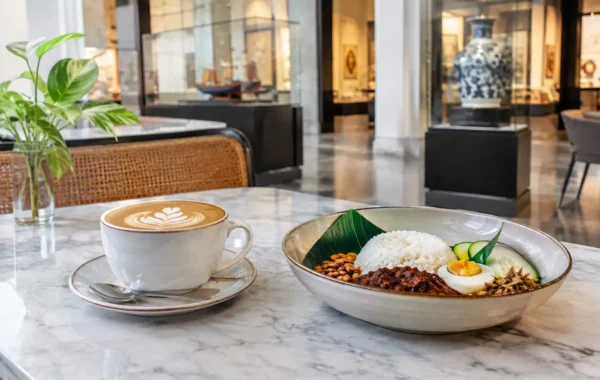
The museum experience extends this connection beyond the gallery. As Malaysia’s first integrated heritage and lifestyle museum, Straits & Oriental Museum frames its collections within a broader cultural outing, where art, dining, conversation and collecting can sit alongside historical discovery. It is a fitting approach for maritime heritage. Ports were never only warehouses and departure points; they were social places, full of exchange, hospitality and stories.
For families, the showcase offers a compelling way to introduce history without reducing it to dates. Children can imagine how a ship was loaded, why a captain risked a difficult crossing and who might have waited at the destination for a cargo of bowls. For collectors, the display encourages more careful looking, especially at provenance, condition and the relationship between an individual piece and its wider archaeological context.
A visit with lasting perspective
Ming ceramics are often admired for their elegance, but their deeper fascination lies in what they witnessed. They crossed seas at a time when maritime trade was remaking the region. They connected craftspeople in China with buyers across Asia. Some were lost in an instant, then returned to the world centuries later with their stories still intact.
A visit to the showcase is therefore not only about seeing porcelain of distinction. It is about standing before the material evidence of Asia’s shared maritime past, and recognising that every surviving piece once had a destination beyond the horizon.