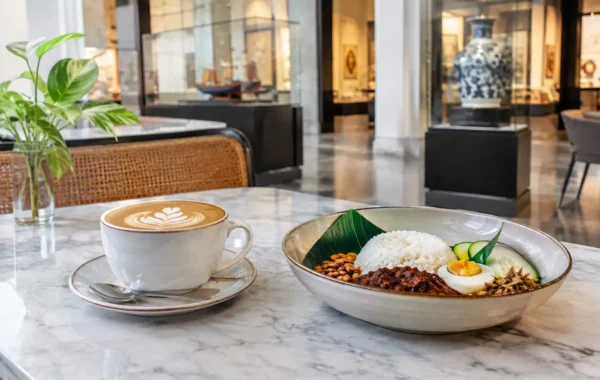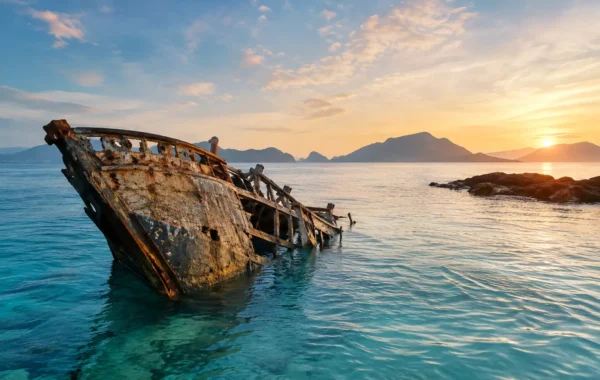
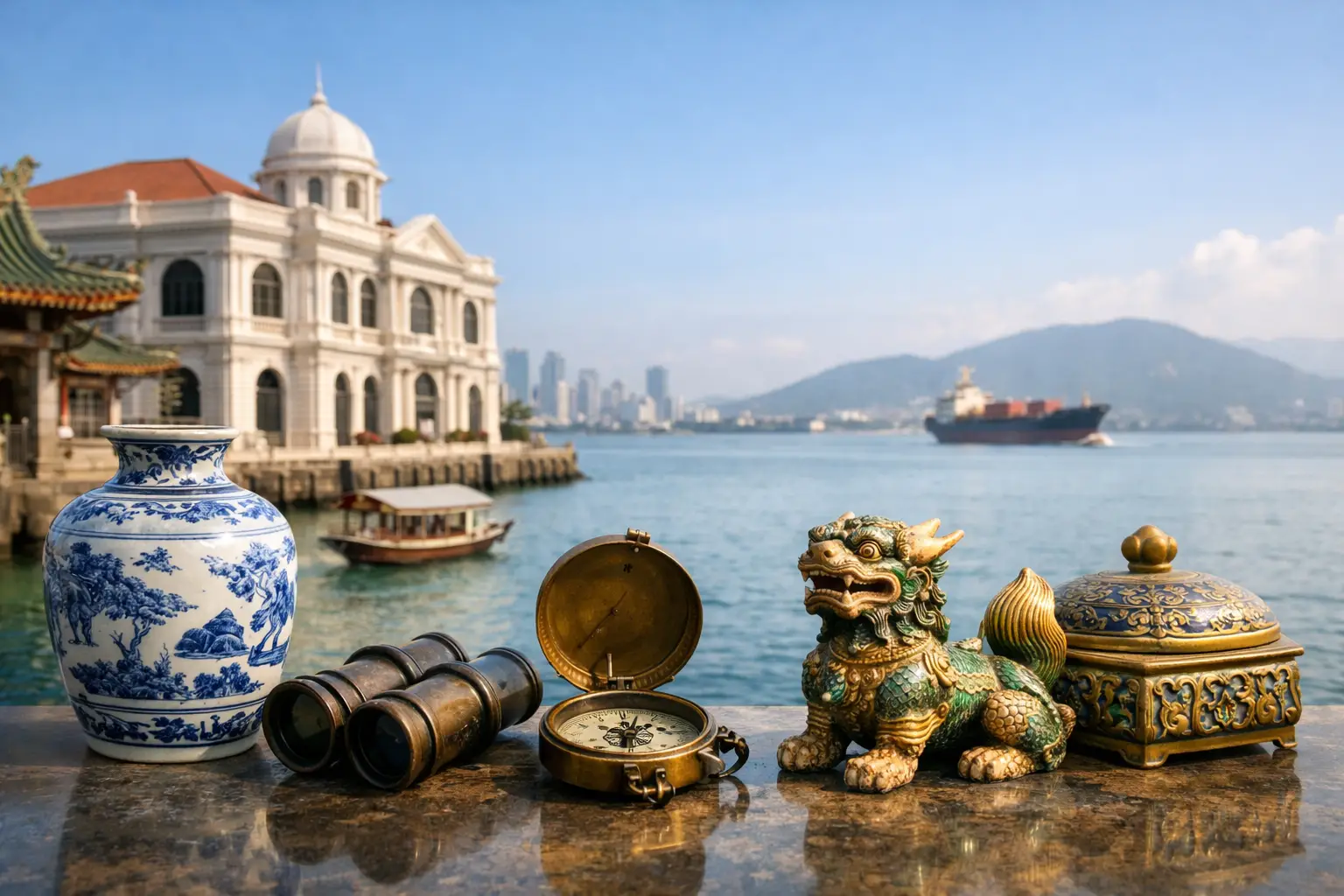

A shard of porcelain can hold the evidence of an empire: where a vessel sailed, which kiln supplied its cargo, who commissioned its wares, and how ideas travelled with commerce. At 海峡与东方博物馆(Straits & Oriental Museum For Academia), shipwreck ceramics offer an unusually immediate route into these connected histories. They bring the study of Asian maritime exchange out of the abstract and into view, through objects that once moved across seas between China, Southeast Asia and wider trading worlds.
For students, researchers and educators, this matters. Maritime archaeology is not only about spectacular discoveries beneath the water. It is a means of reading the past through material culture, economic networks, technological skill and human taste. A museum collection centred on recovered ceramics makes those subjects tangible, while Penang’s own historic position on the Straits of Malacca gives the encounter a powerful sense of place.
Why shipwreck ceramics matter to academic study
Ceramics survive where many other forms of cargo do not. Textiles decay, timber deteriorates and organic goods leave little trace, yet porcelain and stoneware may endure for centuries below the sea. Their durability has made them essential evidence for understanding the movement of goods and the relationships that made long-distance trade possible.
A single bowl or storage jar can be examined from several scholarly angles. Its form may suggest how it was used. Its glaze, decoration and clay body can point towards a production centre or period. Its presence alongside other wares may reveal the purchasing habits of merchants and consumers. When objects are considered as a cargo rather than as isolated treasures, they begin to show the scale, variety and organisation of maritime trade.
The collections associated with the Wanli, Turiang, Royal Nanhai, Nanyang, Xuande and Desaru shipwrecks are especially valuable in this respect. Together, they invite comparative questions across different centuries, regions and trading conditions. Rather than treating Asian ceramics as a fixed tradition, visitors can see them as products of changing demand, innovation and exchange.
海峡与东方博物馆 as an object-led classroom
The most memorable teaching often begins with close looking. In a gallery, students can notice the weight of a vessel, the precision of painted motifs, the evidence of firing, or the practical design of an object intended for use and transport. These details are easily overlooked in a lecture slide. Encountering them directly encourages more careful observation and more confident interpretation.
For an academic visit, the strongest starting point is not simply to ask, “What is this?” Better questions are: “Who might have used it?”, “What route could have carried it here?”, and “What does its material tell us about the systems behind it?” Such questions make room for history, archaeology, art history, anthropology, conservation and trade studies at once.
The museum setting also helps students distinguish between an object’s original life and its present life. A ceramic vessel was first made, bought, packed and carried. It was later lost at sea, recovered through maritime archaeology, conserved, documented and displayed. Each stage shapes the story that can now be told. This is a useful corrective to the assumption that museum objects speak for themselves without interpretation.
Reading trade through form, function and decoration
Porcelain is often admired for beauty, but scholarship becomes richer when beauty is considered alongside function. A small cup, a large dish and a heavy storage jar fulfilled different needs. Their forms can indicate domestic dining, ceremonial use, merchant provisioning or transport. Decorative choices, meanwhile, may reflect aesthetic fashions, cultural symbols and the expectations of particular markets.
This is where comparison is productive. Students might place blue-and-white wares beside more restrained stoneware and ask why one type travelled farther or appealed to a different buyer. They may compare repeated designs with exceptional pieces, considering whether standardisation supported trade at scale. They may also consider the limits of what an object can prove. A Chinese-made bowl found on a shipwreck does not, by itself, identify every person involved in its journey or every destination it reached.
That caution is central to good historical practice. Shipwreck cargoes are powerful but incomplete archives. They preserve a particular moment of loss, not a complete record of all trade. Weather, salvage history, excavation methods and collection context can affect what survives and what is available for study. The most thoughtful interpretations acknowledge these gaps rather than smoothing them away.
A meeting point for disciplines
Maritime ceramic collections reward interdisciplinary research because no one field can fully explain them. Archaeology can establish context and deposition. Art history can trace stylistic traditions. Materials analysis can investigate composition and manufacture. Economic history can examine commercial systems, while environmental history can consider monsoon winds, navigational knowledge and the risks of seaborne travel.
For researchers of Southeast Asia, the value is equally cultural. The region was not a passive corridor between larger powers. Its ports, communities, rulers, merchants and craftspeople shaped the movement and meaning of imported goods. Ceramic cargoes demonstrate connection, but they should not erase local agency. The most compelling research asks how international commerce was adapted to local tastes and social worlds.
This perspective is particularly resonant in George Town. A visit can frame maritime history not as a distant subject but as part of the wider story of a port city formed through movement, encounter and exchange. The gallery becomes one point within a broader urban landscape where trade, migration, food and architecture continue to carry layered histories.
From scholarly enquiry to public interpretation
Museums sit between specialist knowledge and public curiosity. Their task is not to reduce complex research into a set of simple facts, but to make that research approachable without losing its integrity. Shipwreck ceramics are well suited to this work because they offer a visual entrance into questions that can otherwise feel remote: trade policy, courtly consumption, colonial collecting, technological change and cultural contact.
For educators, a visit can support assignments that ask students to interpret an object label, compare visual evidence with secondary reading, or build an argument from material evidence. For researchers, it can prompt fresh questions about classification, provenance, display and the ethics of maritime heritage. For families and independent visitors, the same objects can provide an accessible starting point for a more thoughtful appreciation of Asia’s shared past.
There is a balance to maintain. A lifestyle destination can make heritage feel welcoming through food, art, conversation and considered hospitality, but the objects must remain more than decorative backdrops. Their cultural and archaeological significance deserves time, context and respect. When these elements are held together well, a museum visit becomes both pleasurable and intellectually serious.
Preparing a productive academic visit
A worthwhile visit benefits from a clear research focus. Before arriving, decide whether the emphasis is on ceramic typology, maritime routes, museum interpretation, conservation, collecting histories or public engagement. A focused question helps visitors move beyond general admiration and notice the details most relevant to their enquiry.
It is also useful to record observations carefully: dimensions where available, motifs, condition, gallery context and the language used in interpretation. Sketching an object or writing an immediate description can be more revealing than relying solely on photographs. Afterwards, compare these observations with published scholarship and remain alert to what was not visible or not stated in the display.
Researchers requiring detailed collection information, image permissions or specialist access should establish requirements in advance. Museum collections balance public display, conservation needs and responsible handling, so access may depend on the nature and scope of the proposed work. That preparation respects both the objects and the people entrusted with their care.
The enduring value of shipwreck ceramics lies in their ability to make vast histories feel human. They were made by skilled hands, selected for real markets, loaded onto vessels and carried into uncertain waters. To study them closely is to see maritime Asia not as a line on a map, but as a world of craftsmanship, risk, appetite and connection.