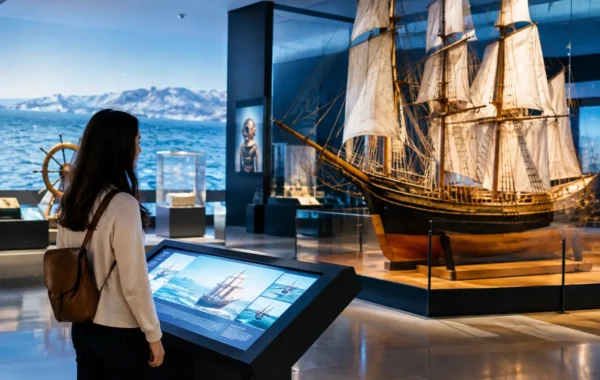


A cannon pointing across George Town’s waterfront tells only part of Penang’s story. The idea of Straits and Oriental Museum as a partner to Fort Cornwallis invites a richer encounter with the sea routes, traders, sailors and precious cargoes that shaped this historic port. It is a proposition founded not on adding another attraction, but on bringing two distinct heritage settings into a more meaningful conversation.
For clarity, the historic fort is widely known as Fort Cornwallis. Its walls speak of colonial administration, defence and the strategic value of Penang at the edge of the Straits of Malacca. A museum centred on shipwreck ceramics, meanwhile, gives physical form to the maritime networks that existed across Asia long before, during and beyond that period. Together, they can help visitors see the fort not simply as a monument, but as part of a far larger world of exchange.
Why a Fort Convallis partnership makes sense
Fort Cornwallis stands at a pivotal point in George Town’s public memory. Its architecture and setting evoke the late eighteenth-century story of Penang as a British trading settlement, while the harbour beyond it recalls the movement of people and goods that gave the island its enduring significance. Yet a fort is necessarily selective in what it can show. Its defensive structures communicate authority and strategy exceptionally well; they cannot, by themselves, reveal the intimate objects that travelled through the waters surrounding Penang.
That is where a partnership with Straits & Oriental Museum has particular cultural value. The museum’s authentic porcelain and ceramic artefacts, recovered from historic Asian shipwrecks, provide a direct connection to maritime trade on a human scale. A bowl, jar or finely painted dish is more than a decorative object. It carries evidence of craftsmanship, commerce, taste and the risks of a voyage that did not reach its intended destination.
Placed alongside the story of the fort, these artefacts could widen the visitor’s perspective. The fort represents a place from which trade was observed, protected and governed. Shipwreck ceramics represent the cargoes that made such trade possible, the communities that produced them and the routes that linked China, Southeast Asia and the wider region. The result is not a simplified tale of empire or commerce, but a more complete and engaging account of Penang’s place in the maritime world.
From fort walls to maritime routes
The most compelling heritage experiences create a sense of continuity between place and object. At Fort Cornwallis, visitors can stand within a landmark that faced the sea at a moment of profound change in regional trade. At the museum, they can encounter porcelain recovered from wrecks such as the Wanli, Turiang, Royal Nanhai, Nanyang, Xuande and Desaru. This is a natural pairing: one setting anchors the visitor in George Town; the other sends their imagination out across the water.
A thoughtful collaboration would not require either institution to repeat the other’s story. It would work best by recognising their different strengths. Fort Cornwallis can establish the political, geographic and architectural context of Penang’s harbour. The museum can illuminate the material culture of maritime exchange through objects that survived beneath the sea for centuries.
This distinction matters. Heritage partnerships can become superficial when they rely on shared branding without shared interpretation. In this case, the connection is strongest when it remains specific: how did ports function? What objects travelled through Asian waters? Who made them, bought them, carried them and waited for them? What does a recovered cargo reveal about a journey interrupted by weather, navigation or misfortune?
These questions make history feel immediate. They also appeal to different kinds of visitors at once. Families gain a vivid way into the past through tangible objects and stories of shipwrecks. Cultural travellers receive a deeper reading of Penang beyond its celebrated streetscapes. Collectors and design-minded visitors can appreciate the extraordinary refinement of porcelain while understanding its archaeological importance.
A visitor experience with greater depth
The partnership’s value would lie in the quality of the journey it creates, not simply in combining two admissions or promoting two locations. A visitor who begins at the fort may arrive at the museum with a sharper sense of why maritime collections matter. A visitor who first studies a shipwreck ceramic may later view the fort’s coastal position with fresh attention.
Curated interpretation could make that exchange especially rewarding. A small thematic display, for example, might consider the life of a single trading vessel: its point of departure, the goods in its hold, the ports along its route and the conditions that placed it at risk. Fort-based interpretation could then draw attention to Penang’s role as a harbour and strategic settlement, while the museum’s galleries could reveal the remarkable objects and cultural connections carried by sea.
There is also room for contemporary hospitality to support, rather than distract from, the historical experience. A well-paced day of heritage can include time for reflection over a meal, a conversation in a café or a carefully chosen object from a gift house. This is particularly relevant for travellers who seek a full cultural outing rather than a brief stop between other plans. Malaysia’s first integrated heritage and lifestyle museum is well placed to show that learning and leisure need not be at odds when both are shaped with care.
The trade-off is clear: historical content must remain the focus. Dining, retail and events should extend the atmosphere of the visit, not turn heritage into a backdrop. When the artefacts and stories lead, hospitality can give visitors the time and comfort to absorb them more fully.
Shared programming, not borrowed history
A formal partnership is not the only way for two heritage destinations to complement one another. Joint talks, family activity days, curator-led conversations or seasonal programming can create useful links while allowing each site to retain its identity. The subject matter offers ample scope: maritime archaeology, Asian ceramic traditions, port cities, navigation, collecting and conservation all provide strong starting points.
The most successful programmes would avoid presenting the sea as an abstract trade route. Maritime history is made of individuals as much as institutions. It includes potters working in kilns, merchants calculating risks, sailors reading unfamiliar waters, dock workers handling cargo and households choosing objects for daily use. Porcelain is often admired for its beauty, but its true power in this context is its ability to make these lives visible.
There is a further opportunity in connecting audiences across generations. Young visitors may be drawn to the drama of shipwreck archaeology and the mystery of recovered treasures. Adults may value the historical nuance, artistic quality and regional context. International visitors can find a memorable introduction to Penang’s role in Asian maritime history, while local visitors may see a familiar waterfront and historic fort through a different lens.
A stronger story for George Town
George Town is best understood through layers. Its streets, places of worship, shophouses, food traditions and waterfront do not belong to a single narrative. They reflect centuries of arrival, adaptation, trade and community. Fort Cornwallis and the Straits & Oriental Museum occupy different chapters of that story, but their relationship is persuasive because both point towards the sea.
A partnership would therefore offer more than a convenient itinerary. It could help visitors connect strategic history with material culture, colonial-era landmarks with older Asian trade networks, and the visible waterfront with the artefacts recovered from its wider maritime world. It also respects the fact that heritage is most memorable when people can see, feel and discuss it from more than one viewpoint.
For anyone planning a day around George Town’s historic core, the most rewarding question may not be which landmark to visit first. It may be this: what did Penang’s shoreline witness, and what still survives to tell that story? A fort, a shipwreck ceramic and a little time to look closely can provide a remarkable answer.