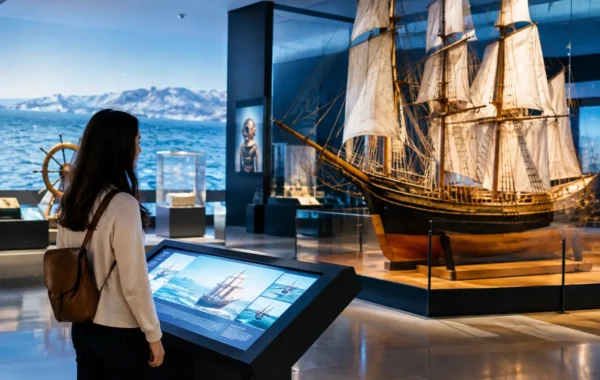
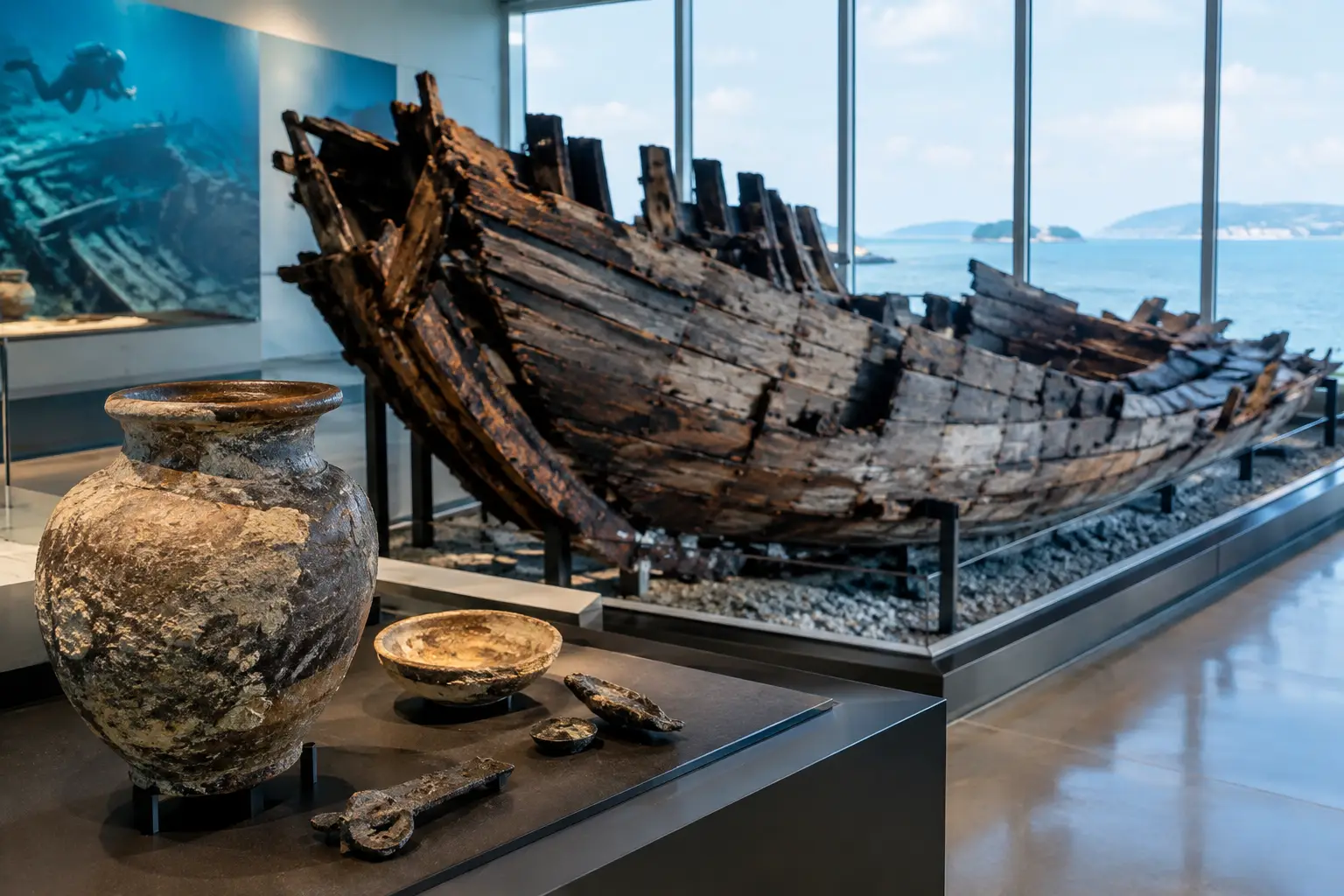

A porcelain bowl raised from the seabed is never merely a beautiful object. Its glaze may carry the taste of imperial fashion; its shape may reveal the meal it was made for; its journey may trace a merchant vessel moving through monsoon winds centuries ago. The top maritime archaeology exhibits make these connections visible, transforming fragments of trade into a richly human story of travel, risk, craft and exchange.
For visitors to George Town, shipwreck ceramics offer an especially compelling way to encounter the region’s past. Penang has long been shaped by the movement of people and goods across the Straits of Malacca. A collection of recovered cargo allows that maritime history to be seen at eye level, in the intricate painted detail of a dish or the quiet perfection of a storage jar.
What makes maritime archaeology exhibits exceptional?
The finest displays do more than present objects behind glass. They establish provenance, explain the vessel and voyage from which an artefact came, and place it within the wider networks that connected China, Southeast Asia, India and beyond. A single ceramic becomes more meaningful when visitors understand whether it travelled as luxury tableware, practical cargo or part of a merchant’s carefully calculated investment.
Context matters because the sea is a demanding archive. A shipwreck preserves objects in unusual ways, but it also separates them from the households, markets and hands that once gave them purpose. Thoughtful interpretation restores some of that lost setting. It asks who made an object, who commissioned it, what route it took and why it was worth carrying across dangerous waters.
Authenticity is equally important. Recovered artefacts retain traces of an actual voyage interrupted in time. They invite close looking: the crackle of a glaze, the hand-painted rhythm of cobalt blue, the variations that distinguish a workshop-made piece from a more refined commission. Such details are not minor. They are evidence of the world that produced and traded them.
Top maritime archaeology exhibits: the stories to look for
Rather than treating shipwreck collections as a contest between beautiful objects, it is more rewarding to look for exhibits that illuminate distinct moments in Asian maritime history. The following wreck narratives show why ceramics recovered from the sea hold such enduring fascination.
Wanli: porcelain for a connected world
Ceramics associated with the Wanli period speak to a flourishing era of export porcelain, when Chinese kilns supplied markets far beyond their shores. These pieces often reward visitors who take time to compare forms and decoration. A dish made for export could carry familiar Chinese techniques while responding to overseas preferences in scale, pattern or function.
The importance of a Wanli display lies in that negotiation between local artistry and international demand. It challenges the idea that historical trade moved in only one direction. Overseas buyers influenced what was made, while Chinese ceramic traditions gave those goods their distinctive prestige. The result is an exhibit that is as much about taste and commerce as it is about porcelain.
Turiang: cargo as a portrait of daily life
A shipwreck cargo is not always composed of rare ceremonial treasures. That is precisely why the Turiang story is so revealing. Everyday wares, serving vessels and storage forms can show what merchants believed would sell, what households wanted to use and how familiar goods travelled across cultural boundaries.
This is where visitors often find the greatest connection. A simple bowl, cup or jar can feel surprisingly immediate because its original role was practical. It may once have been intended for a dining table, a shopkeeper’s stock or a family kitchen. Maritime archaeology gives such domestic objects a second life as evidence, showing how ordinary habits became part of a vast regional trading system.
Royal Nanhai: the scale of maritime commerce
The Royal Nanhai collection brings attention to the organisational ambition behind seaborne trade. Every vessel required capital, crew, supplies, knowledge of seasonal winds and an understanding of what different ports might purchase. A cargo of ceramics therefore represents a business decision made long before a ship reached open water.
An effective exhibit does not reduce this story to numbers alone. It makes scale tangible through groupings of related forms and decorative styles. Visitors can see how repetition itself tells a story: hundreds of similarly shaped pieces suggest planned distribution, while uncommon objects may point to higher-value customers or specialised demand.
Nanyang: routes shaped by exchange
The word Nanyang evokes the southern seas and the web of ports that made Southeast Asia central to global exchange. Exhibits connected to this maritime world are most powerful when they show movement as a two-way process. Ships carried ceramics southward, but they also carried ideas, ingredients, languages, religious practices and artistic influences between coastal communities.
For a visitor, this broader view adds depth to the visual pleasure of porcelain. A painted motif is not simply decoration; it belongs to a commercial and cultural conversation that crossed waters. Such displays are particularly resonant in Penang, where layered histories of migration and trade remain part of the city’s living character.
Xuande: refinement, rarity and imperial taste
Xuande porcelain is admired for its technical accomplishment and visual confidence, particularly in blue-and-white wares. In a maritime archaeology setting, these objects offer a useful contrast to more utilitarian cargo. They remind us that ships could carry goods at different levels of value, from practical ceramics to pieces associated with exceptional skill and elite taste.
Yet refinement should not be mistaken for the whole story. A beautiful object becomes more significant when it is considered alongside its route and recovery. How did such a piece travel? Who had the means to acquire it? What does its presence at sea reveal about the reach of luxury trade? These questions move visitors beyond admiration towards a more informed appreciation.
Desaru: a wreck as a moment preserved
The Desaru shipwreck collection demonstrates one of maritime archaeology’s most affecting qualities: its ability to preserve a disrupted moment. Objects once packed for a destination were instead claimed by the sea, only to reappear centuries later with their stories incomplete but still eloquent.
That incompleteness deserves respect. Archaeology cannot always provide a neat answer to every question, and responsible interpretation should acknowledge uncertainty. Dates, origins and intended markets may be refined as research develops. For many visitors, this is part of the appeal. The collection is not a finished tale but an invitation to consider what remains unknown beneath the surface.
How to experience a shipwreck collection well
Begin with one object rather than trying to absorb every artefact at once. Notice its form, weight and decoration, then look for the information that connects it to a ship, a period and a trading route. This slower approach makes a gallery visit feel less like viewing a catalogue and more like following a voyage.
Next, compare objects that appear similar. Small differences in rim shape, painted motifs or glaze can indicate changing fashions, workshop practices or separate markets. Families may find this especially rewarding when children are invited to choose one favourite piece and imagine the journey it made before reaching the seabed.
Finally, allow time for the wider setting. At Straits & Oriental Museum, the encounter with shipwreck ceramics sits within an integrated heritage and lifestyle experience, allowing history, art, hospitality and conversation to share the same address. It is a fitting way to approach maritime heritage: not as something sealed away from contemporary life, but as a legacy that still shapes how a port city sees itself.
The most memorable maritime archaeology exhibits leave visitors with more than an image of porcelain. They leave a sense of distance crossed, of skilled hands at work, and of countless lives linked by the sea. Pause before the object that draws your eye. Its journey may be older than the city around you, yet its story is still arriving.