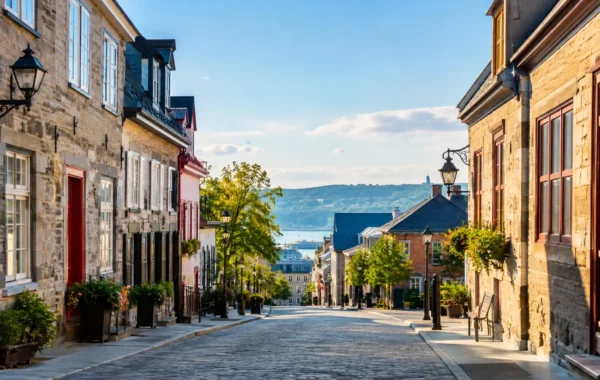
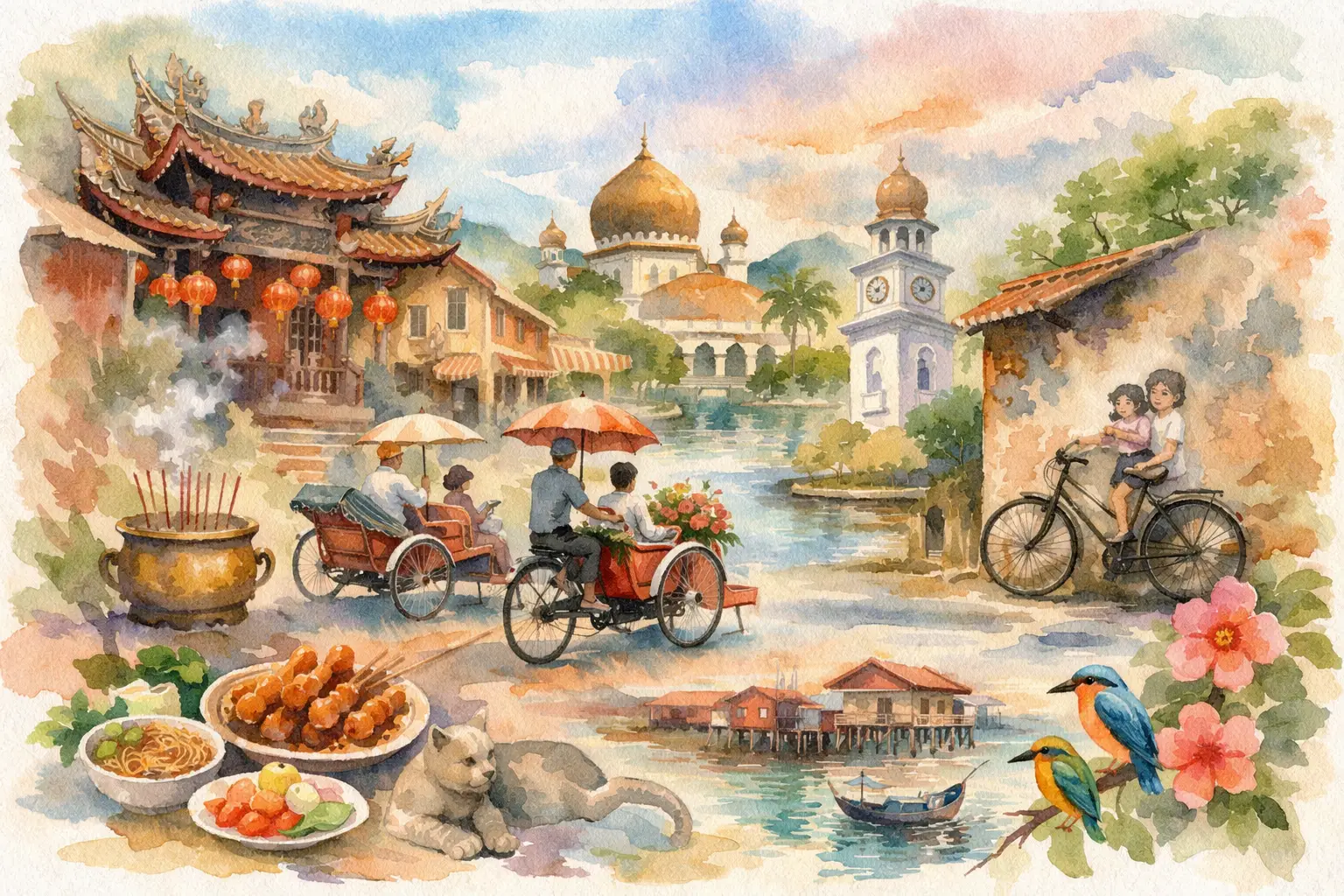

George Town rewards the traveller who looks up, slows down and notices the details – the carved shutters above a five-foot way, the scent of incense drifting from a clan house, the sudden flash of street art on an old limewashed wall. If you are searching for things to do in Georgetown UNESCO, the real pleasure lies in how easily history, food, faith and everyday life sit beside one another.
This is not a city to race through with a checklist. Its appeal is layered. One hour can bring you from a venerable temple courtyard to a contemporary gallery, then on to a café inside a restored shophouse where the architecture is as much a draw as the menu. The best visit balances landmark attractions with smaller moments that give the old quarter its character.
Why Georgetown UNESCO feels different
George Town’s UNESCO World Heritage status is not simply about preserved buildings. It is about a living urban landscape shaped by trade, migration and exchange across centuries. Chinese, Malay, Indian, Eurasian and colonial influences are not arranged for display in neat compartments. They are still present in the streets, in the places of worship, in long-established businesses and, perhaps most memorably, in the food.
That is why the most satisfying way to experience the city is to move between grand heritage sites and intimate cultural encounters. Some visitors come for architecture, others for street food or photography. Most leave realising that the city works best when you allow these interests to overlap.
1. Walk the heritage streets properly
A proper walk through the historic core is the foundation of any list of things to do in Georgetown UNESCO. Armenian Street, Ah Quee Street, Beach Street and the surrounding lanes reveal the city’s mercantile past through restored shophouses, arcades and facades with distinct regional influences.
Go early if you prefer gentler heat and softer light. Later in the day, the streets become livelier, which suits visitors who enjoy people-watching and the energy of an active old town. Neither is better – it depends whether you want atmosphere for photographs or a more contemplative pace.
Look beyond the frontage. Many of the most elegant buildings carry subtle details: timber louvres, ceramic tiles, plaster ornament and internal courtyards concealed behind modest shopfronts. In George Town, restraint often hides remarkable craftsmanship.
2. Visit the Clan Jetties
The Clan Jetties remain one of the most distinctive waterfront experiences in the city. Built on stilts over the water, these settlements speak to George Town’s maritime identity and the communities that helped shape it. They are photogenic, certainly, but they are also residential spaces, so a respectful visit matters.
Chew Jetty is the most visited and the easiest for first-time travellers to access. It offers a vivid sense of place, especially in the late afternoon when the light begins to shift across the water. If you value quieter observation, you may prefer exploring beyond the busiest stretches.
3. Step inside the great clan houses and mansions
George Town’s grand residences and clan houses add depth to the street-level experience. They show how trade wealth, family lineage and social identity were expressed in architecture. These interiors often provide what the streets cannot – ornament, ritual context and a more complete sense of how elite households and associations once functioned.
Khoo Kongsi is one of the clearest examples of heritage splendour in the city, with richly carved timber, gilded details and an atmosphere that feels ceremonial rather than merely decorative. The Peranakan mansions, meanwhile, reveal another dimension of George Town’s cultural refinement through furniture, ceramics, textiles and domestic design.
For visitors who enjoy antiques, collecting or design history, these sites are often highlights rather than optional stops. They turn heritage from an abstract idea into something tactile and human.
4. Make time for a museum with a strong point of view
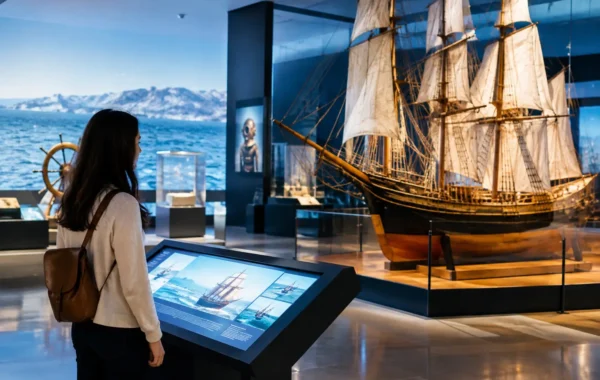
A good museum visit in George Town should do more than display old objects. It should tell you why they mattered, how they travelled and what they reveal about the world that made this port city possible. That is particularly true in a place shaped by shipping routes, commerce and cross-cultural exchange.
For that reason, a maritime-focused collection adds something distinctive to the city experience. At Straits & Oriental Museum, rare shipwreck ceramics and porcelain recovered from historic Asian wrecks bring the region’s seaborne history into sharp focus. It is a compelling stop for travellers who want more than a general overview and prefer artefacts with provenance, drama and scholarship behind them.
The advantage of choosing a museum with a defined narrative is clarity. Rather than seeing heritage as a broad theme, you begin to understand George Town as part of an interconnected maritime world.
5. Seek out street art, but do not stop there
Street art has become one of the city’s most recognisable attractions, and understandably so. The murals and installations animate the old streets and create an accessible way into the city’s personality. They are playful, photogenic and easy to enjoy even on a short visit.
Still, there is a trade-off. If you chase only the most famous pieces, George Town can start to feel like a backdrop rather than a living heritage city. The better approach is to let the artwork guide your route while remaining open to everything around it – workshops, shrines, verandas, side lanes and local businesses that give each area its texture.
6. Experience its places of worship as part of one shared landscape
One of George Town’s greatest cultural strengths is the close presence of temples, mosques and churches within the historic centre. Visiting these spaces offers a direct sense of the plural society that shaped the city over generations.
Kapitan Keling Mosque, Sri Mahamariamman Temple and the historic churches nearby each bring their own architectural language and devotional atmosphere. Modest dress and respectful behaviour are essential, but these visits are usually among the most memorable because they show heritage as lived practice, not preserved scenery.
If your interest leans towards architecture, pay attention to how these buildings occupy space in relation to the street. If your interest is cultural history, consider how closely different traditions have coexisted here.
7. Eat where heritage still has flavour
Few things to do in Georgetown UNESCO are as persuasive as simply sitting down to eat. The city’s food culture is inseparable from its history. Trade, migration and adaptation are all on the plate, whether you are trying Peranakan dishes, hawker classics or long-established coffeeshop favourites.
There is no single perfect strategy. Hawker centres offer breadth and local rhythm, while heritage restaurants and well-restored dining spaces can provide a slower, more atmospheric meal. One suits discovery and variety; the other can feel more occasion-led. Both belong in a well-shaped itinerary.
If you have limited time, choose one meal for energy and one for ambience. George Town does both exceptionally well.
8. Browse old shops, galleries and thoughtful retail spaces
George Town is at its best when culture and commerce meet with taste. Antique shops, small galleries, bookshops and curated gift spaces allow you to bring part of the city’s visual and material culture into your day without reducing it to souvenir hunting.
This is especially rewarding for travellers who enjoy objects with context – ceramics, prints, textiles or decorative pieces that reflect Penang’s layered history. Not every purchase needs to be grand. Sometimes a well-made keepsake says more than a bag full of generic mementoes.
9. Pause in a café inside a restored shophouse
One of the pleasures of the city is the way historic buildings have found new life without entirely losing their old soul. A good café stop offers more than coffee. It gives you time to absorb the scale, ventilation, materials and spatial rhythm of the shophouse form.
Some visitors prefer heritage spaces that feel polished and contemporary. Others seek places with more patina, where age is still visible in the beams and plaster. Again, it depends on your style of travel. George Town accommodates both.
10. See the city after dark
The heritage quarter changes character in the evening. Heat eases, façades soften under street lighting and the city feels less like an open-air museum and more like a place settling into itself. Dining, a quiet drink and an unhurried walk can reveal a side of George Town that daytime crowds miss.
This is also when the contrast between old and new becomes especially clear. Restored buildings glow with fresh purpose, yet the streets still carry the weight of long history.
11. Leave room for unplanned discoveries
The finest heritage cities resist over-scheduling, and George Town is no exception. A side lane may lead to a shrine, a conversation, a workshop or a building detail you had not expected to remember. The city rewards curiosity more than efficiency.
That is why the best things to do in Georgetown UNESCO are not always the most famous ones. They are often the experiences that connect the grand narrative of trade and migration with something immediate – a courtyard tile, a bowl of noodles, a timber staircase worn smooth by generations.
If you give George Town your attention rather than only your itinerary, it tends to give something richer back.